The Life and Death of the Founder of The Salvation Army (William Booth)
This presentation originates from one of three sets of slides. They were gifts, together with a lantern slide projector and script, from General Bramwell Booth to Lt Colonel B J Siebrits, a South African officer who served at The Salvation Army’s International Headquarters as auditor.
The Colonel passed these to his son, Bandmaster B J (Jack) Siebrits of Cape Town. The original projector was used for showing the slides in the Cape Town City Hall in the 1950s. In spite of the size of the building the antique equipment performed admirably. However, eventually the projector globe could not be replaced. Ever-resourceful, Jack Siebrits fitted a lamp from a modern projector and continued using it to good effect.
In due course the collection of slides and projector passed to the bandmaster’s daughters, Myra and Margaret, Sercombe and du Plessis respectively. Major Howard Sercombe scanned these and readily granted permission for them to be posted on ‘thedups.com’. Even though there are probably better images of some scenes elsewhere, the purpose was to make this particular collection accessible to others.
For further information on William and Catherine Booth and The Salvation Army please go to:
The Salvation Army International Heritage Centre
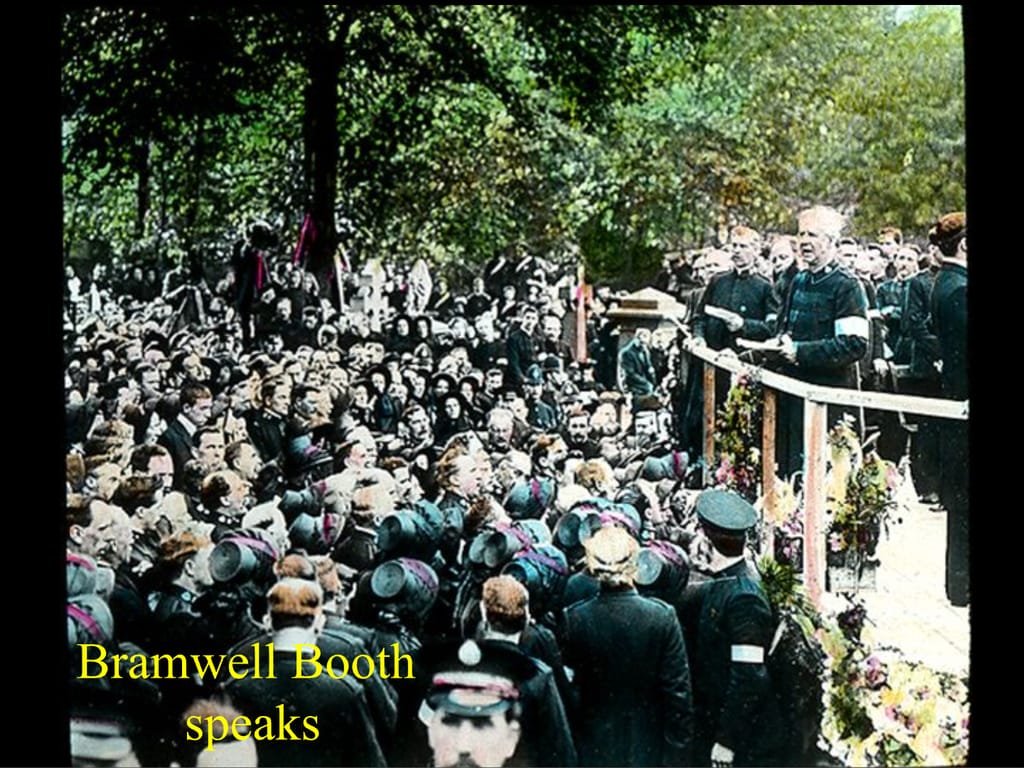
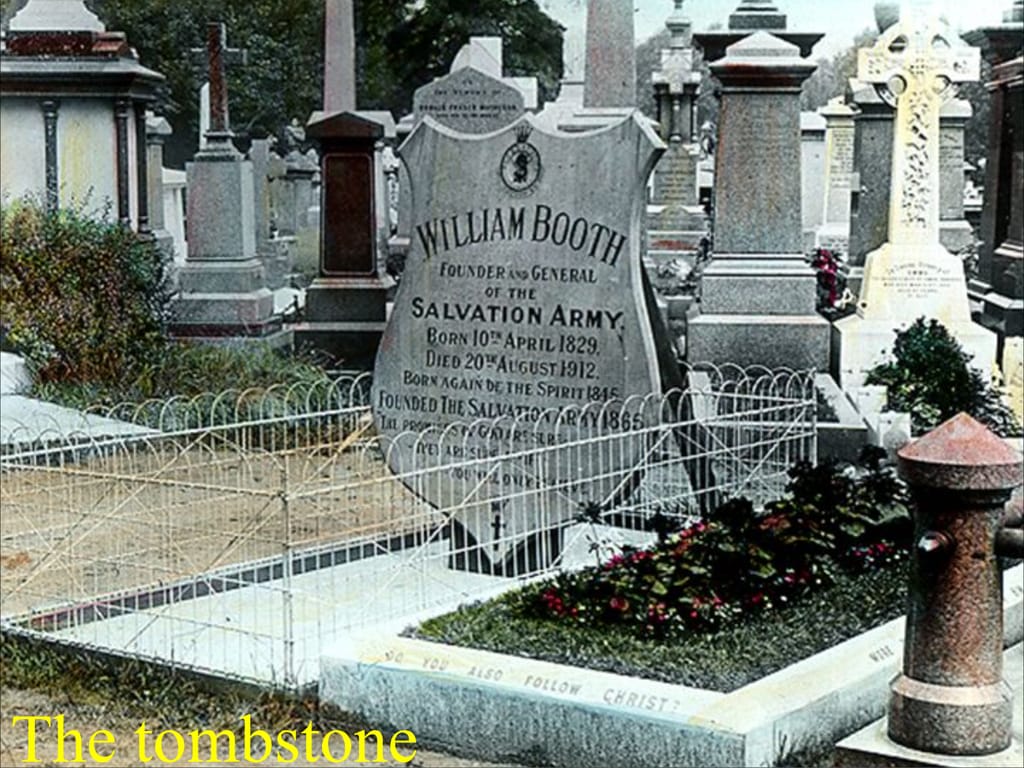
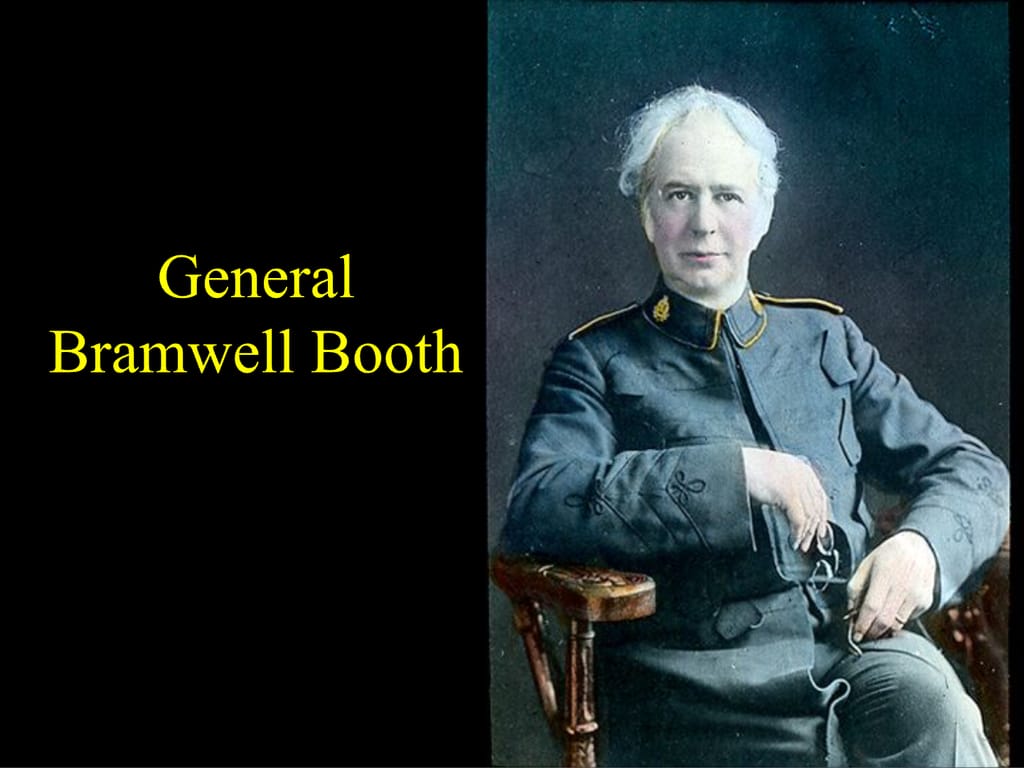

“The life & death of the Founder of The Salvation Army”. This collection is one of three boxes of slides, and is covered by the above title. The slides in this first box have all been scanned, even though there are (probably) better images of some scenes elsewhere: the purpose of this exercise was to make an accessible copy of this particular collection. Three boxes of slides, projector and script were given by General Bramwell Booth to Colonel BJ Siebrits, a South African officer who served at International Headquarters as Auditor. The Colonel passed these to his son, Bandmaster BJ Siebrits of Cape Town. The projector was used, and the slides shown in the Cape Town City Hall. This is a huge building, but this antique equipment filled it admirably. However, the projector globe became irreplaceable, so ancient was it. The projector was fitted temporarily with a lamp from a modern projector and used in this way. In due course the collection of slides and projector passed to the Bandmaster’s daughters, Myra and Margaret, Sercombe and du Plessis respectively. At time of scanning the first box of slides, 25 are missing, some through breakage, but others are possibly out of order, and “lost” in one of the other two boxes. Where a slide is missing, this fact is noted on the slide previous to the missing one. That a slide is missing can be seen from following the original script. These notes are based upon the original type-written script, with some additions and/or expansion. December 2003 Howard Sercombe
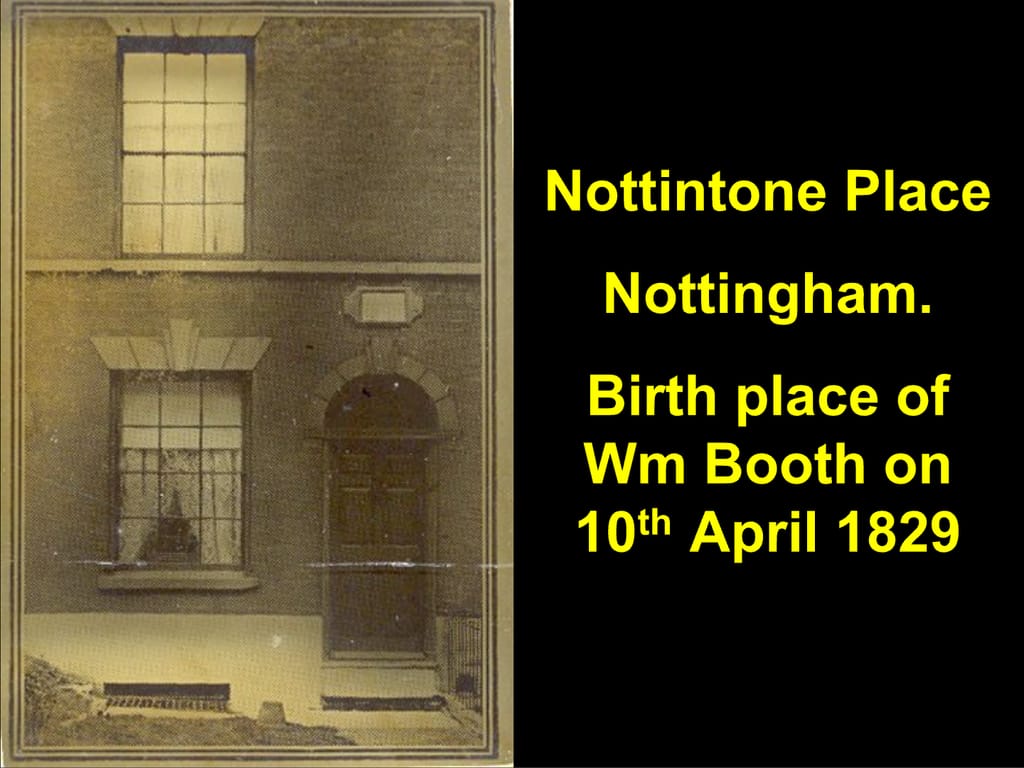
The birthplace of Wm Booth – Nottingtone Place, Nottingham, on April 10th 1829
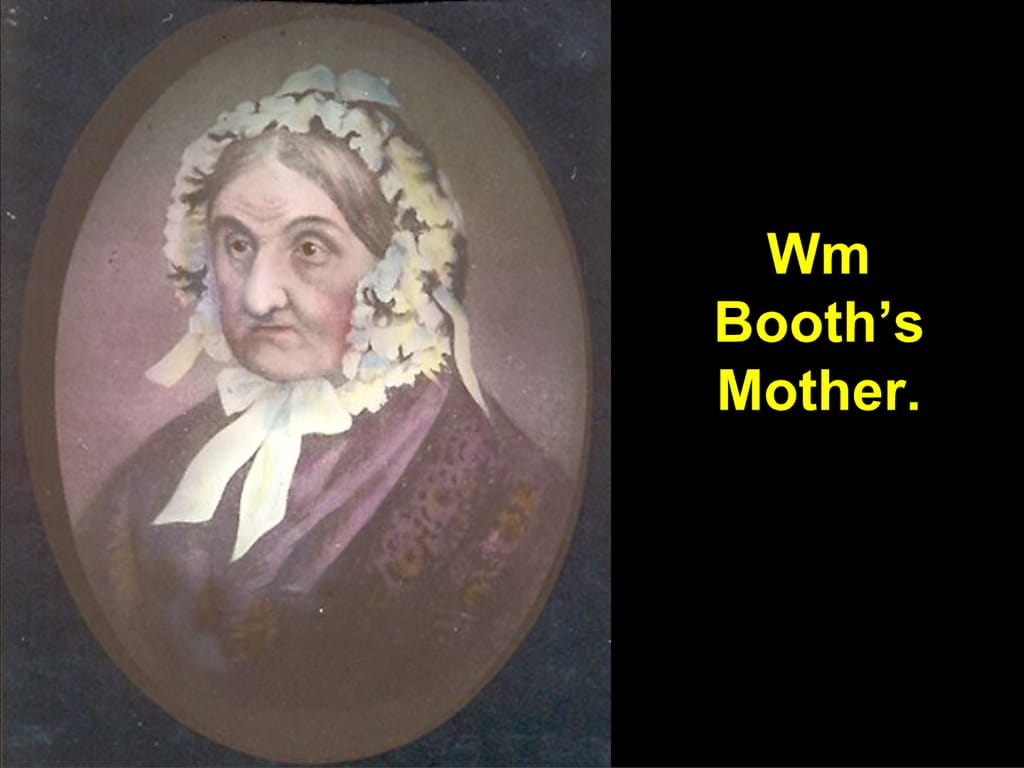
William Booth’s mother.
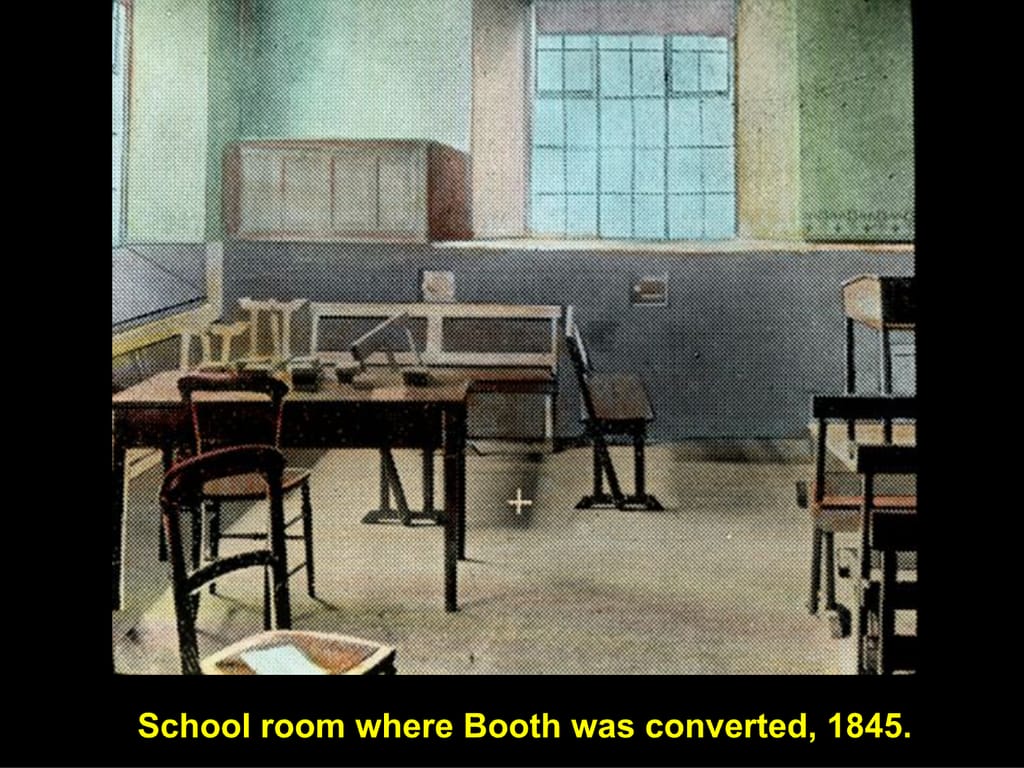
The schoolroom where the General was converted in 1845
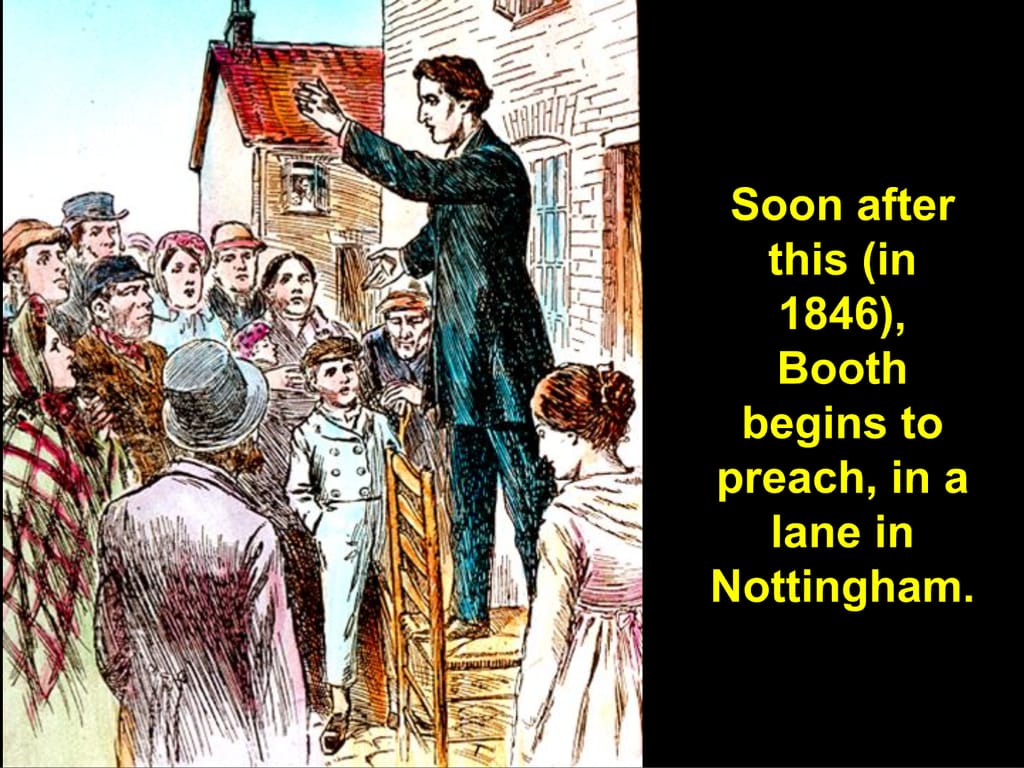
WB began to preach soon after his conversion, in 1846, in a lane in Nottingham. A drawing illustrating this development.
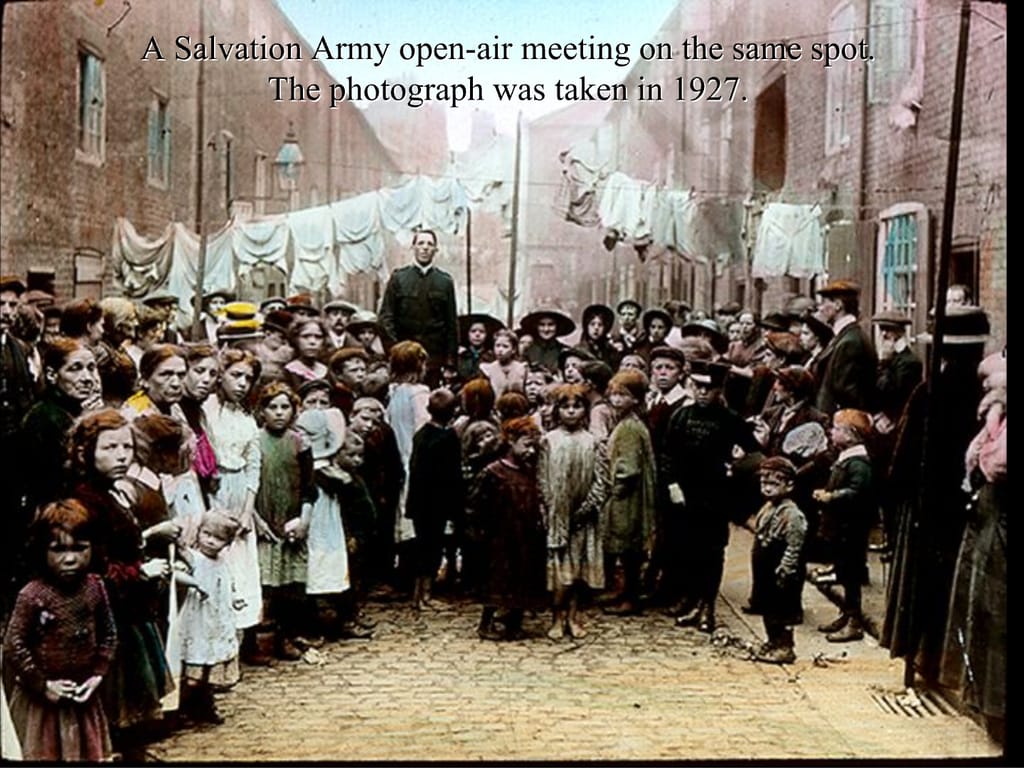
A Salvation Army open-air meeting on the same spot. A photograph taken 1927. The next slide is missing, but was of the church where WB’s converts were refused entry.
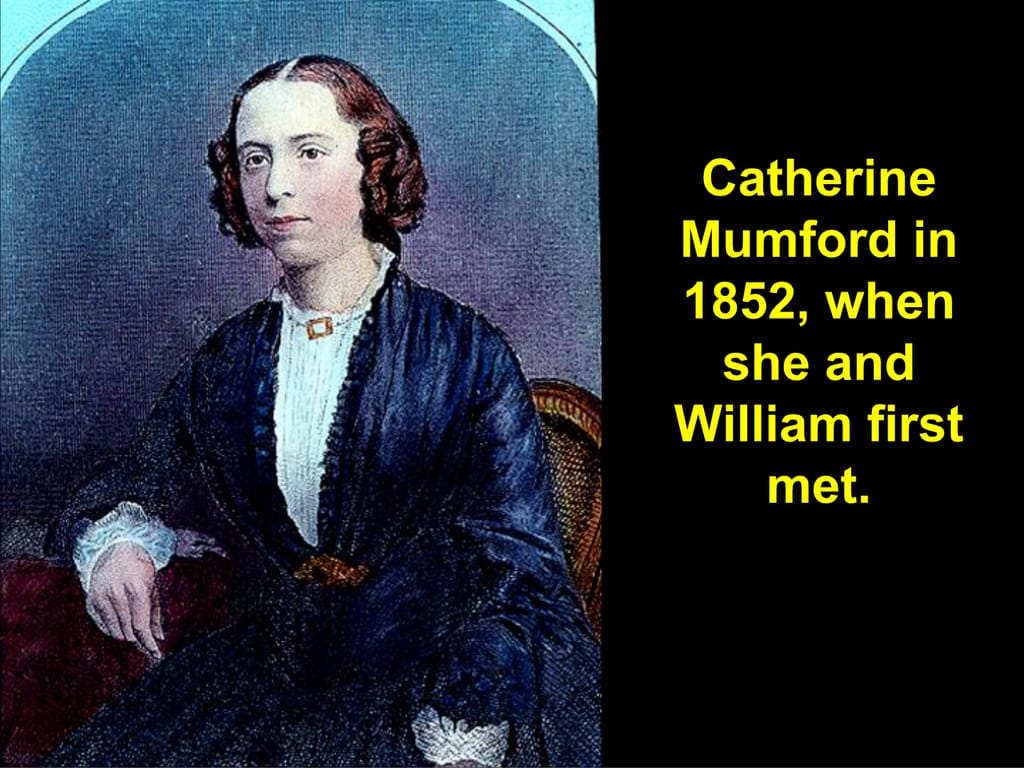
Catherine Mumford when WB met her in 1852.
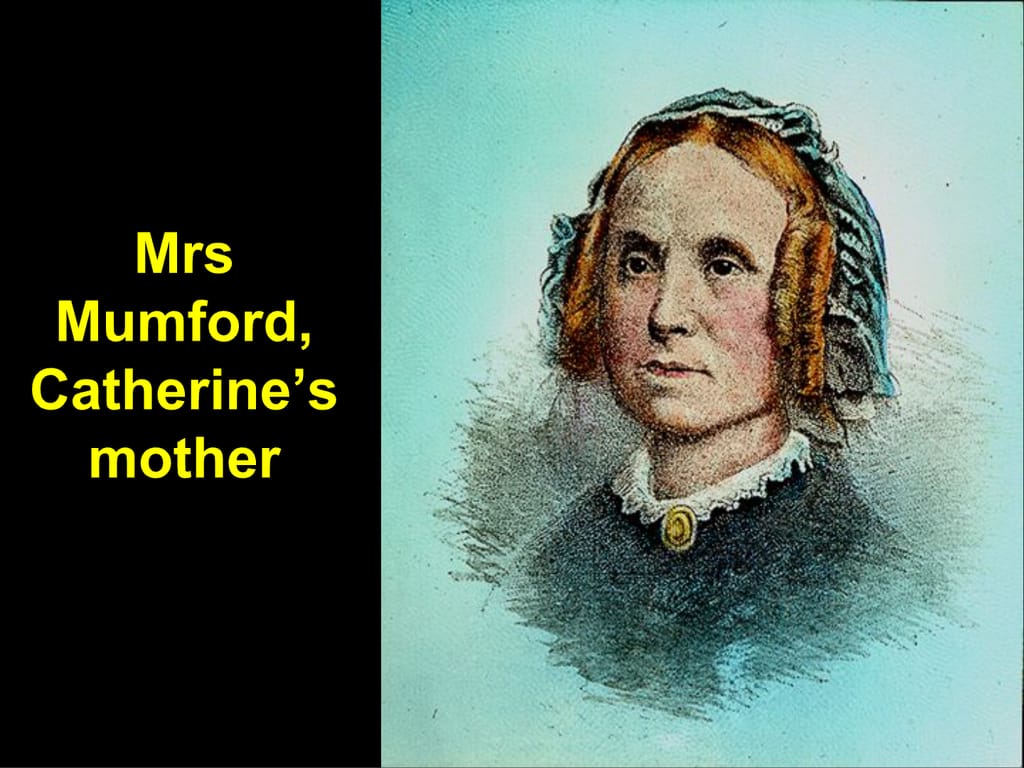
Mrs Mumford – Mrs Booth’s mother.
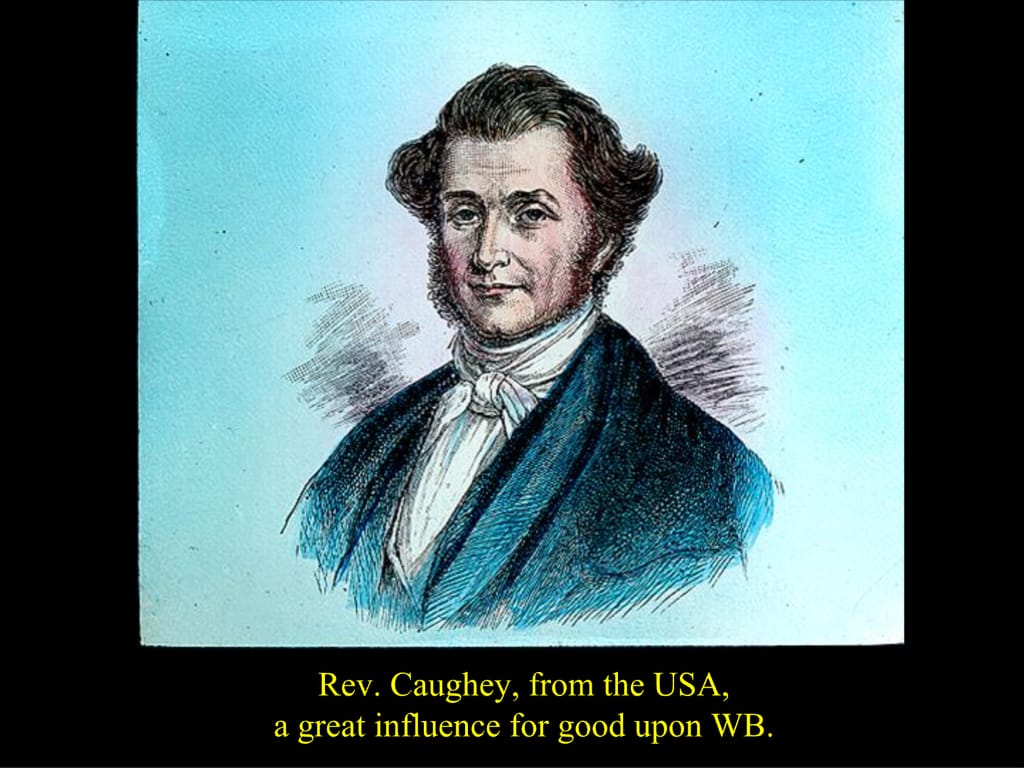
Rev. James Caughey, from the USA, who greatly influenced the General’s ministry. The next slide – of the Chapel atGateshead – is missing.
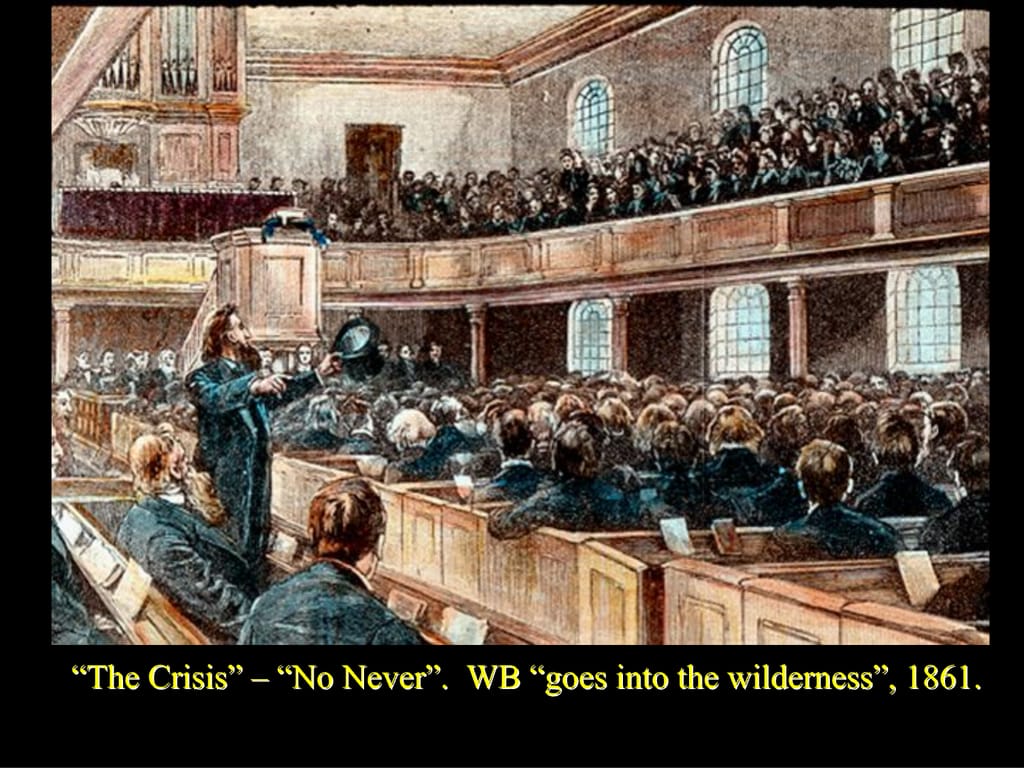
The Crisis ‘No never’ ! The General goes into the wilderness – 1861. The next two slides are missing – of “The Rev. Wm. And Mrs Booth at this time” and “Mile End Waste where the General began London Open-Air work (1864)”
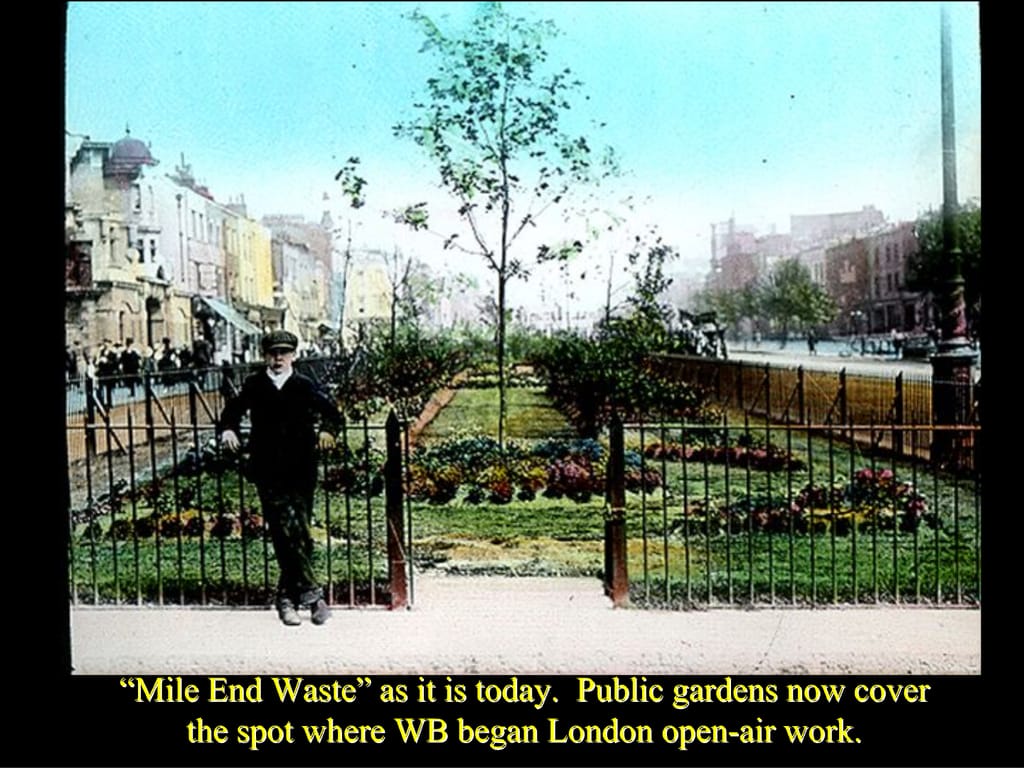
“Mile End waste as it is today. Public gardens now cover the spot where The Founder stood when he began.” So reads the script. The next slide is missing, but was of a memorial plaque let into the ground at the entrance to the Gardens. The following slide is also missing, “The beginning of the East London Mission – the fore-runner of the Christian Mission and The Salvation Army. Tent Services 1864 ”
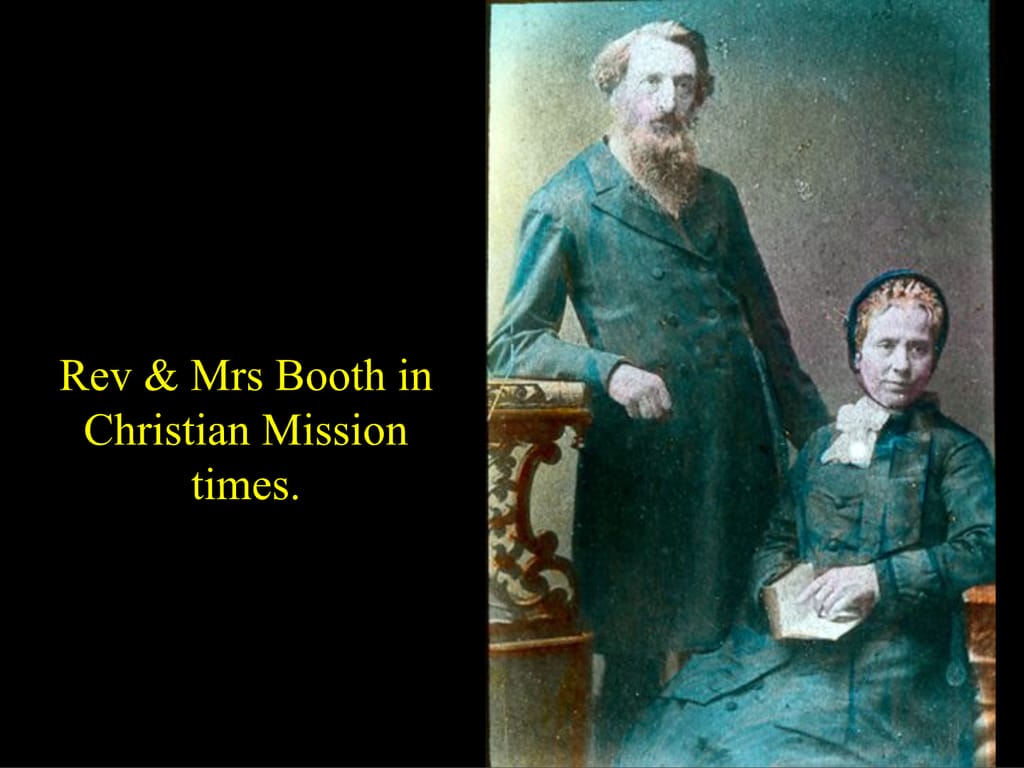
Rev & Mrs Booth in Christian Mission times.
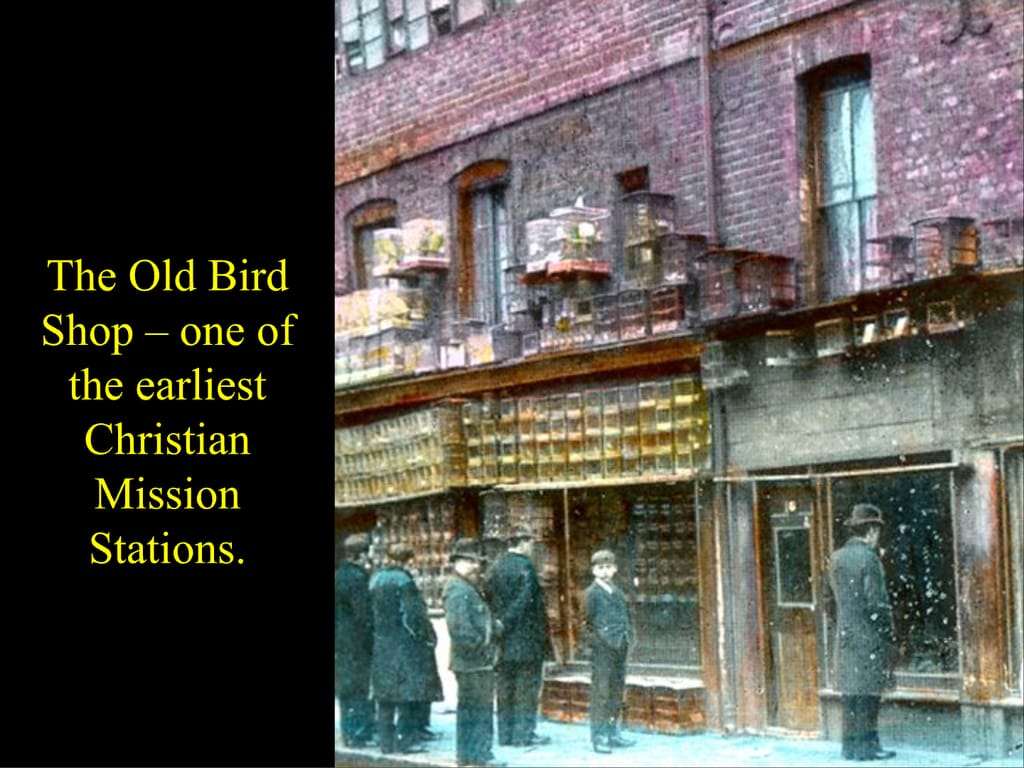
One of the earliest Christian Missions stations – The Old Bird Shop. The next slide is missing, but was of the Booth home at Gore Road. The next slide is also missing – an early portrait of the General taken about this time.
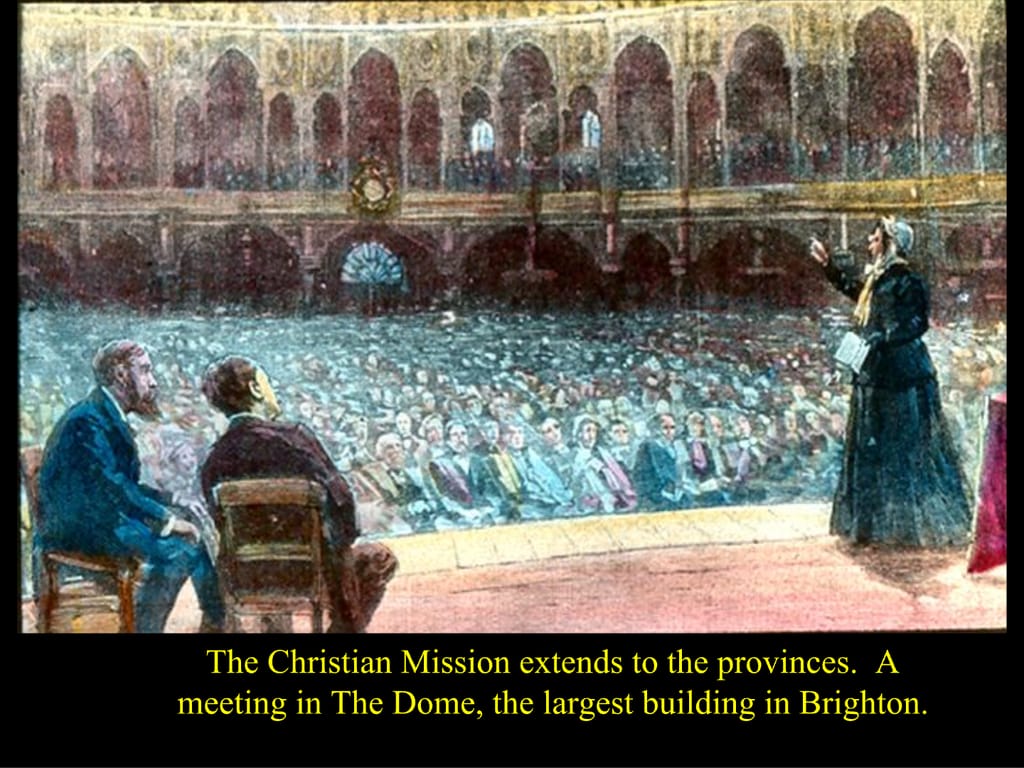
The Christian Mission extends to the Provinces. A meeting at The Dome, the largest building at the fashionable seaside resort Brighton.
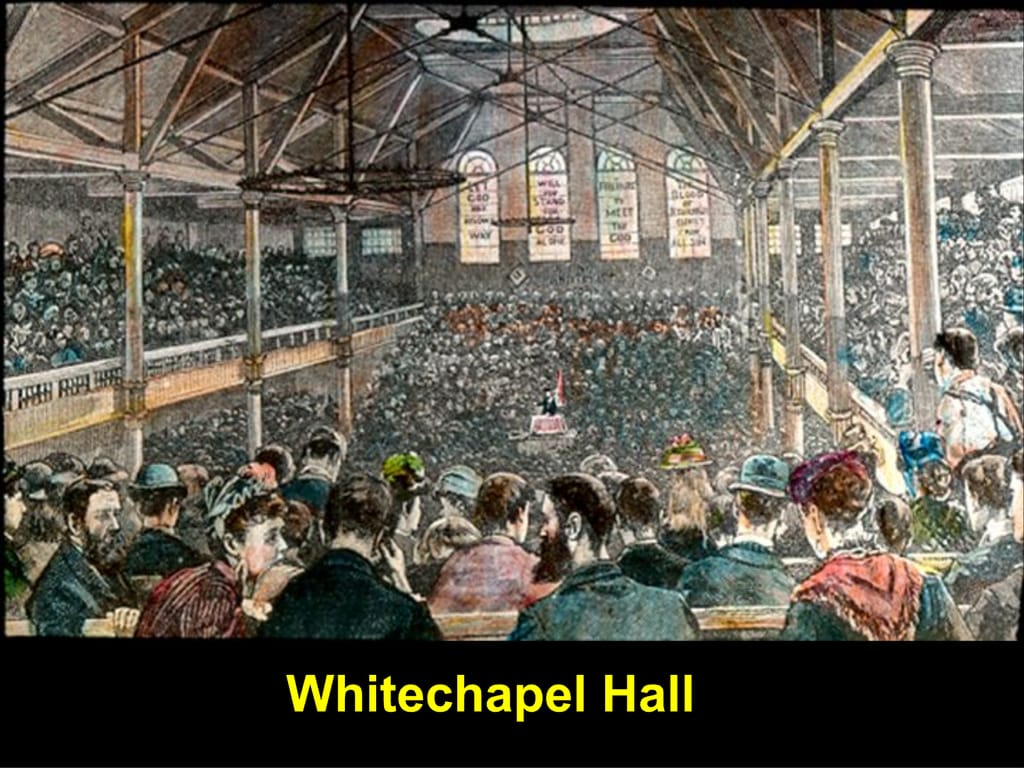
Whitechapel Hall the first Headquarters of the Christian Mission and later The Salvation Army.
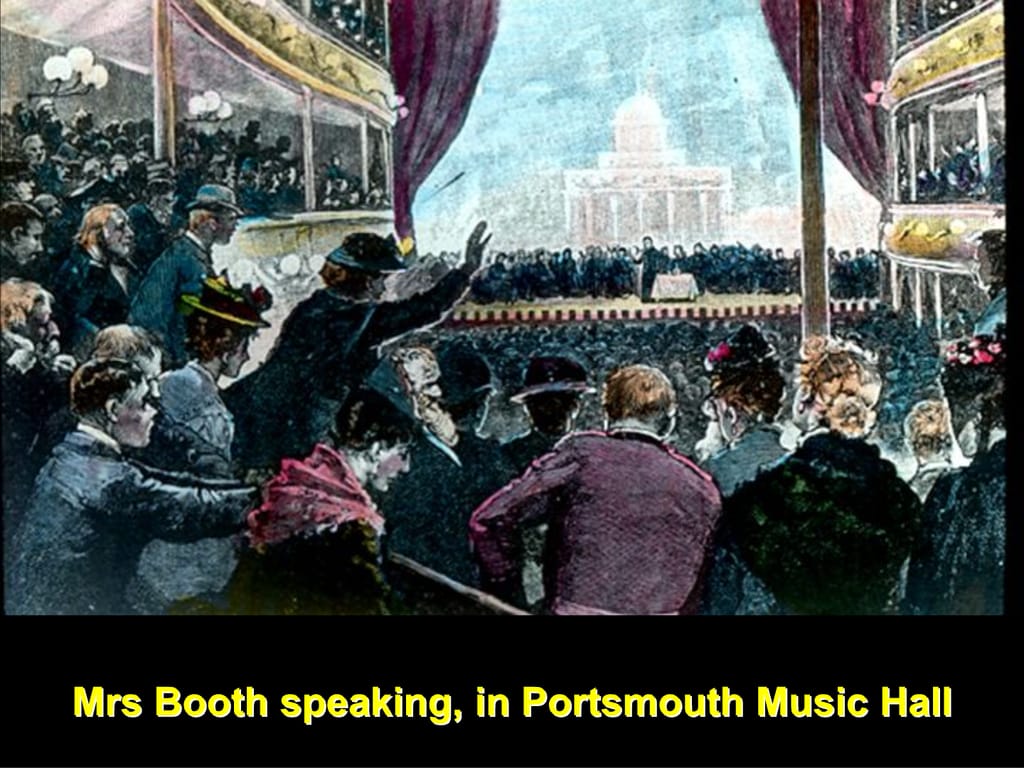
The music halls and theatres are commandeered. Here Mrs Booth is seen speaking from the stage of a Portsmouth Music Hall. This “music hall” could well be the King’s Theatre. The Kings is without doubt the oldest such building in Portsmouth today (ie 2003) and is still in use as a theatre. The Southsea Corps – situated just a few blocks from the King’s – hire it every years for their annual community carol event, “Carols at the King’s”.
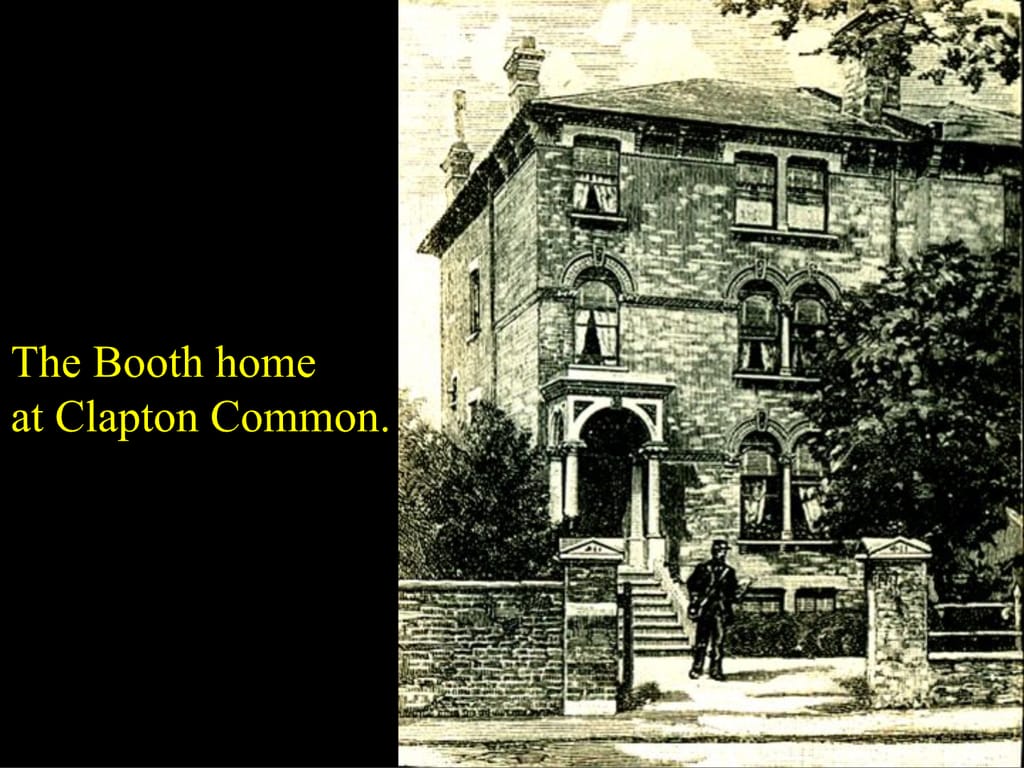
The Booth home at Clapton Common.
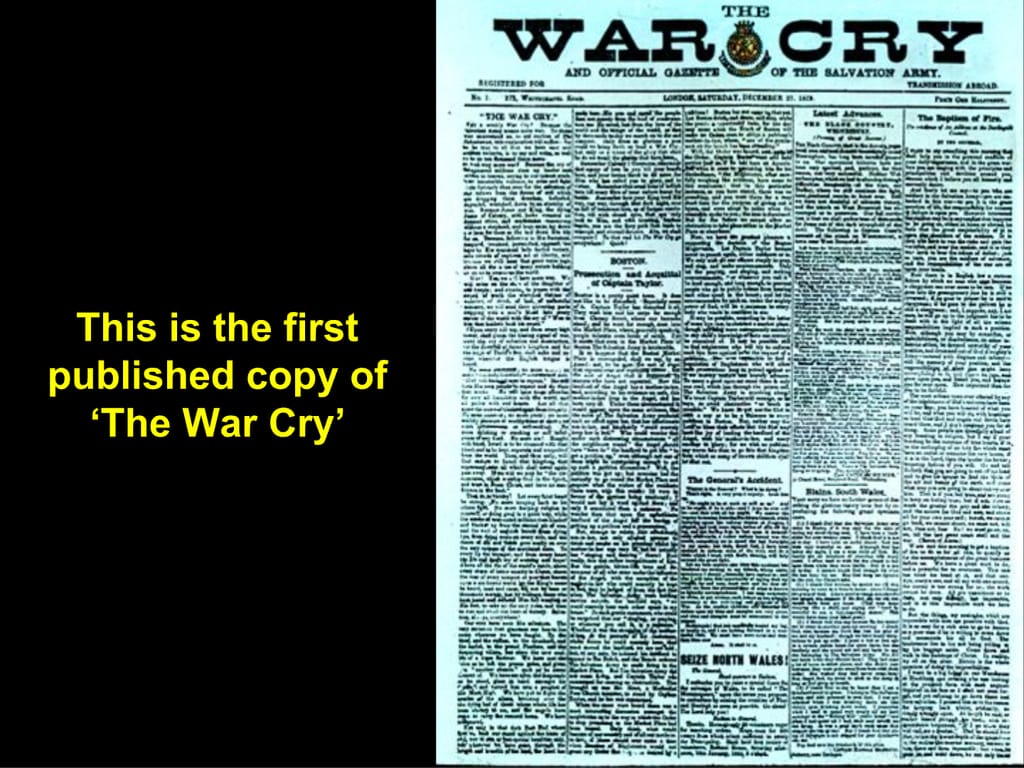
The first ‘War Cry’ dated Saturday December 2?? 18??
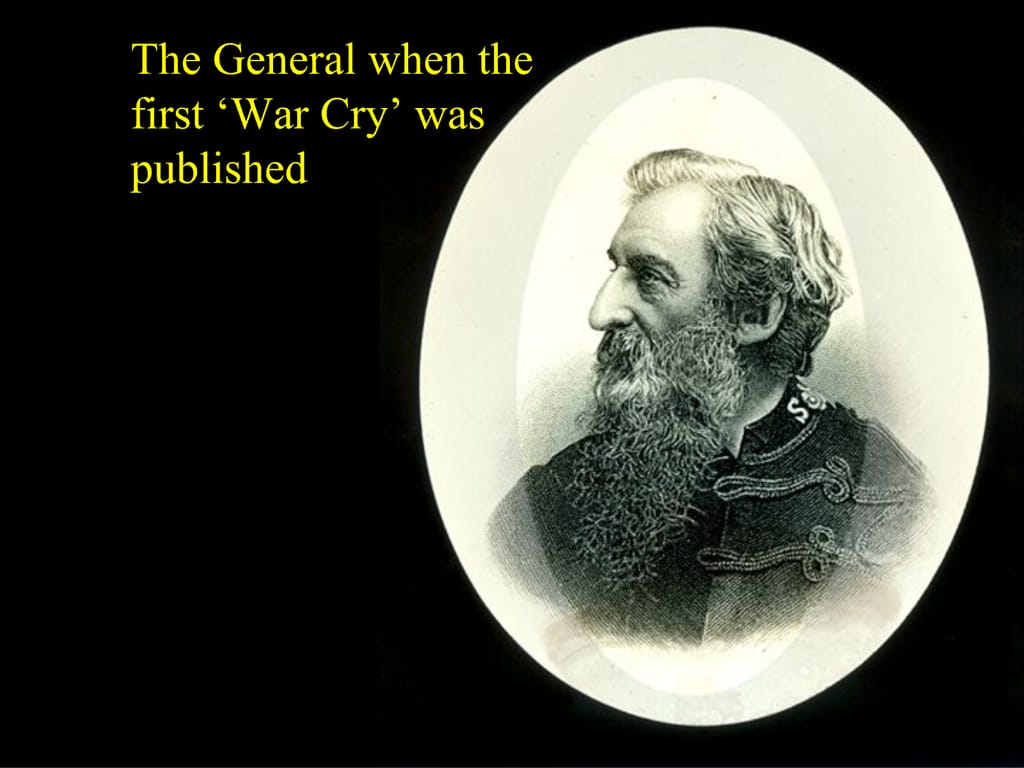
General Booth, at around the time the first War Cry was published.
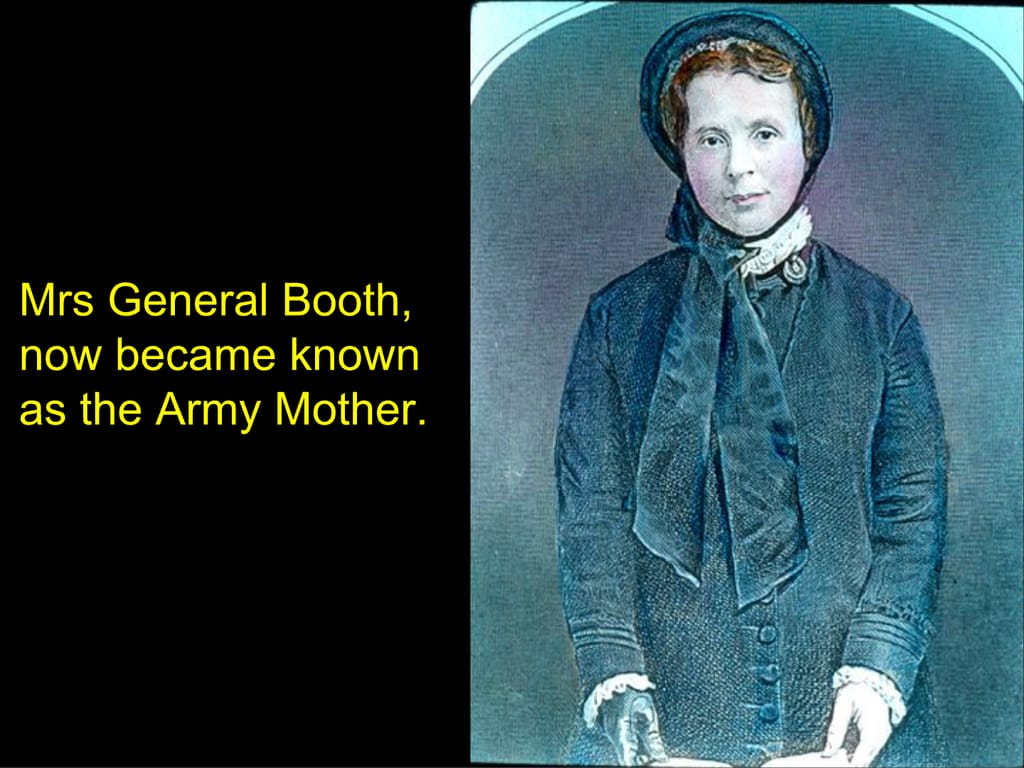
Mrs General Booth, now became ‘The Army Mother’.
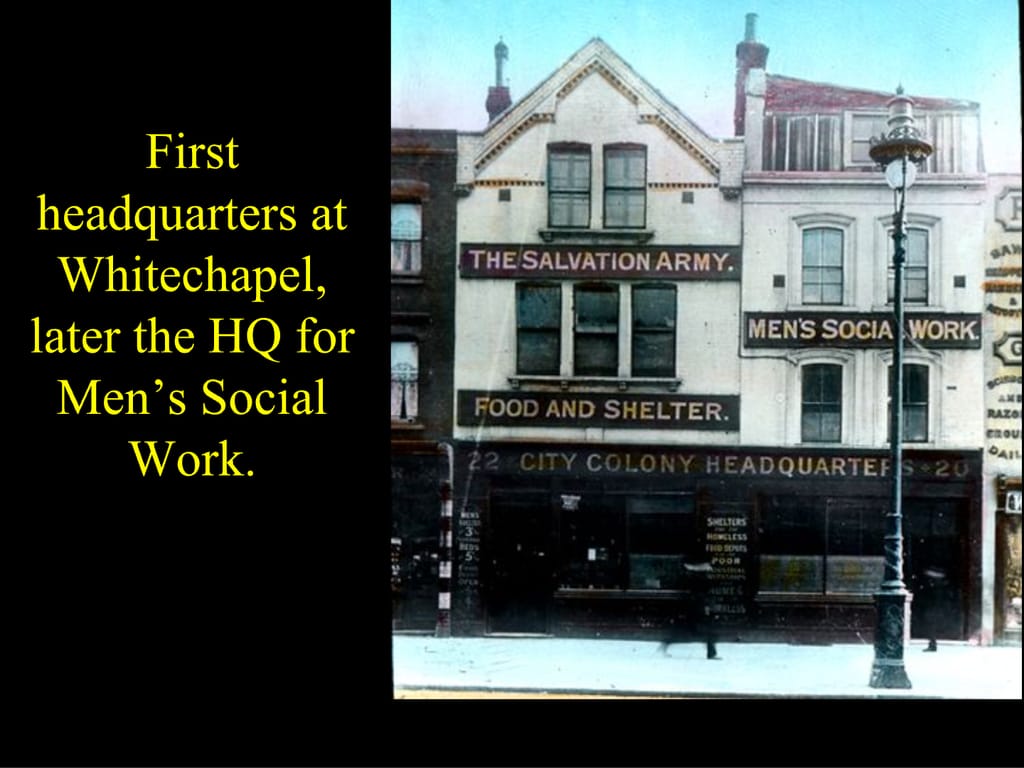
This was the first headquarters of the army at Whitechapel, and afterwards became the Headquarters of the Men’s Social Work.
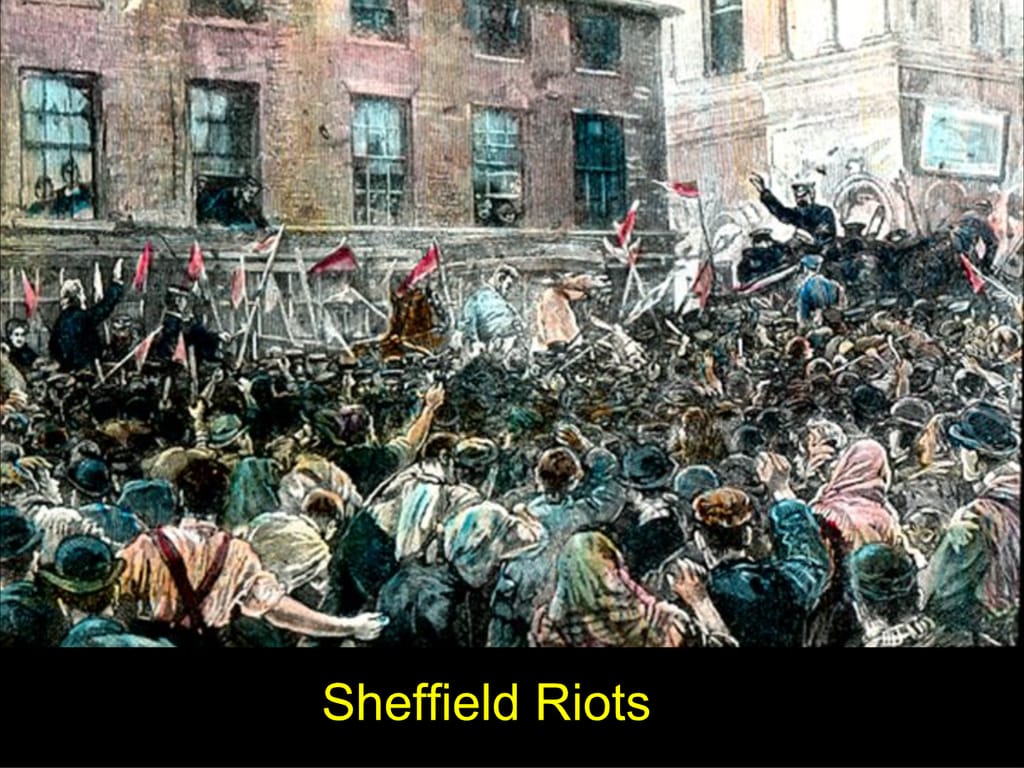
The Sheffield riots.
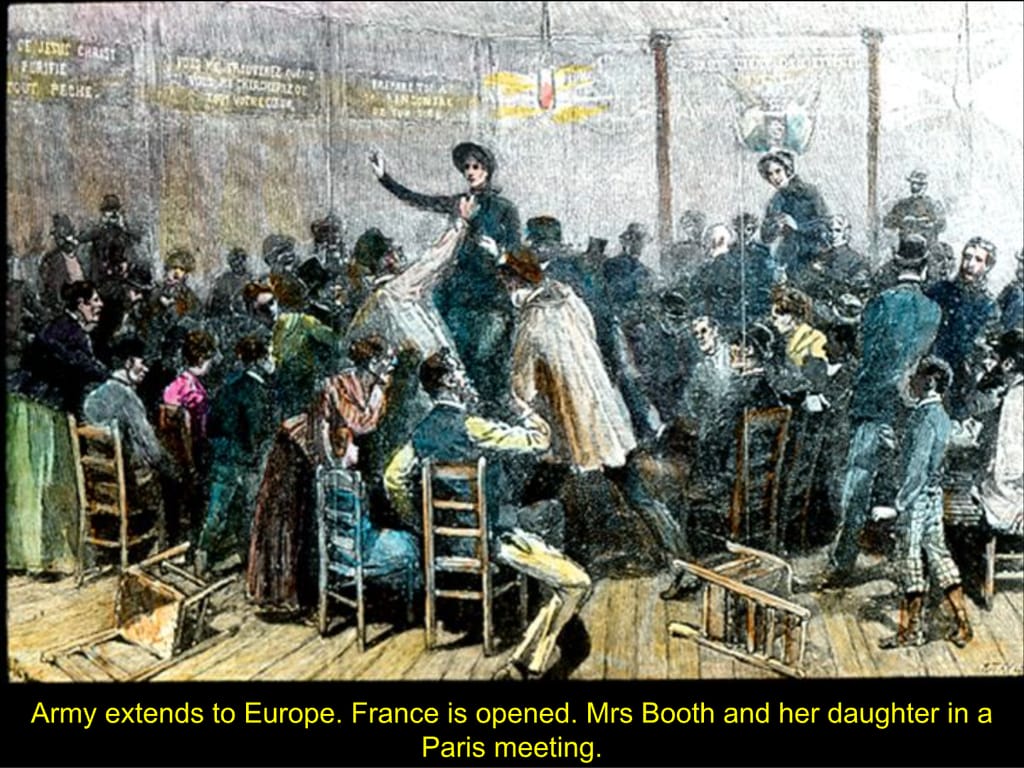
The army extends to the continent of Europe. France is opened. Mrs Booth and her daughter in a Parisian meeting.
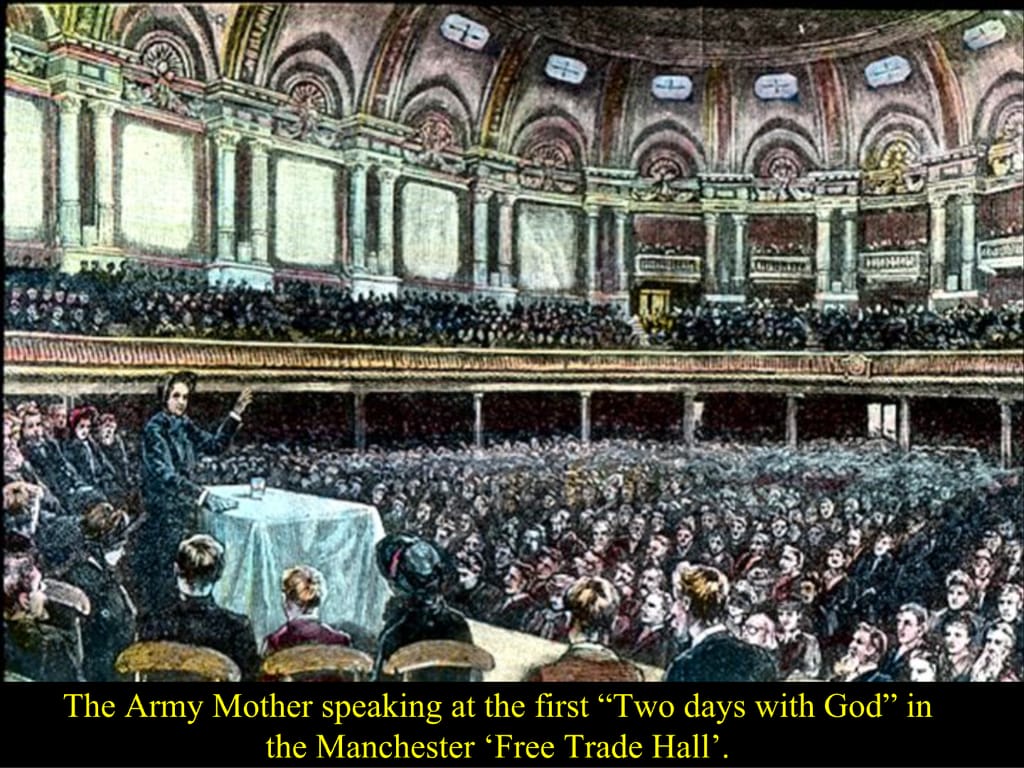
The Army Mother speaking at the first “Two days with God” in Manchester Free Trade Hall.
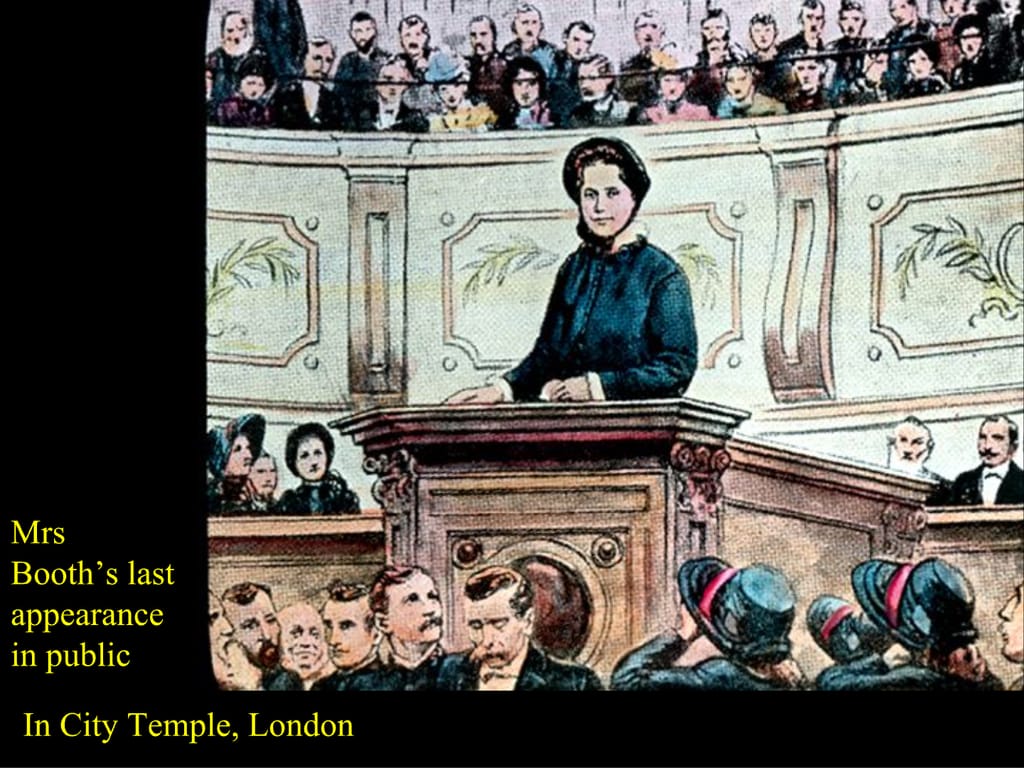
Mrs Booth’s last appearance in public, at the City Temple, London.
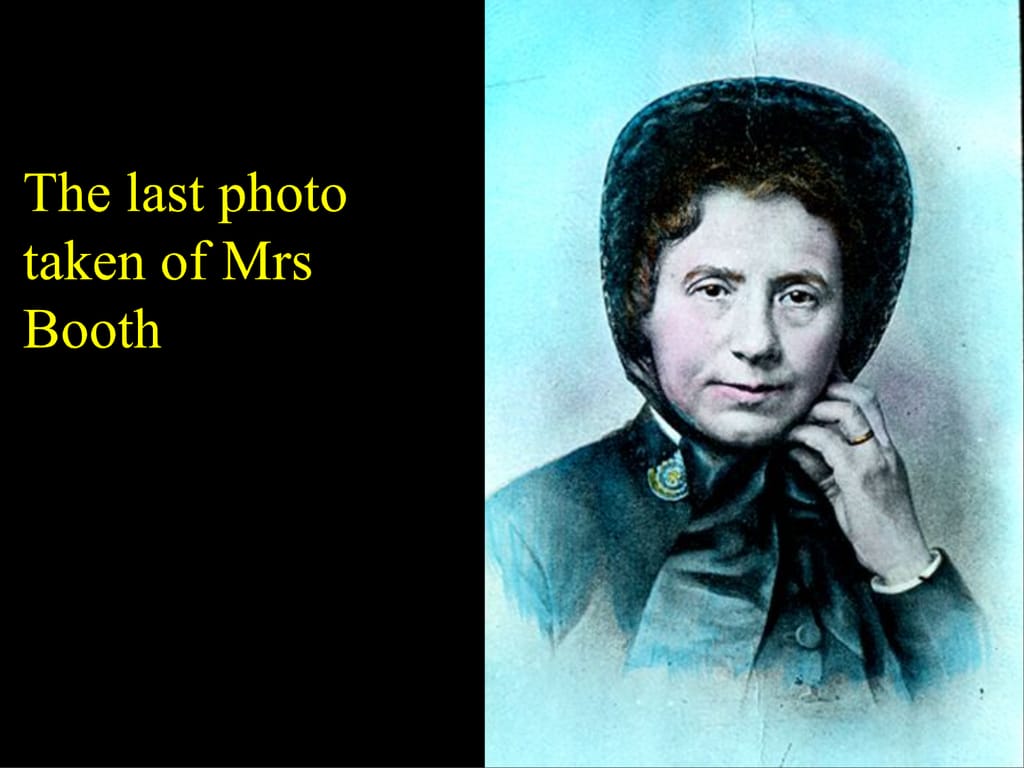
The last photo taken of her, at about this time.
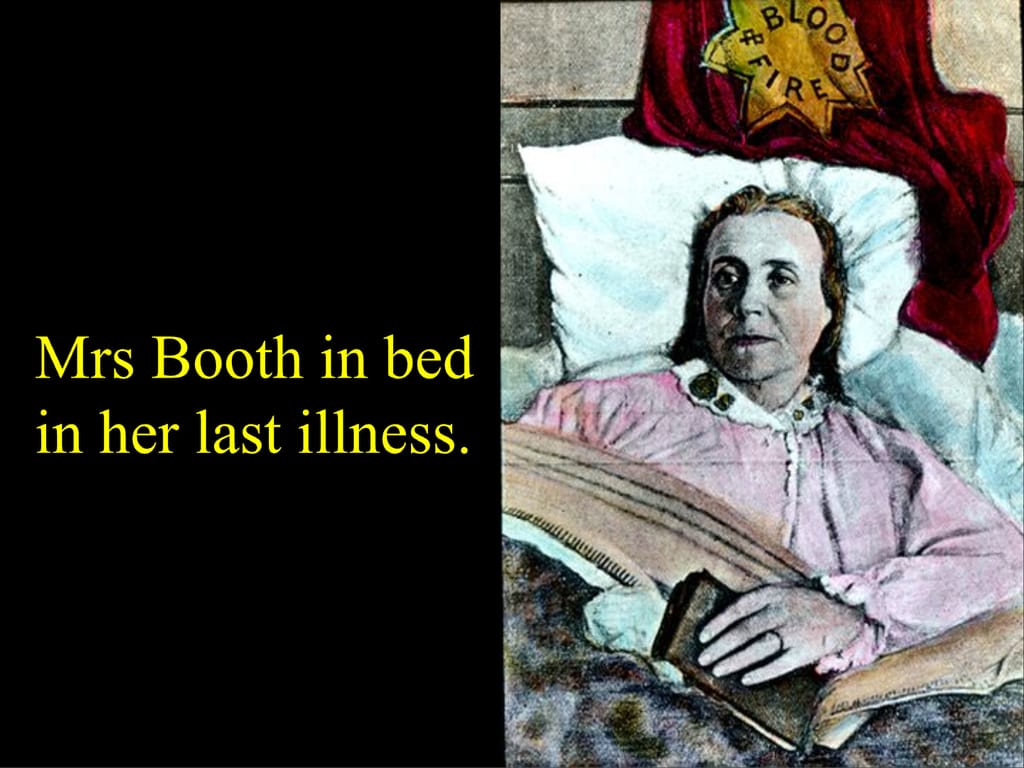
Mrs Booth’s end approaching – the scene of her last illness; the house in Clacton. There script shows there are three similar photographs, but two are missing. Original slides 34, 35 and 36.
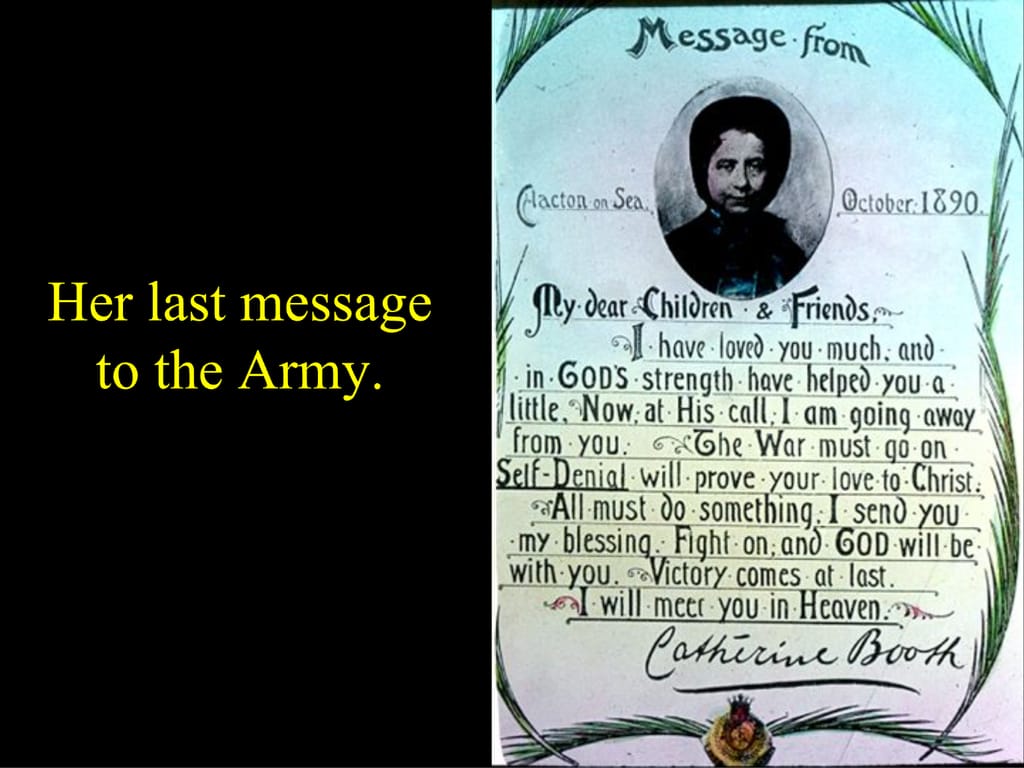
Mrs Booth’s last message to the Army.
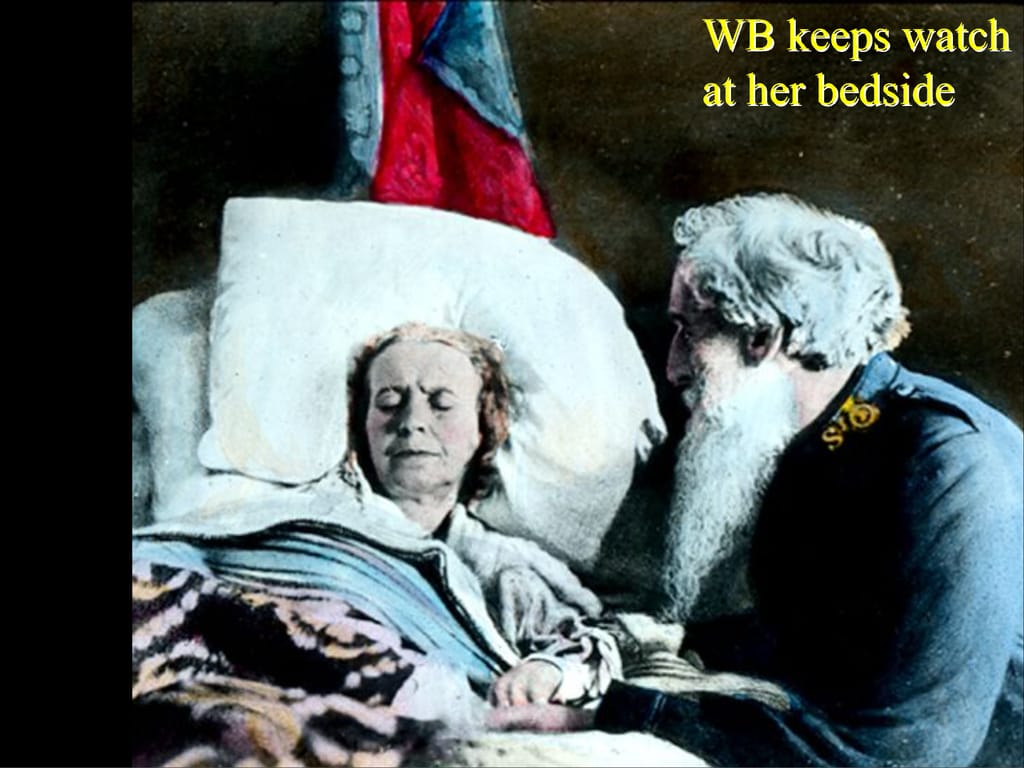
The founder keeping watch at the bedside.
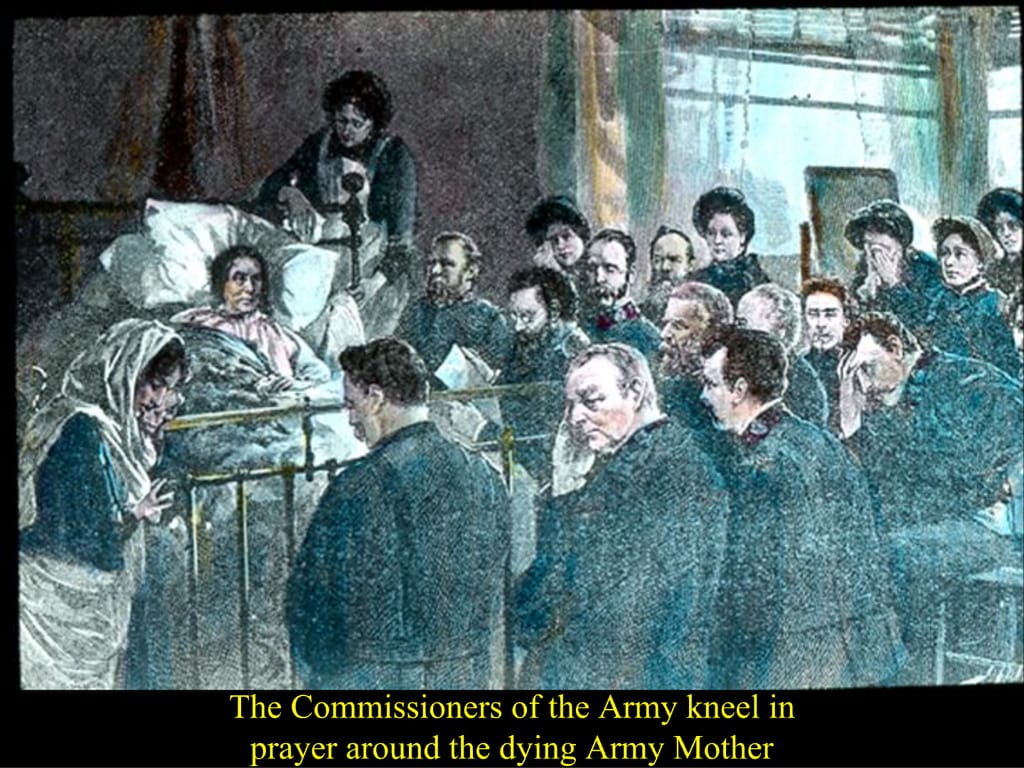
“The parting scene – the Commissioners of the Army kneel in prayer around the dying Army Mother’s bedside.”
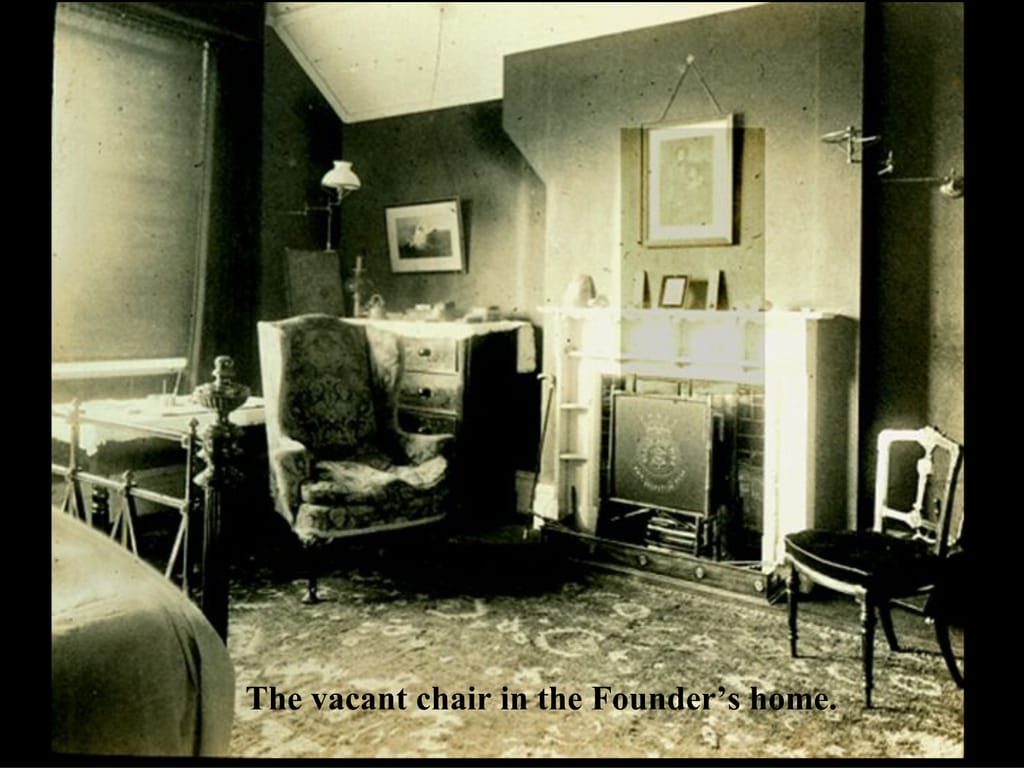
The vacant chair, in the Founder’s home. The next slide were the words of the song, “O boundless salvation.”
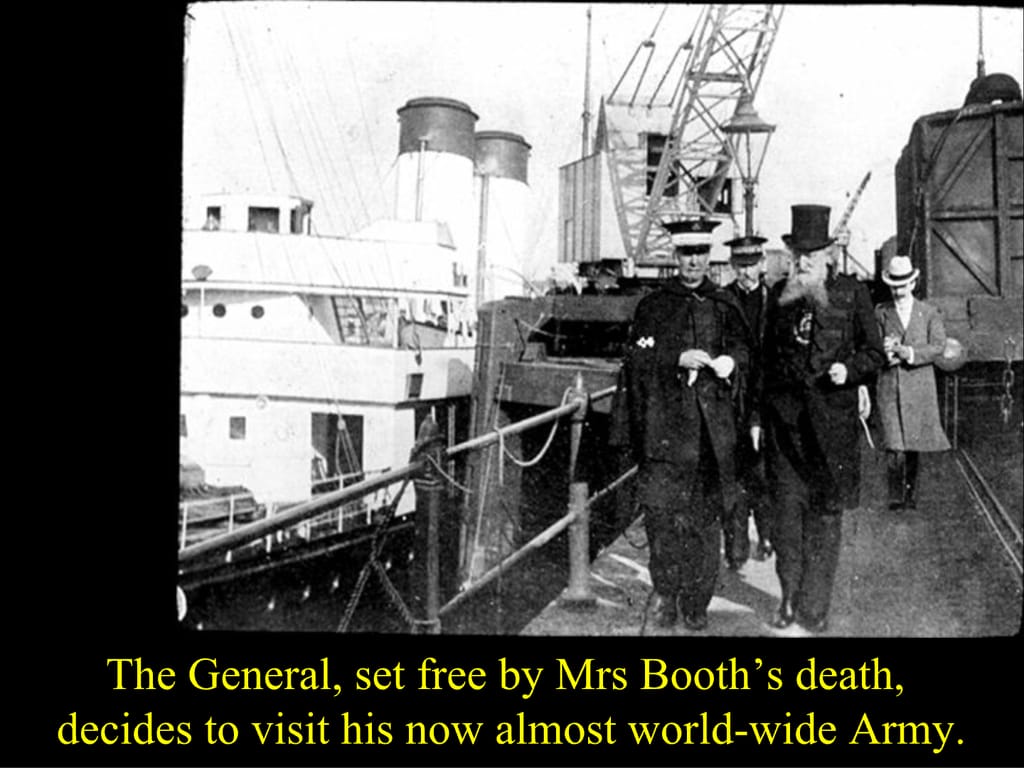
The General, set free by Mrs Booth’s death, decides to visit his now almost worldwide Army.
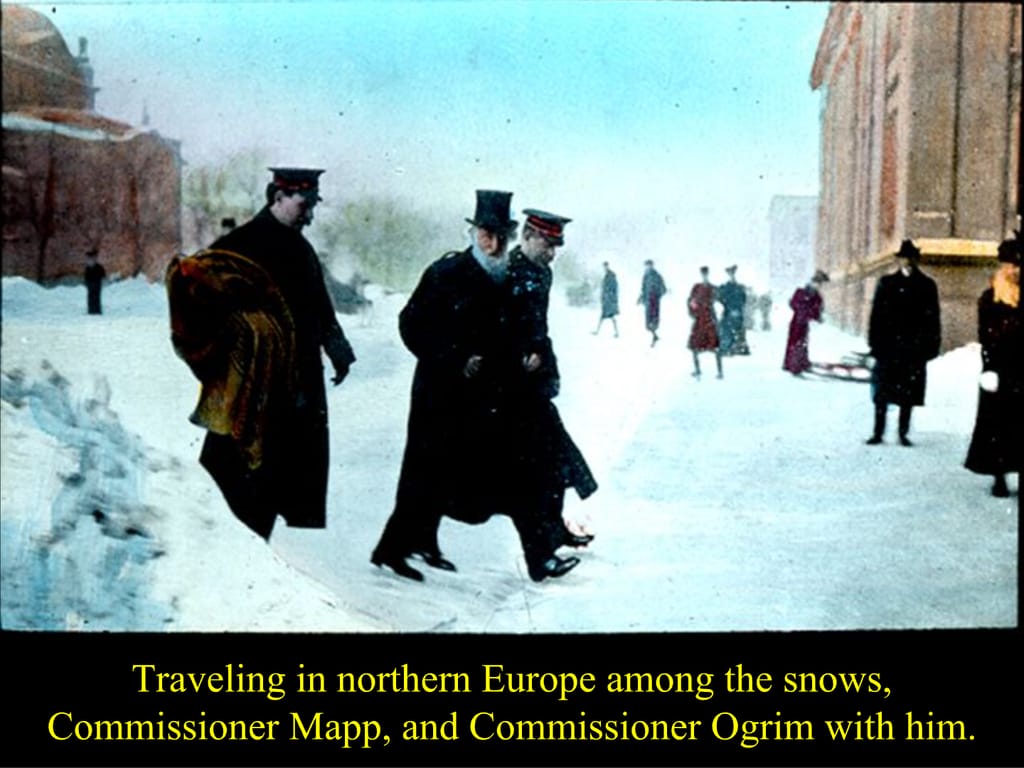
Travelling in north Europe in the snow – Commissioner Mapp and Commissioner Ogrim with him.
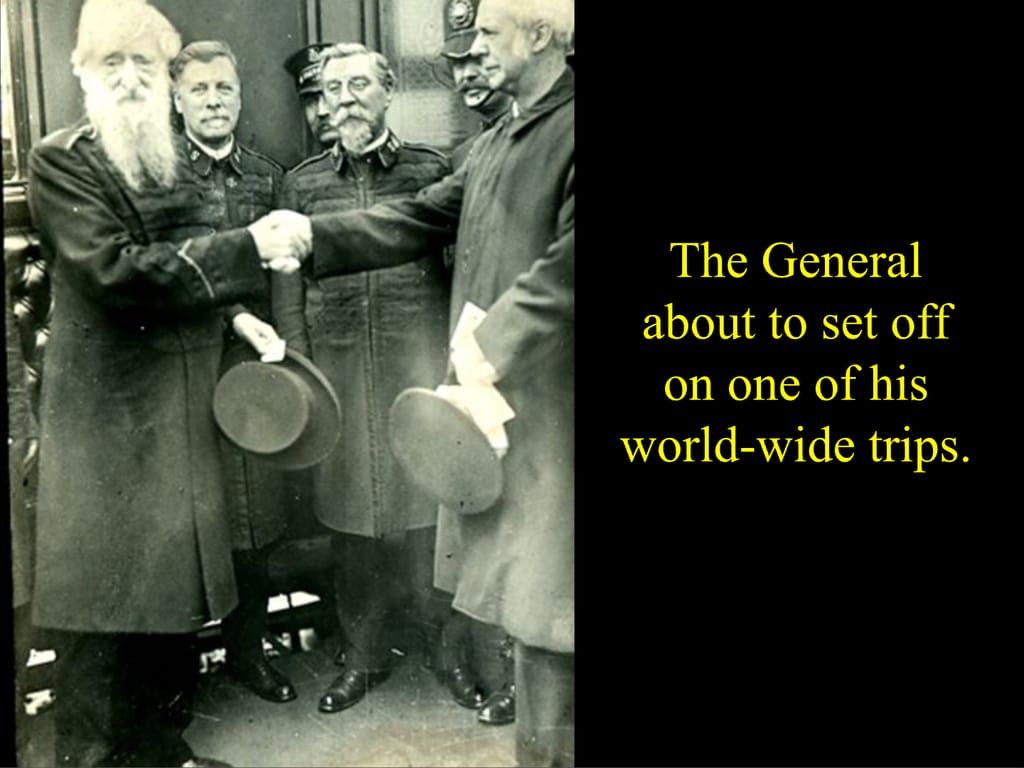
The General about to set off on one of his world trips.
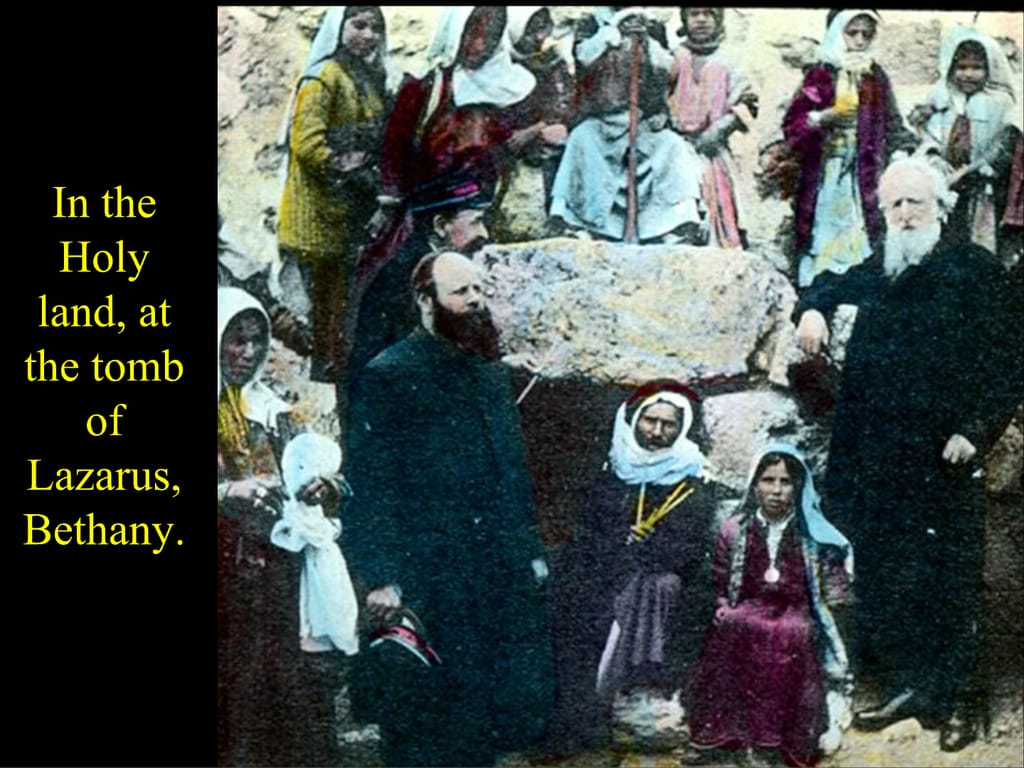
In the Holy Land at the tomb of Lazarus in Bethany. There are seven other slides taken in the Holy Land, but these do not form part of the original script. From the current numbering, slides 35 to 42 are all Holy Land pictures.
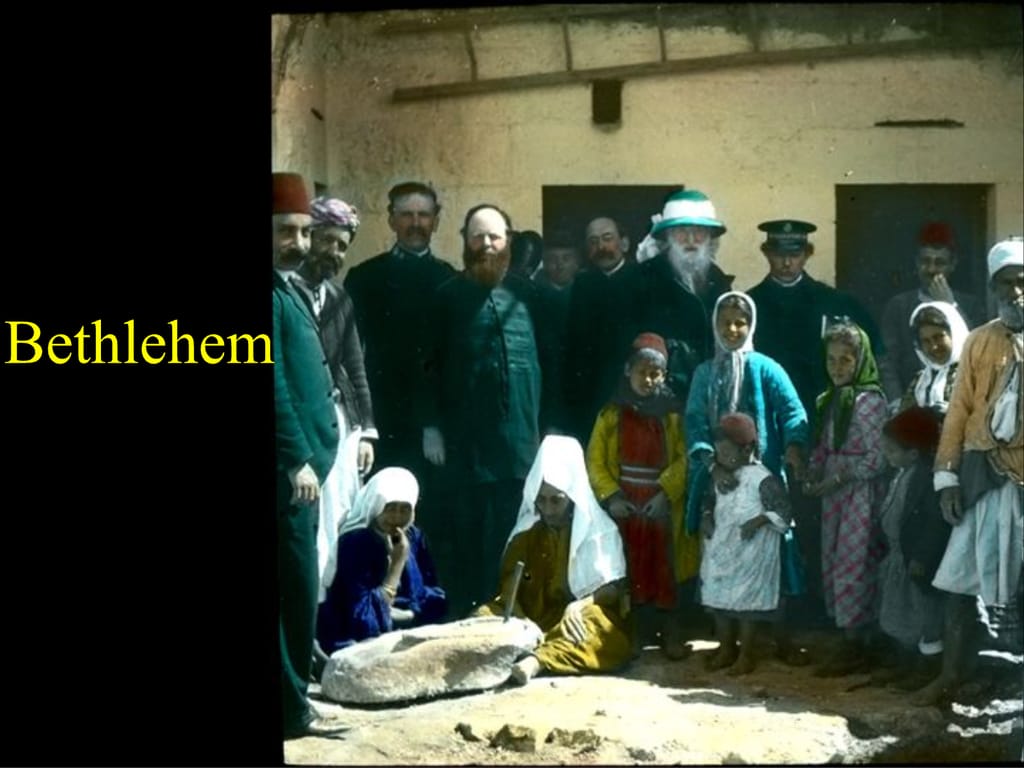
Bethlehem
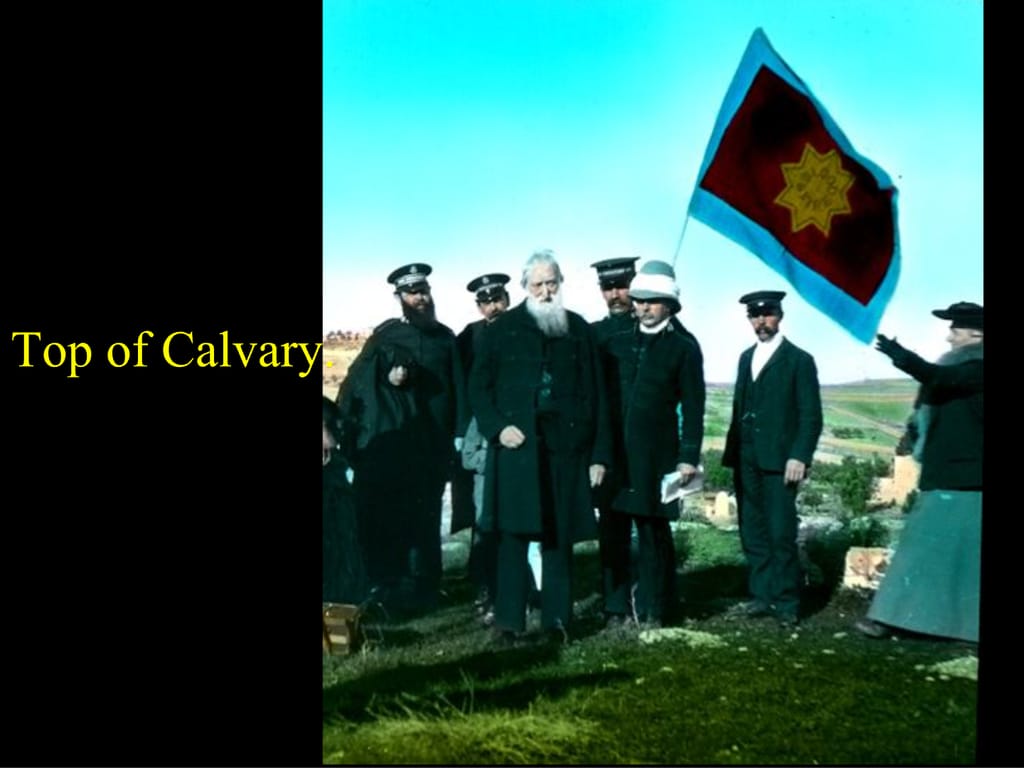
Top of Calvary.
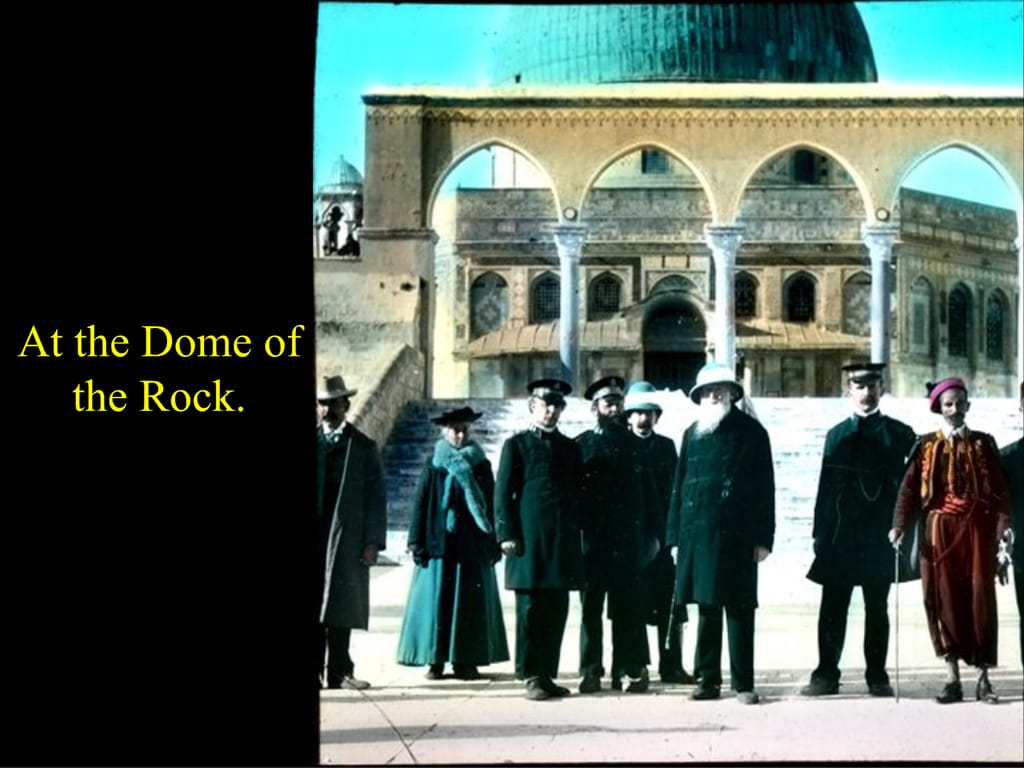
Temple Mount
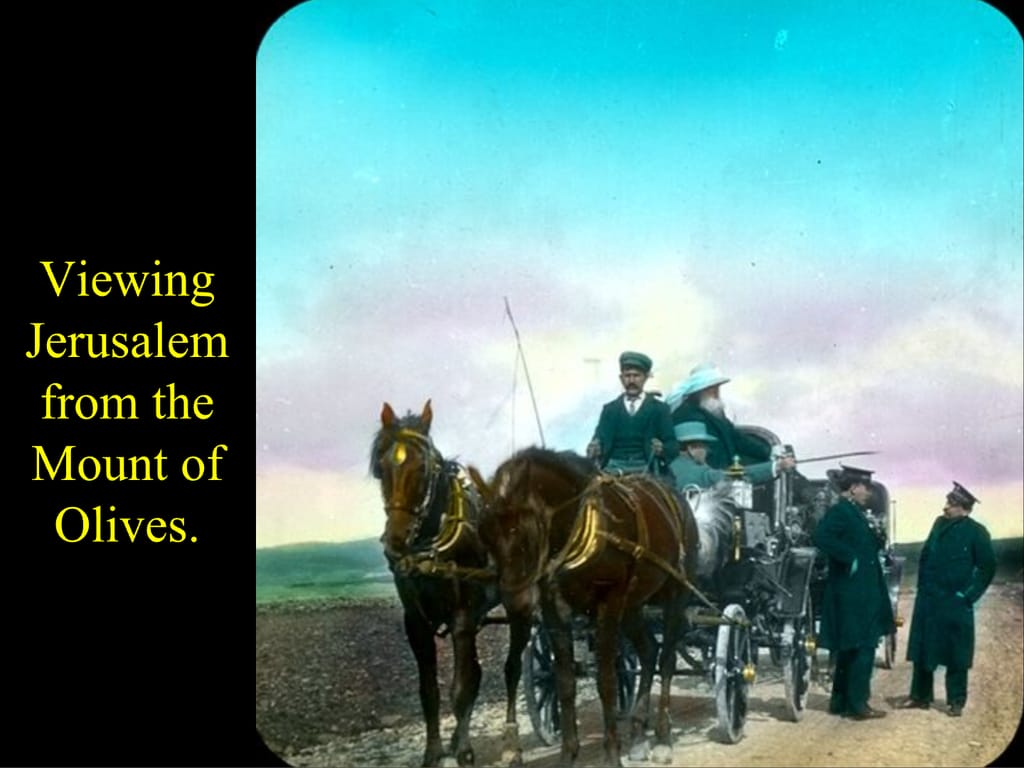
Viewing Jerusalem from Olivet.
Location not identified.
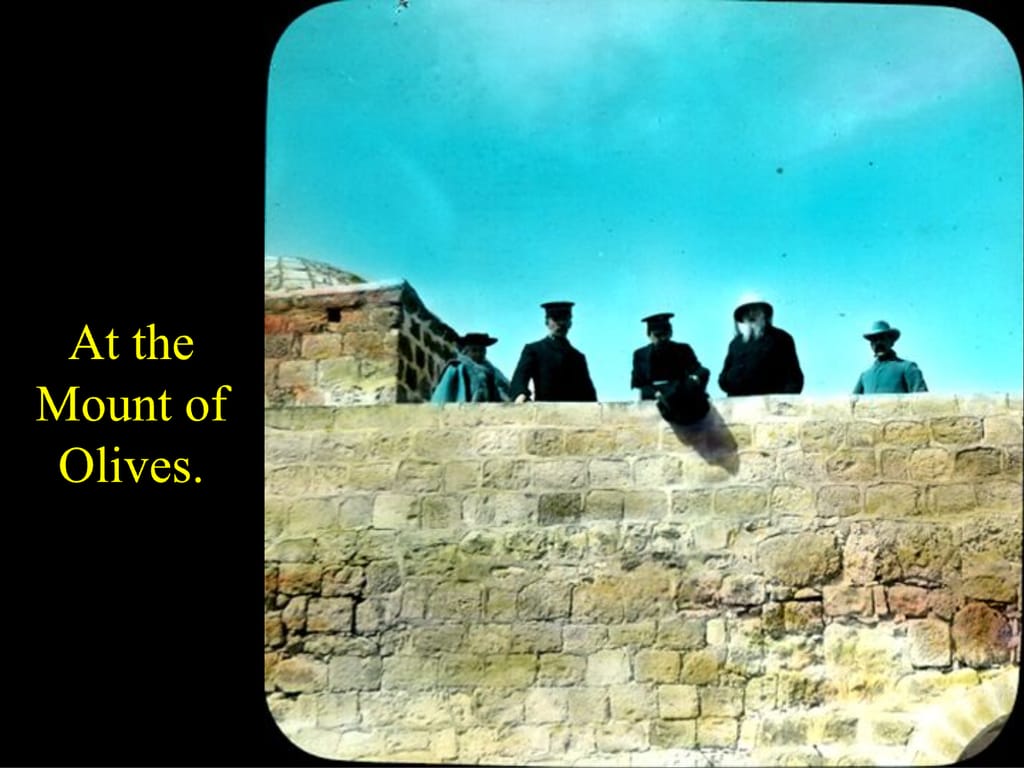
On Mount Olivet.
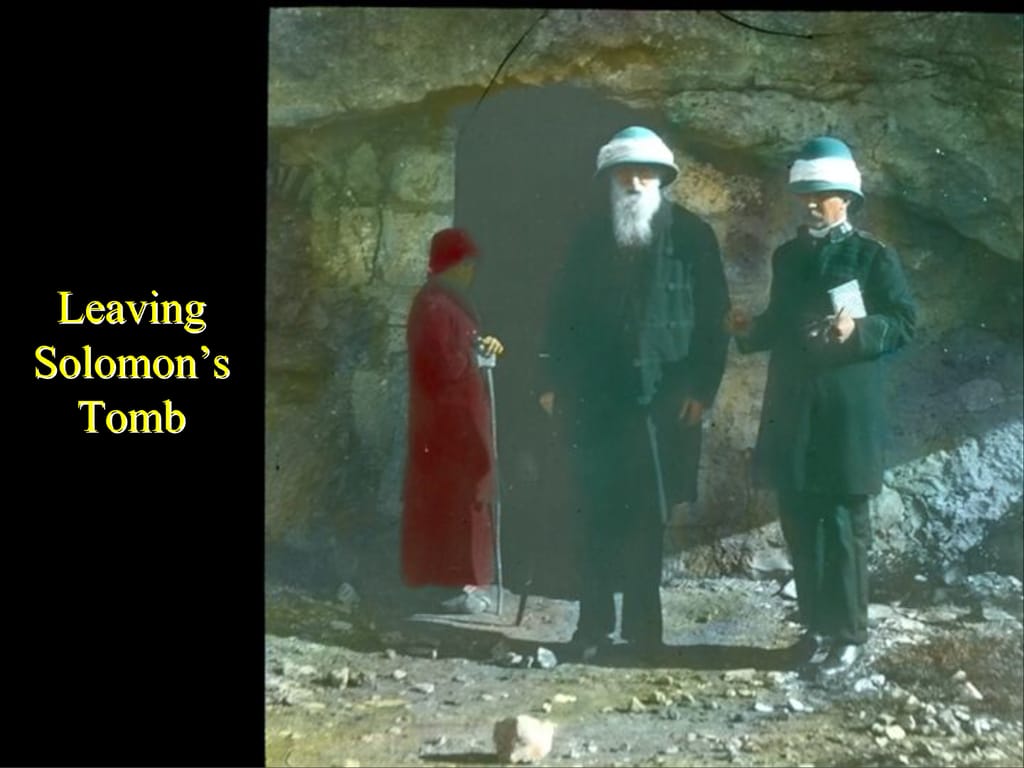
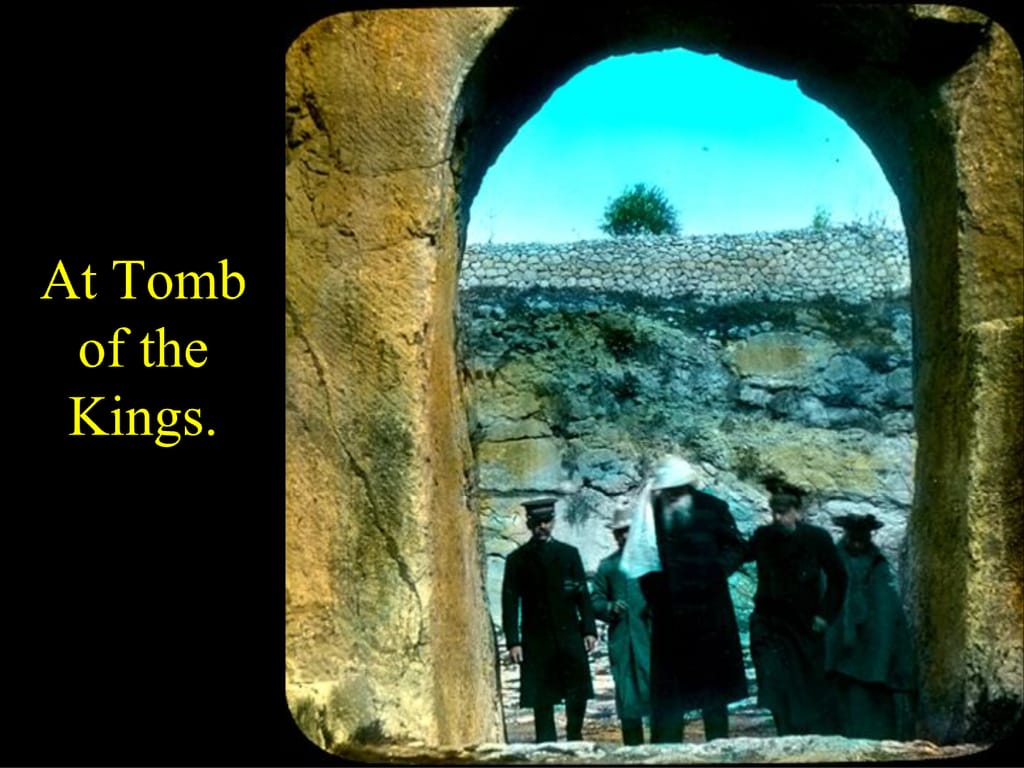
This is one of seven slides, not covered by the script, but clearly a photograph taken in the Holy Land.
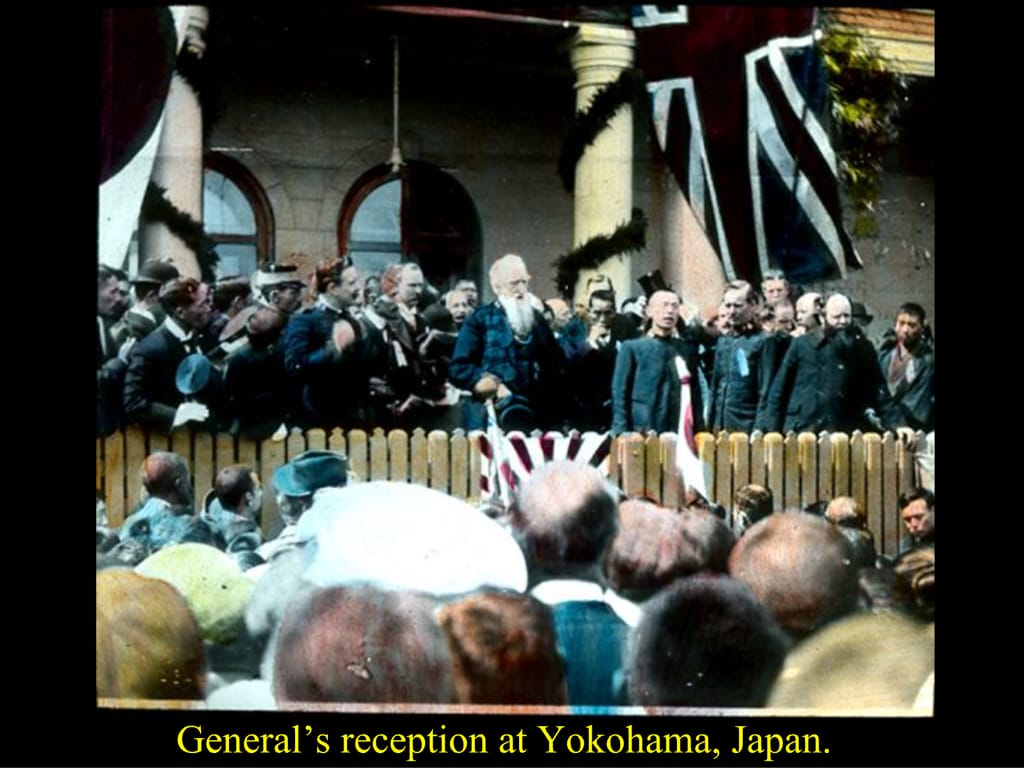
The Founder’s reception at Yokohama, Japan.
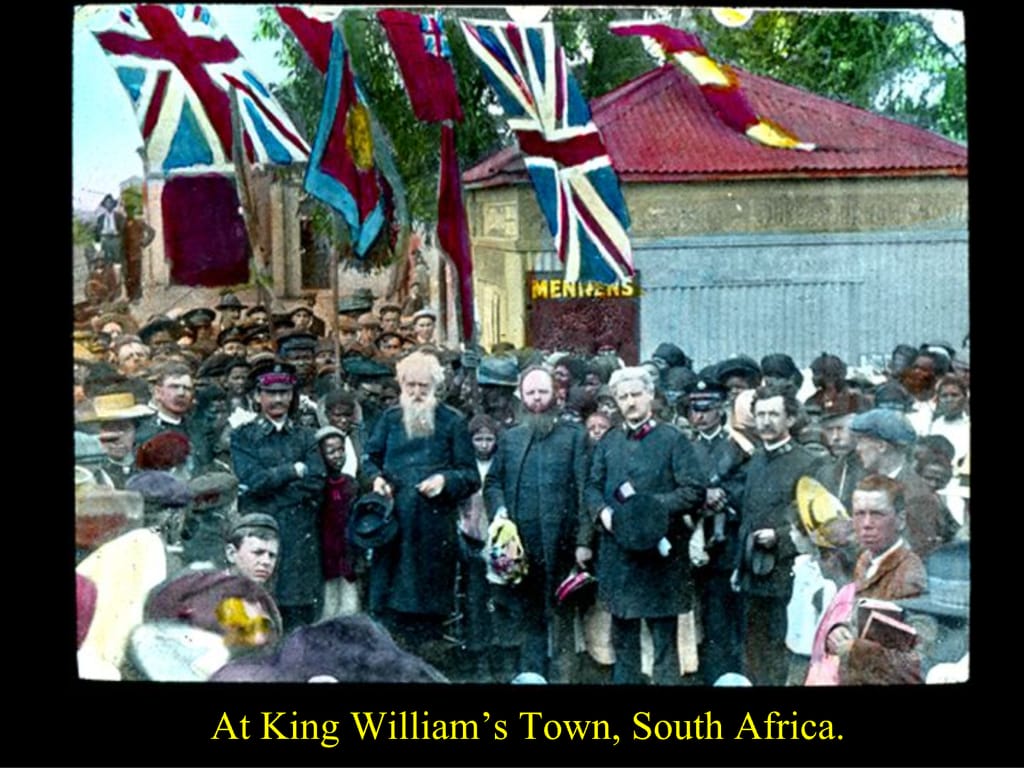
At King William’s Town, South Africa.
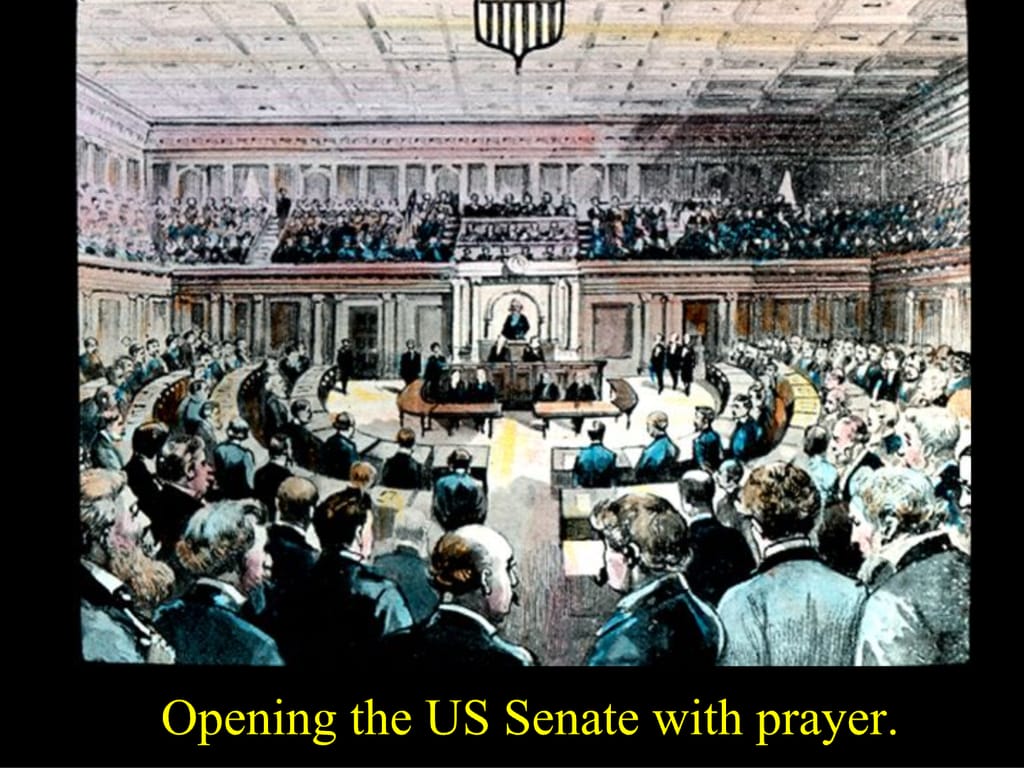
The General opening the American senate with prayer.
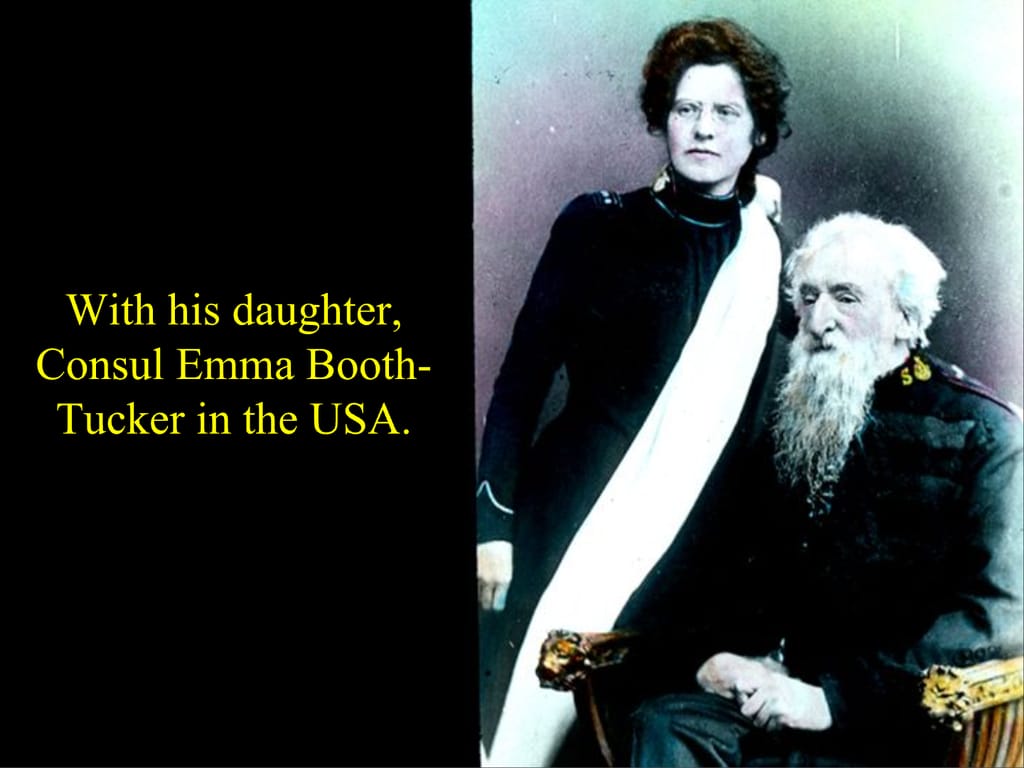
The General and his daughter, Consul Emma Booth-Tucker in the USA.
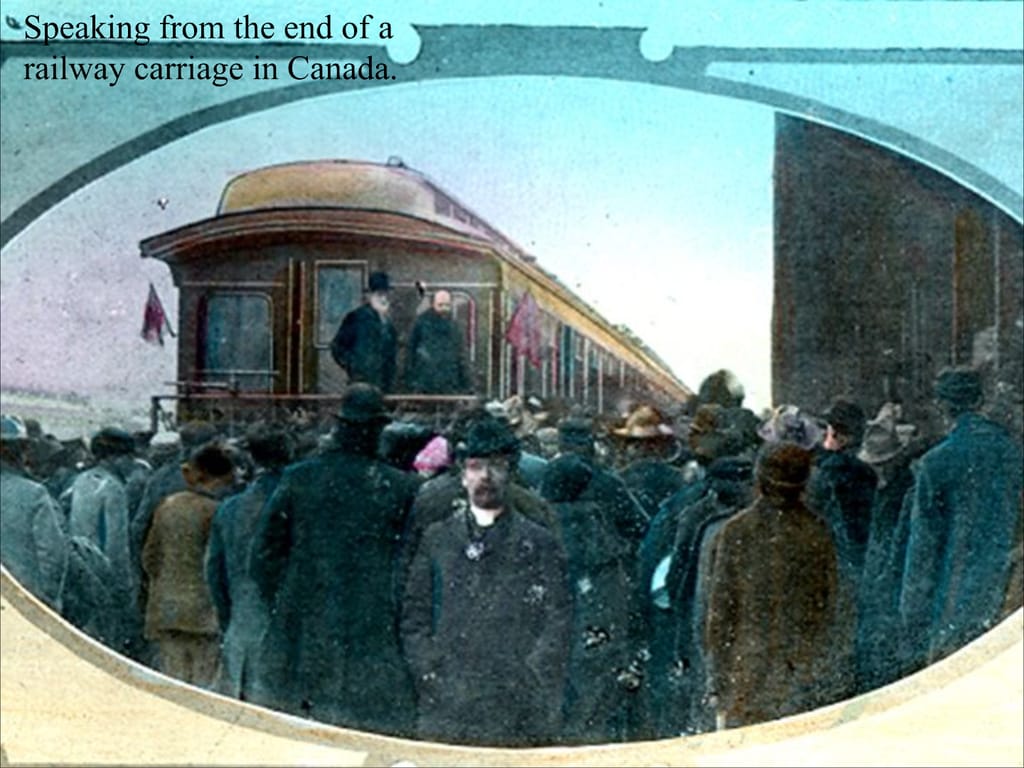
Speaking from the end of a Canadian railway carriage.
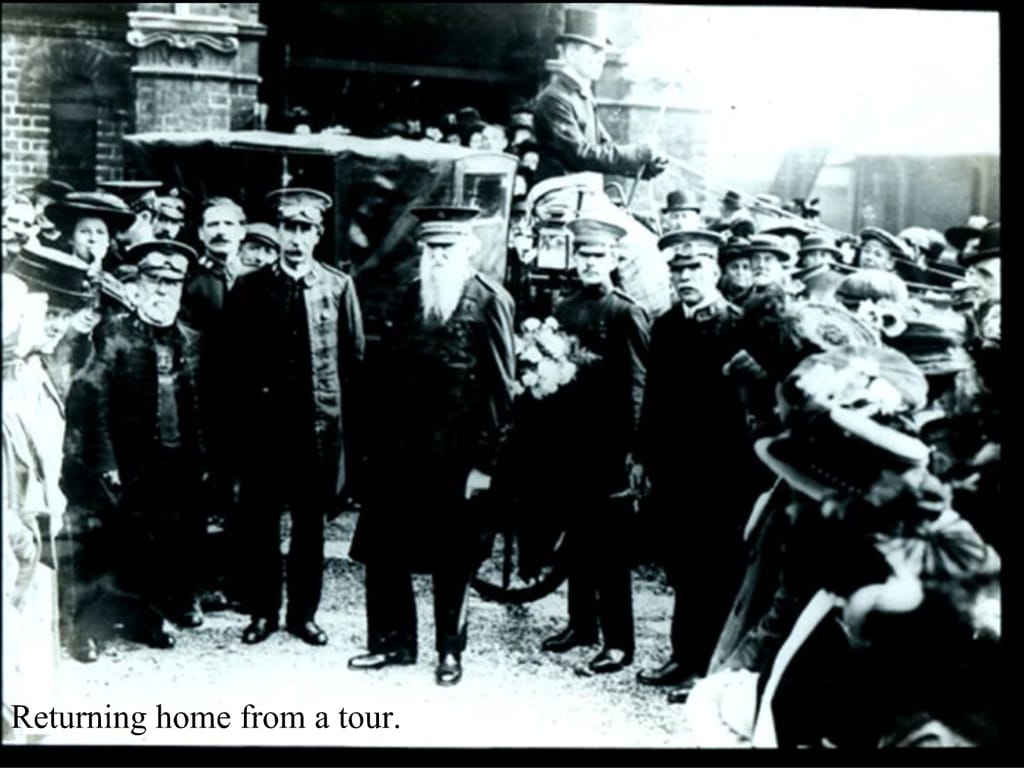
His return from a 30,000 mile trip.
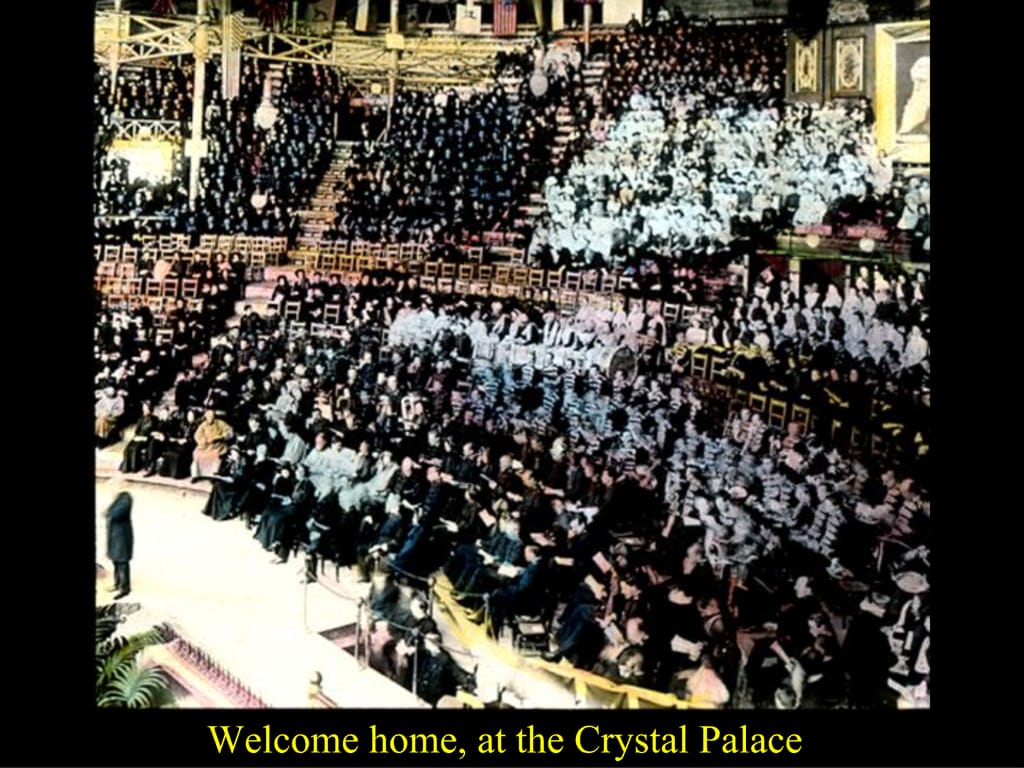
Welcomed at the Crystal Palace. This is a photo of the platform only.
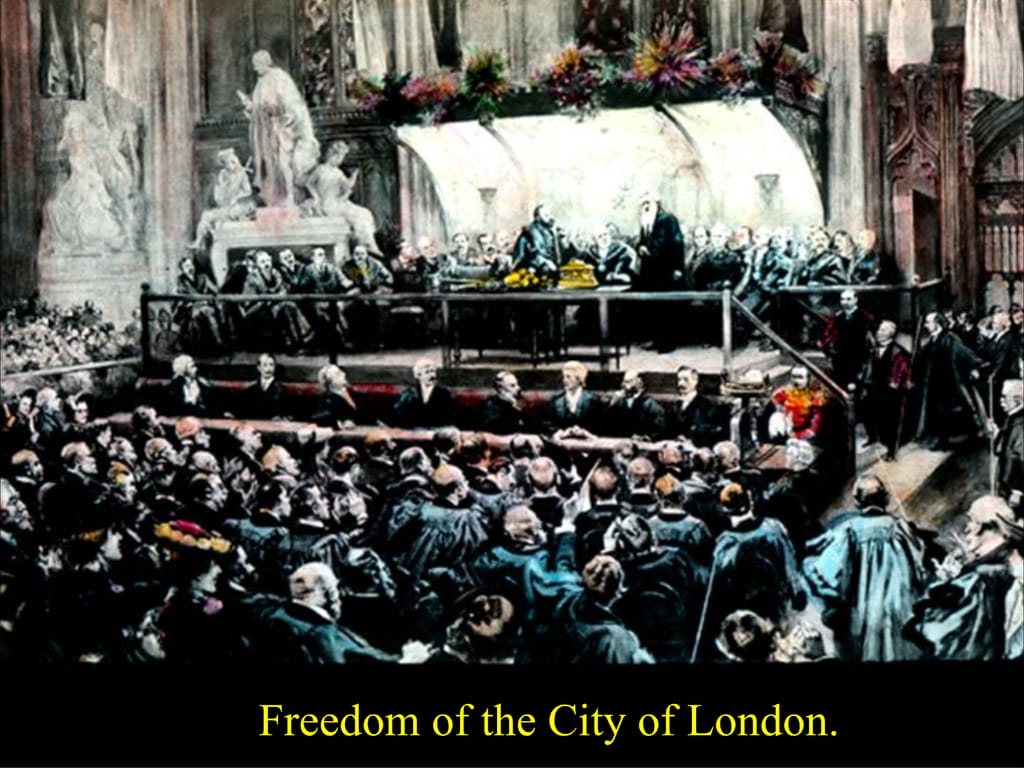
Presentation of Freedom of the City of London, an honour reserved for Britain’s most distinguished sons and guests.
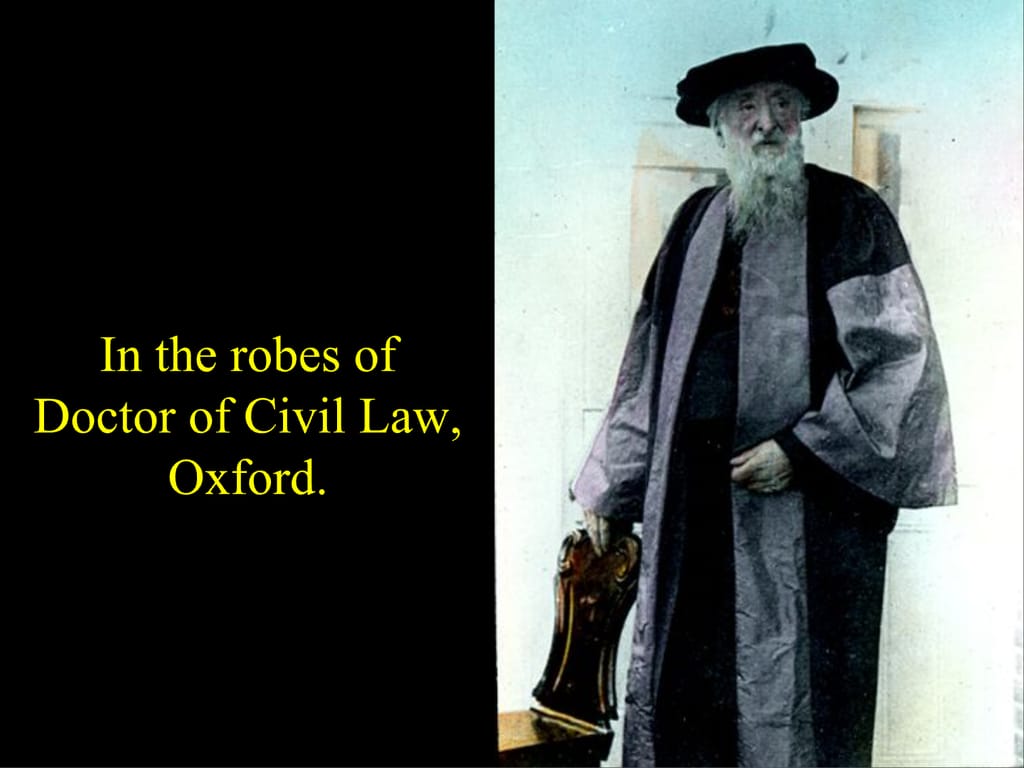
The General in his robes as a Doctor of Civil Law, conferred by the Oxford University.
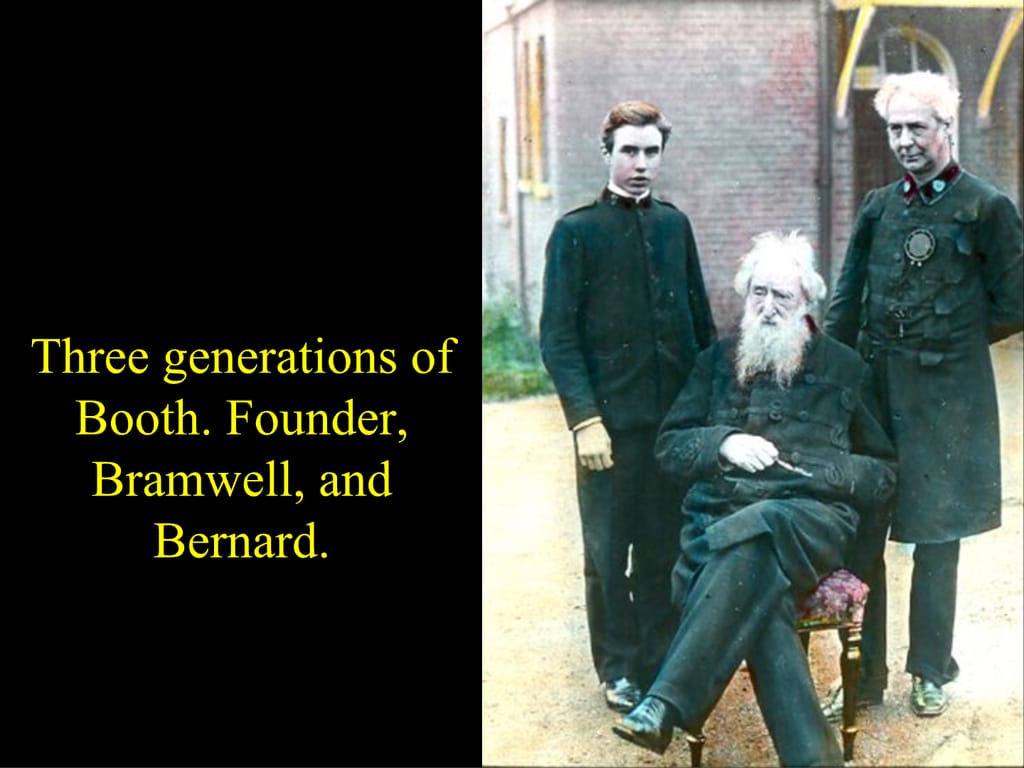
Three generations of Booth – the Founder, Bramwell and Bernard. The latter retired as a Colonel.
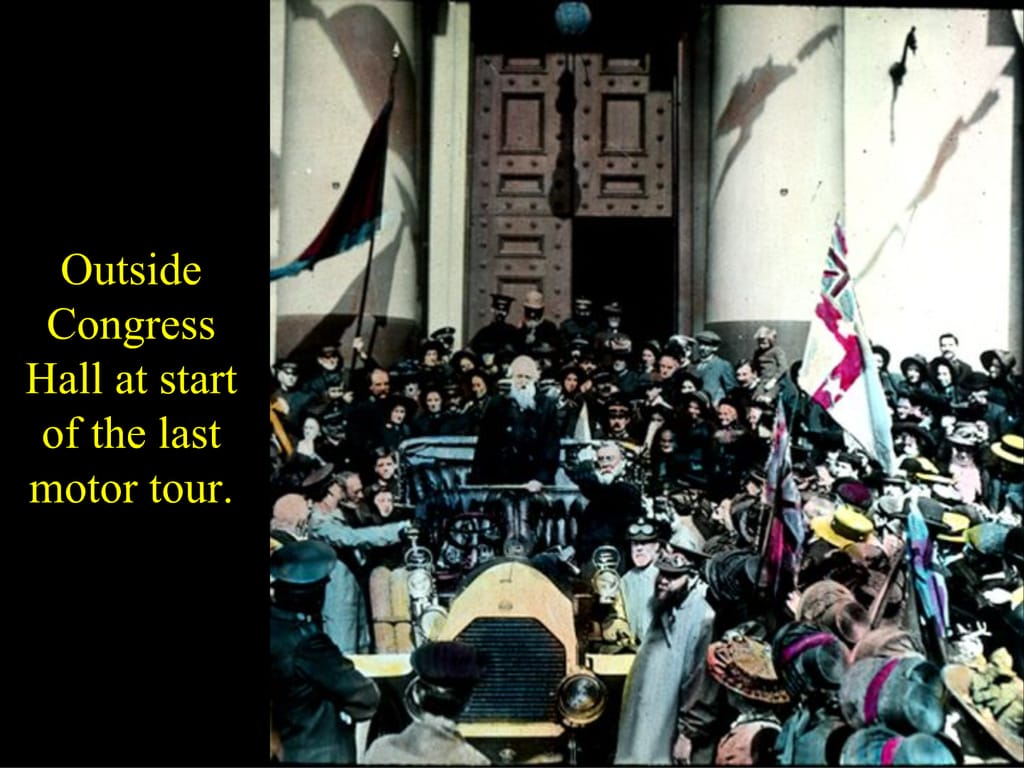
Motor tours. The General starts from Congress Hall, London, on the last of these. If this is the correct match of script to slide, then what is the “foreign” flag on the right? The next slide is missing, “Among the Welsh hills – motor tour.”
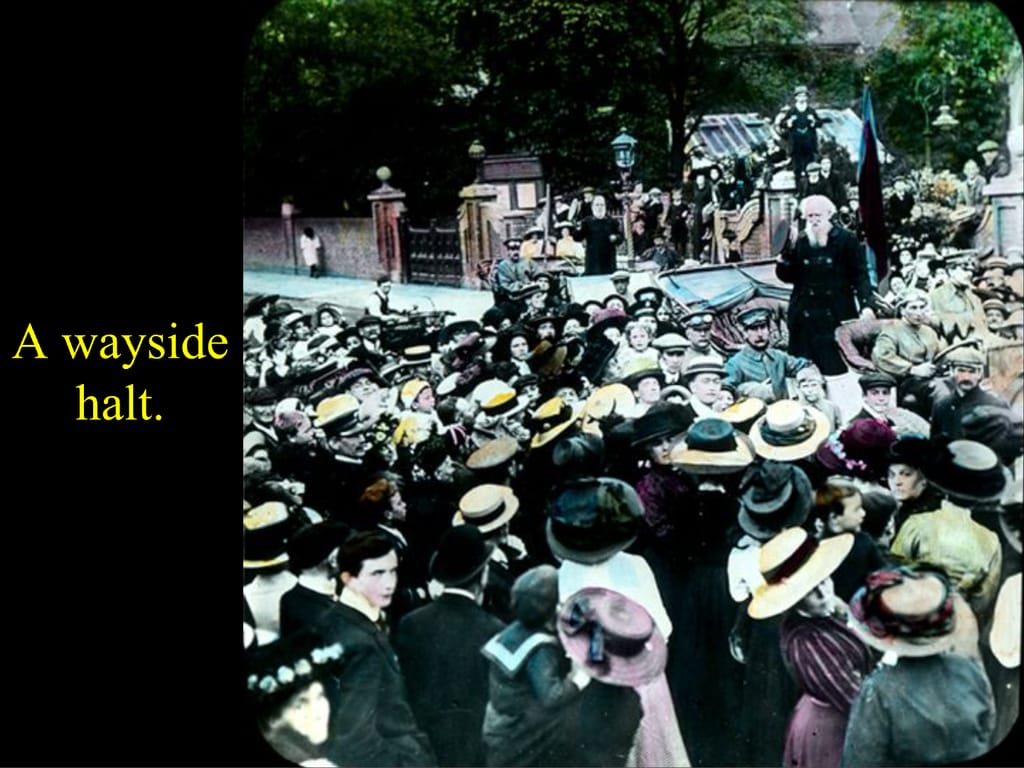
A wayside halt and address.
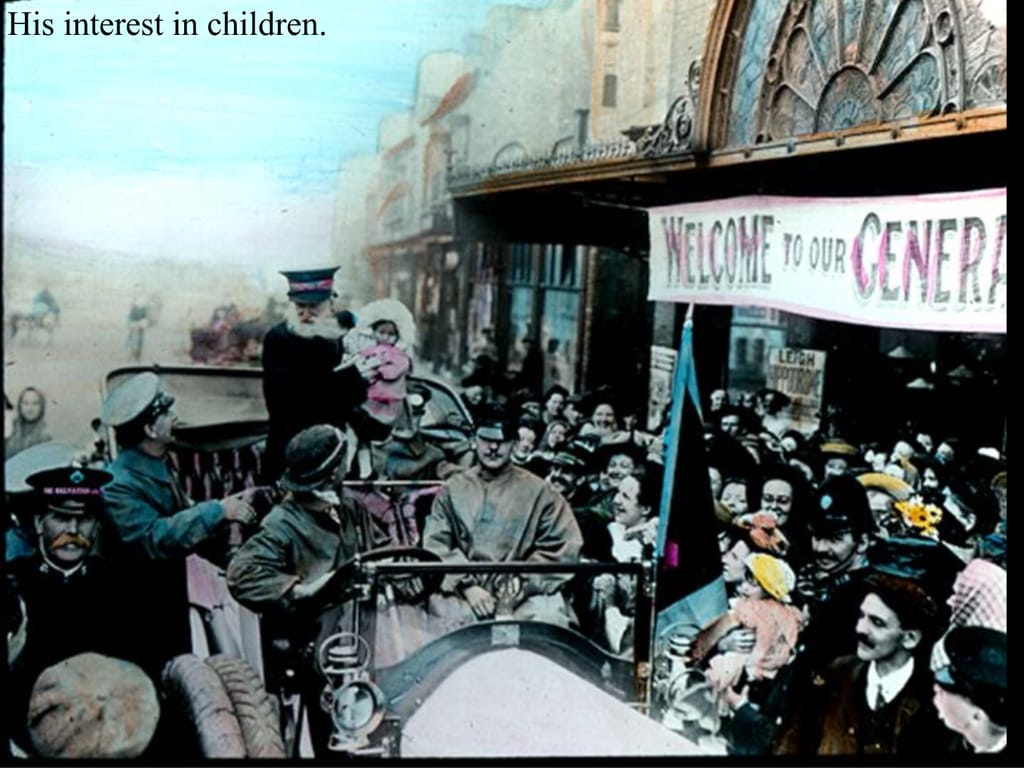
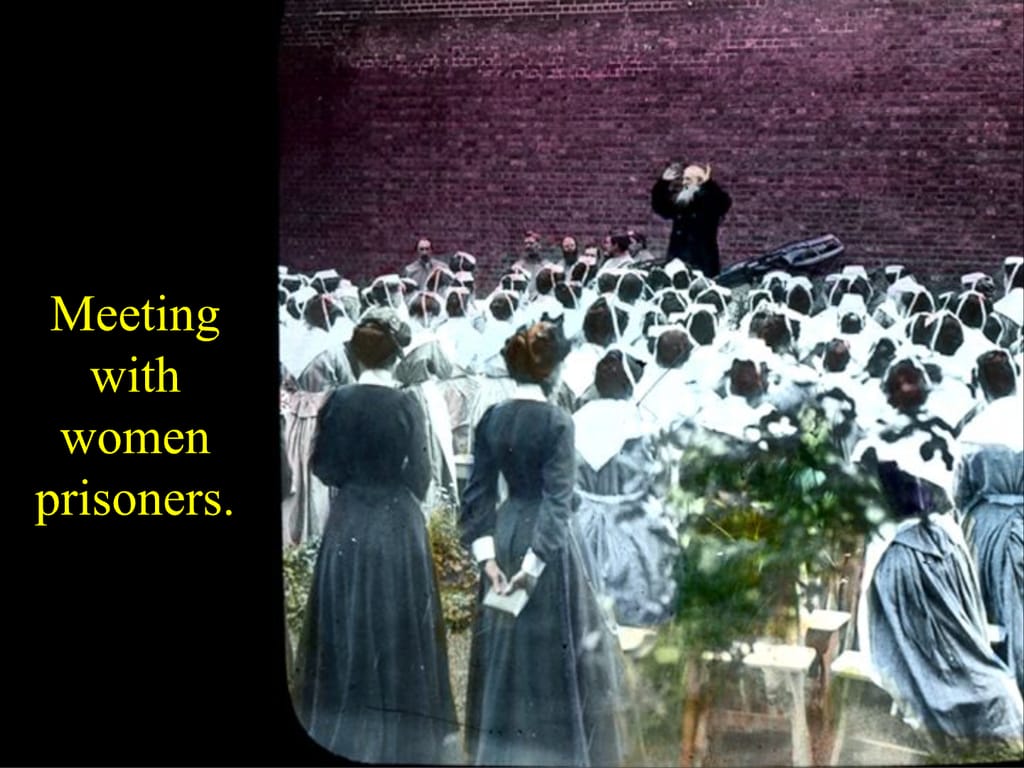
“His interest in children” reads the script. Yet he would not allow small children into his meetings, and officers were designated to ensure this rule was observed! The next slide is missing, and was of the General’s visit to the Bishop of Hereford, from the Bishop’s Palace he went directly to the meeting with women prisoners – next slide.
On this sixth tour in July 1909, it is thought that something entered his eye whilst travelling in the open car, for he was attacked by intense pain.The trip was cut short, and he returned to London. He underwent an operation the next day, but this was unsuccessful. He was 80 yrs of age. He went on another trip in 1911 to finish off this trip from where he had left it two years before.
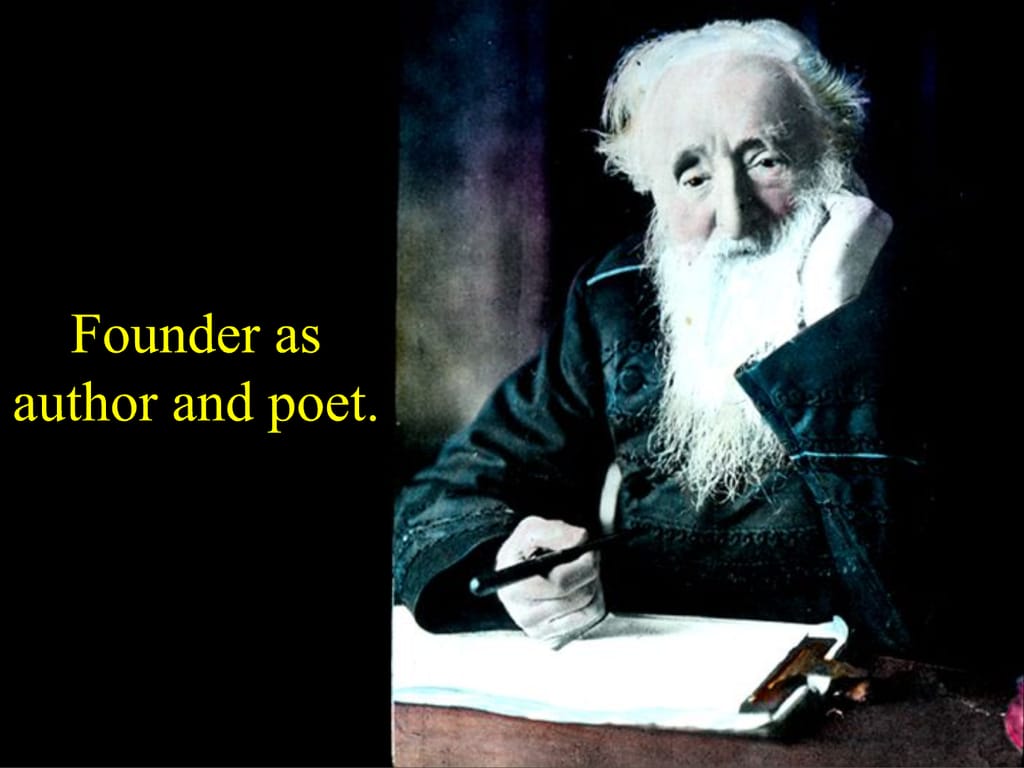
The Founder as author and poet. He is seen here writing one of his stirring charges to the Army. The next missing slide was one of these – ‘O Jesus saviour, Christ divine.’
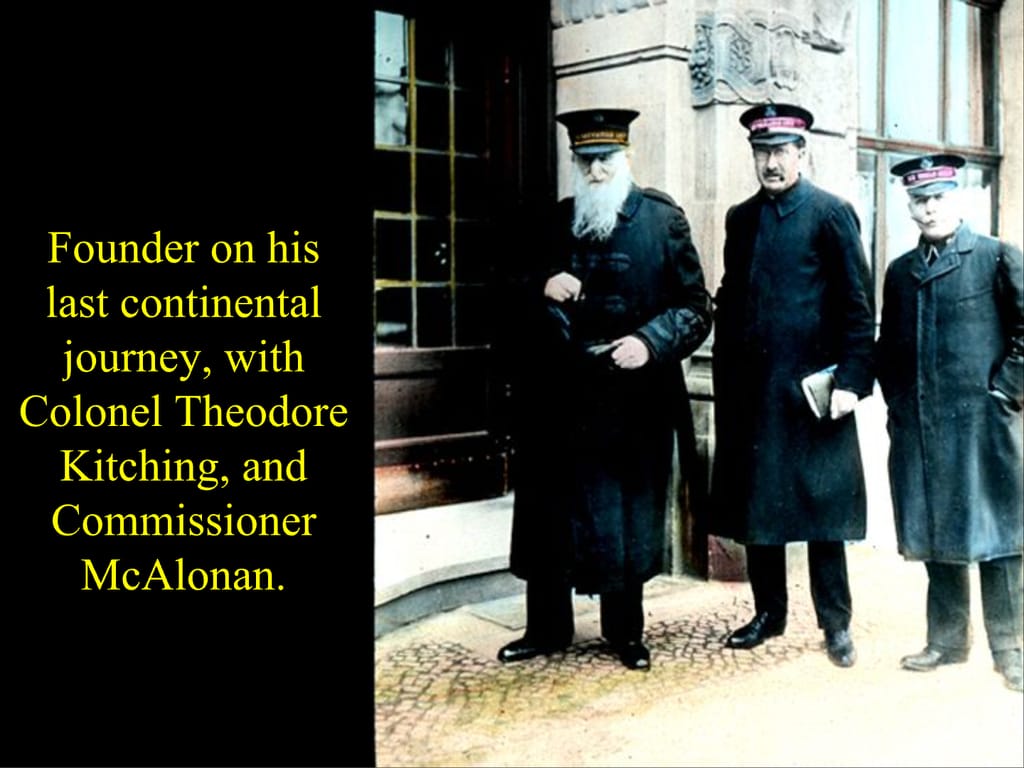
The Founder on his last continental journey, in company of Colonel Theodore Kitchen (father of Wilfred, who became the 7th General) and Commission McAlonan.
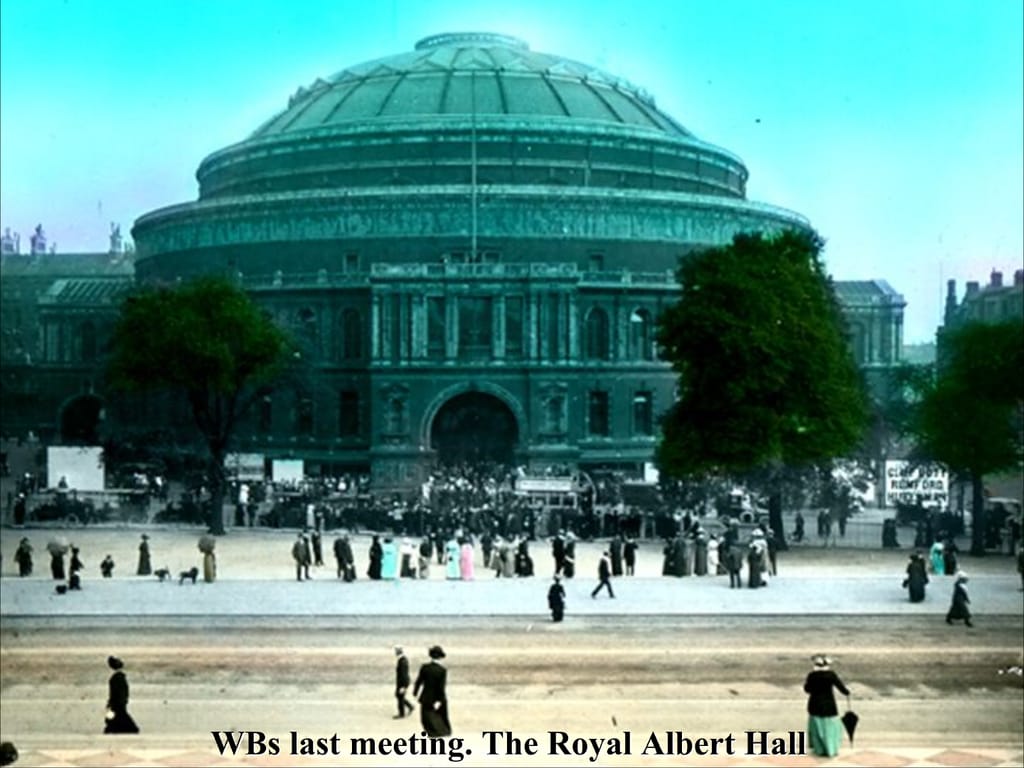
Exterior of the Royal Albert Hall, the occasion of the General’s last public meeting.
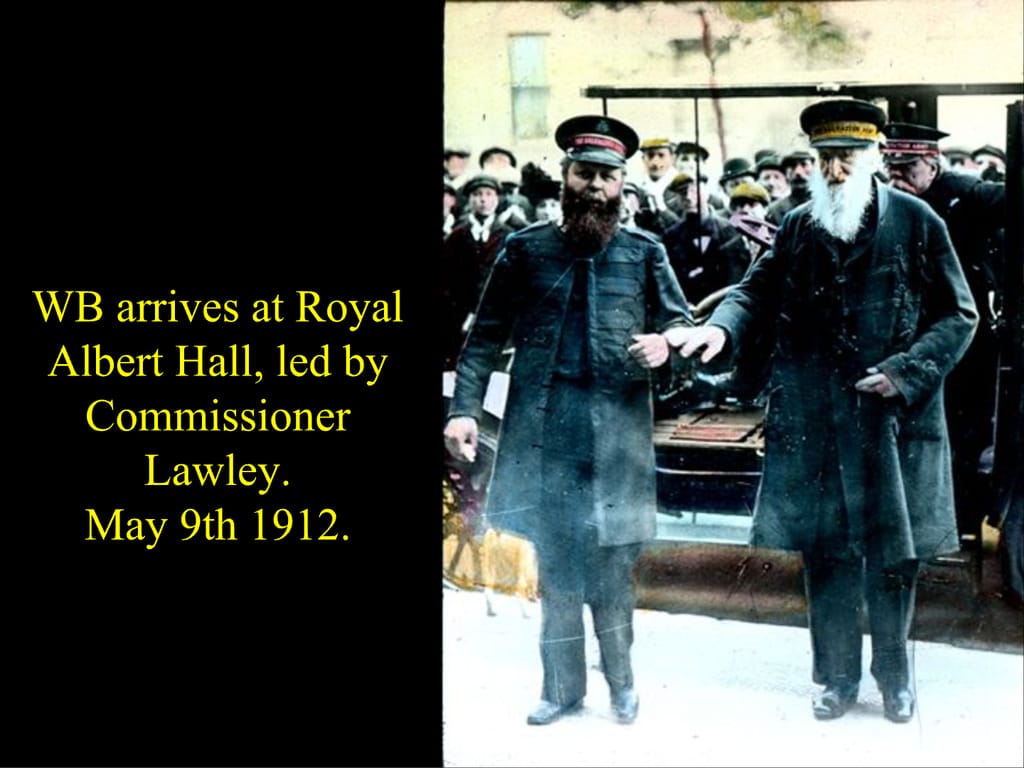
Arriving May 9th 1912, at the RAH with Commissioner Lawley leading him by the hand. The Founder is almost blind.
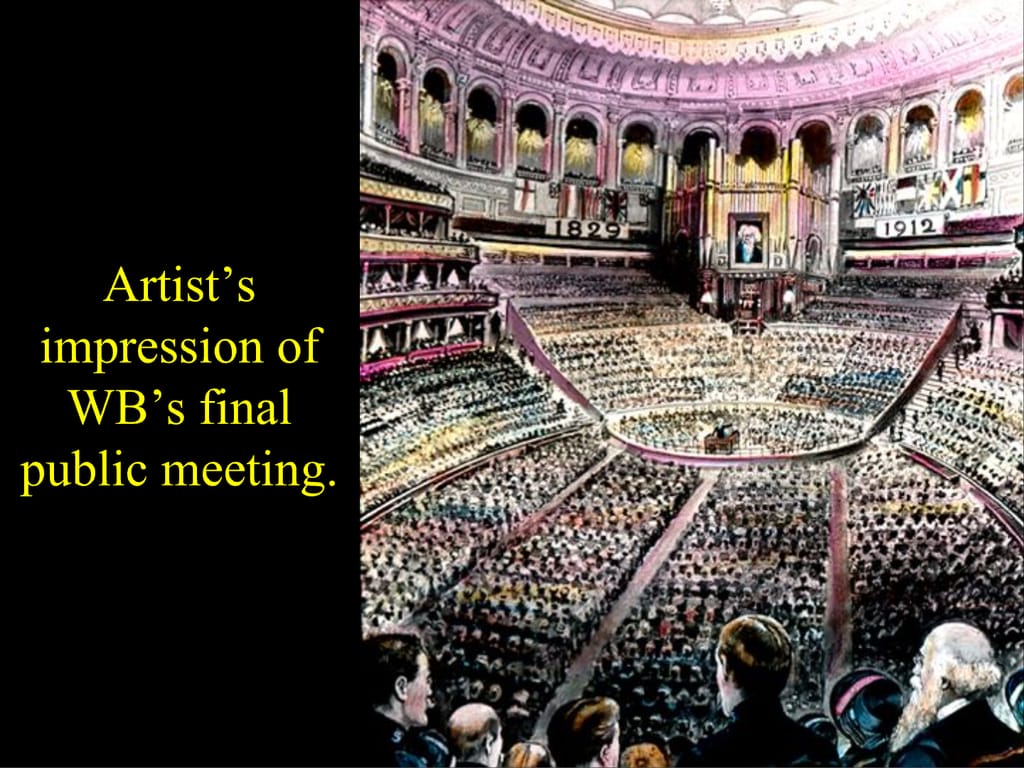
An artists impression of this meeting, the General’s last. The Founder is speaking fro the lower platform in the centre of the picture. The gathering was attended by round 10,000 people. The next slide is missing – the General’s house, Rookstone, Hadley Wood. The script for the next slide reads, “The Crisis approaching. The General before the last fateful operation on his second eye.”
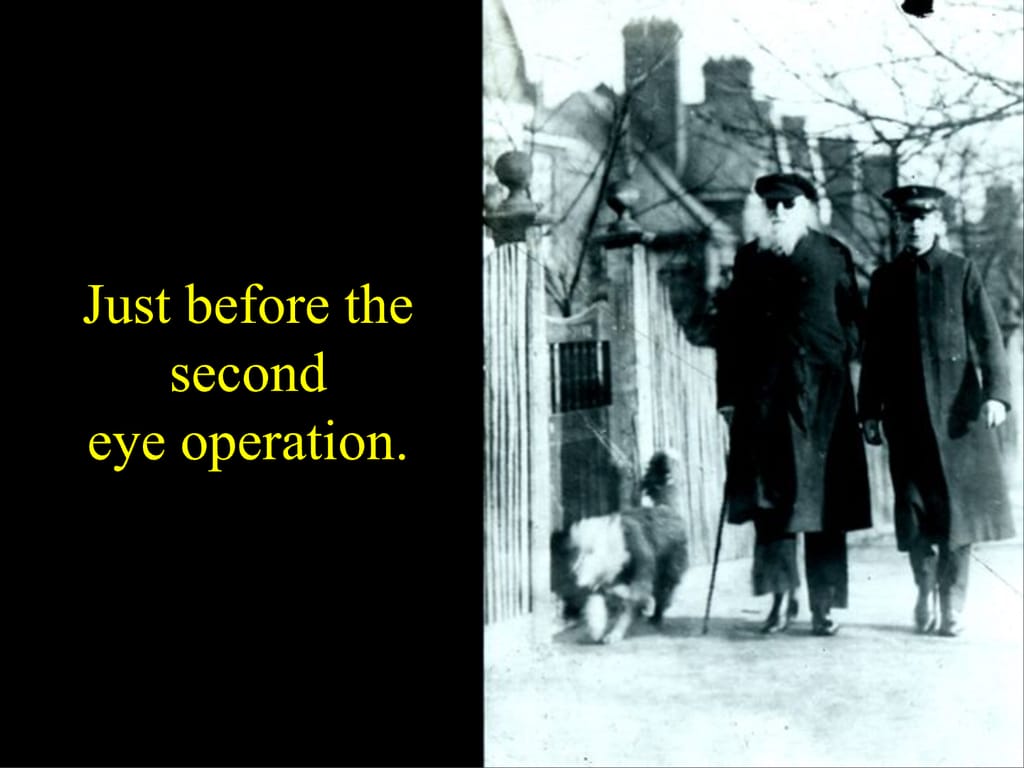
Photograph taken on the morning of May 23rd 1912 just before the operation to his second eye. These slides – original numbers 68 and 70 – could be out of synch with the script.
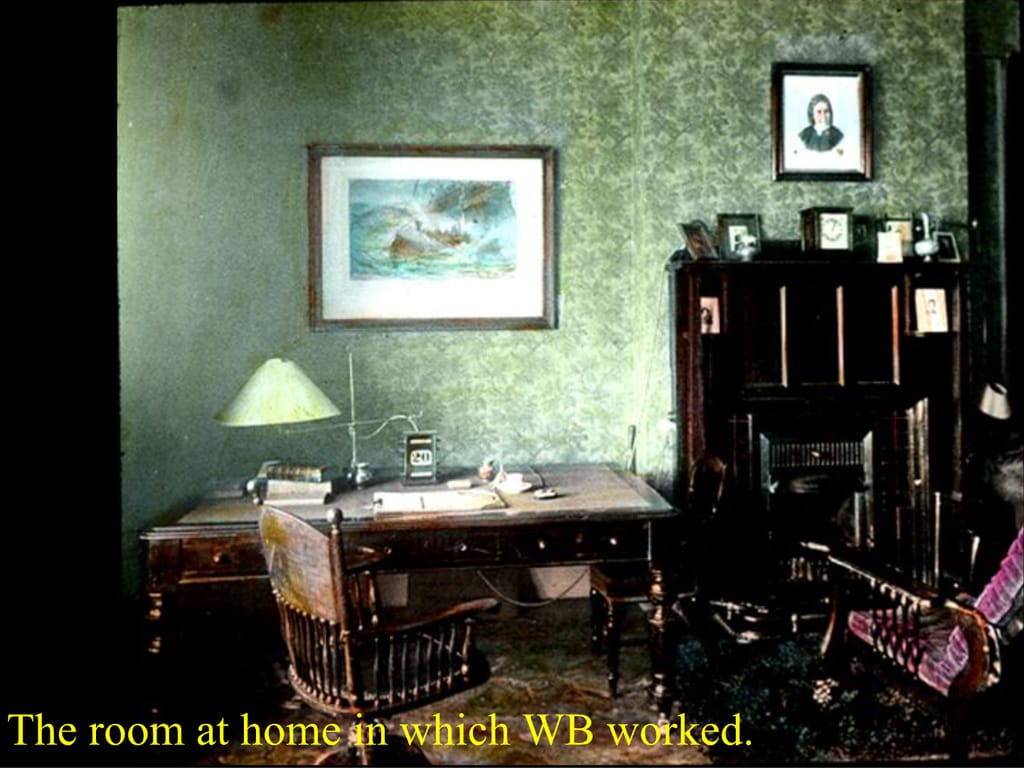
The study at home in which the Founder worked. The next two slides are missing – the General’s housekeeper, and the trained nurse who nursed him.
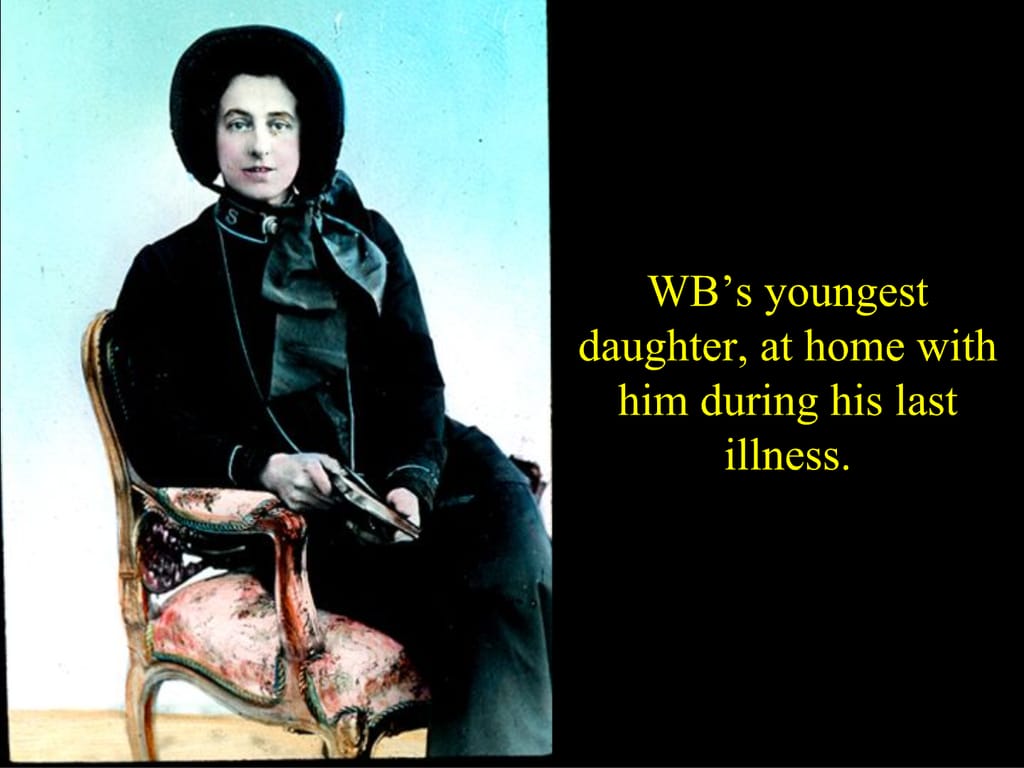
The General’s youngest daughter, who was with him during his last illness.
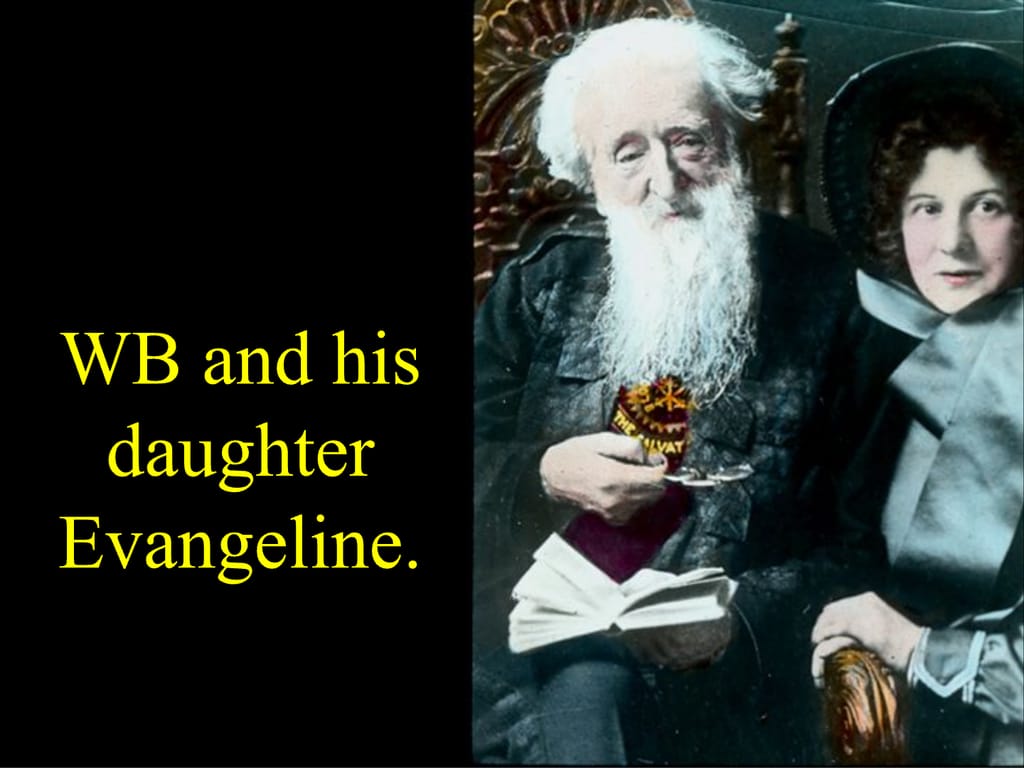
“Miss Eva and The General”.
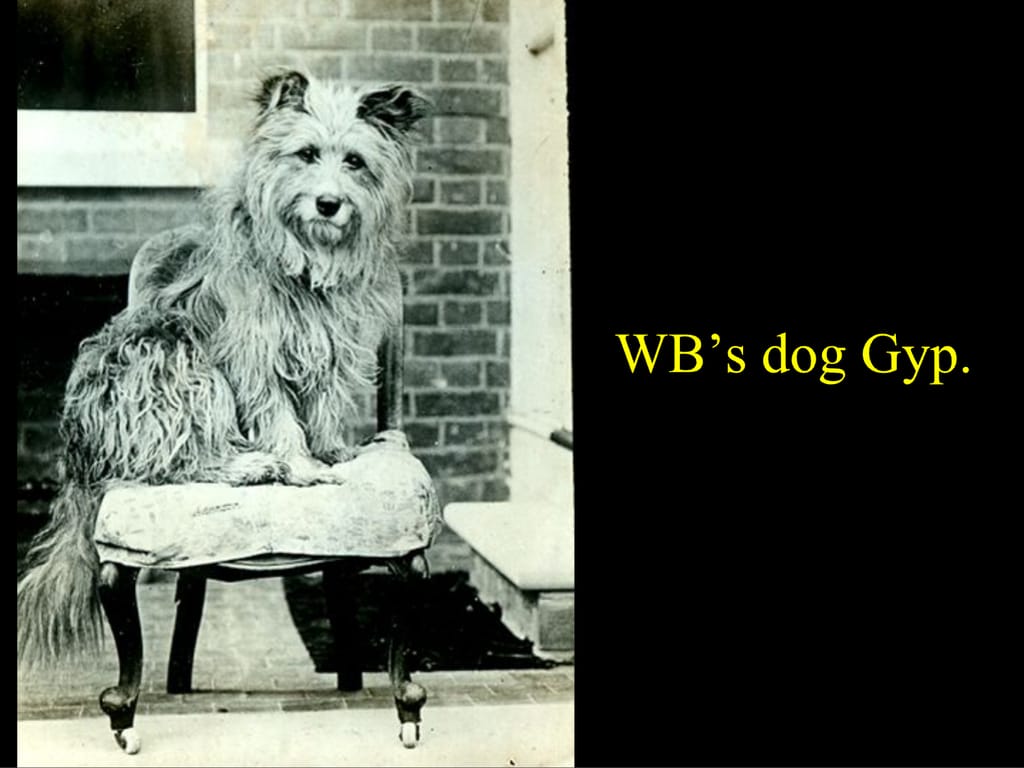
The General’s dog – Gyp.
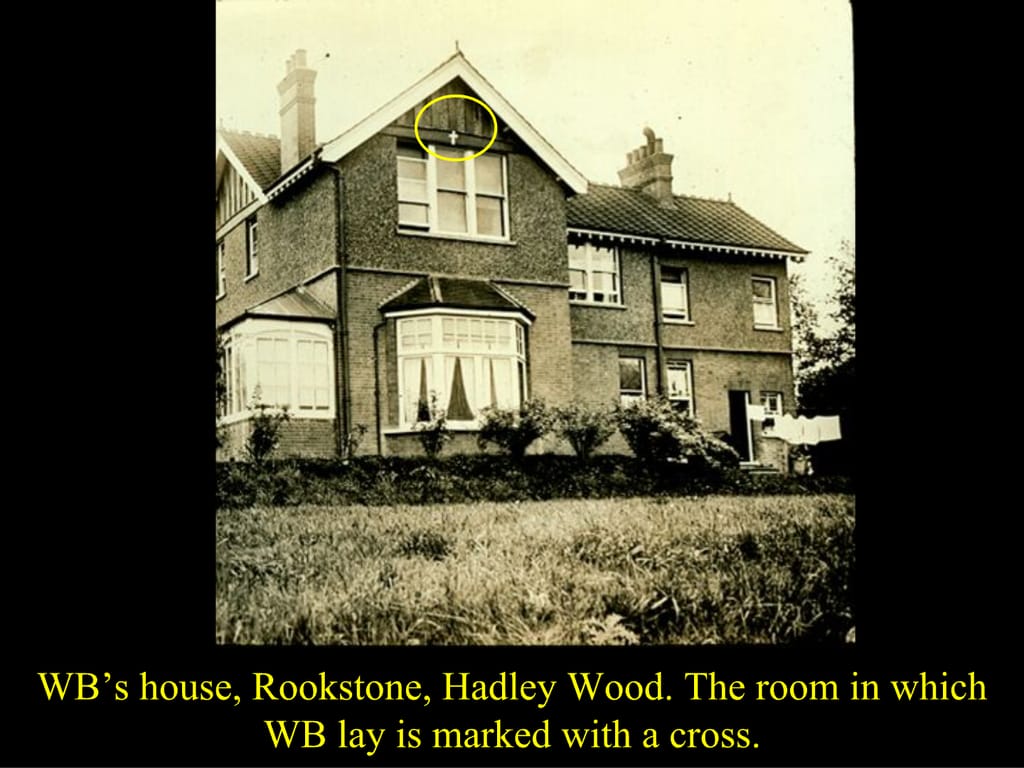
View of the back of Rookstone. The room in which the General lay is marked with a cross. The following slide “The bedchamber in which the General died” is missing. As is the next one – “The welcome home” A drawing of Christ and the General.
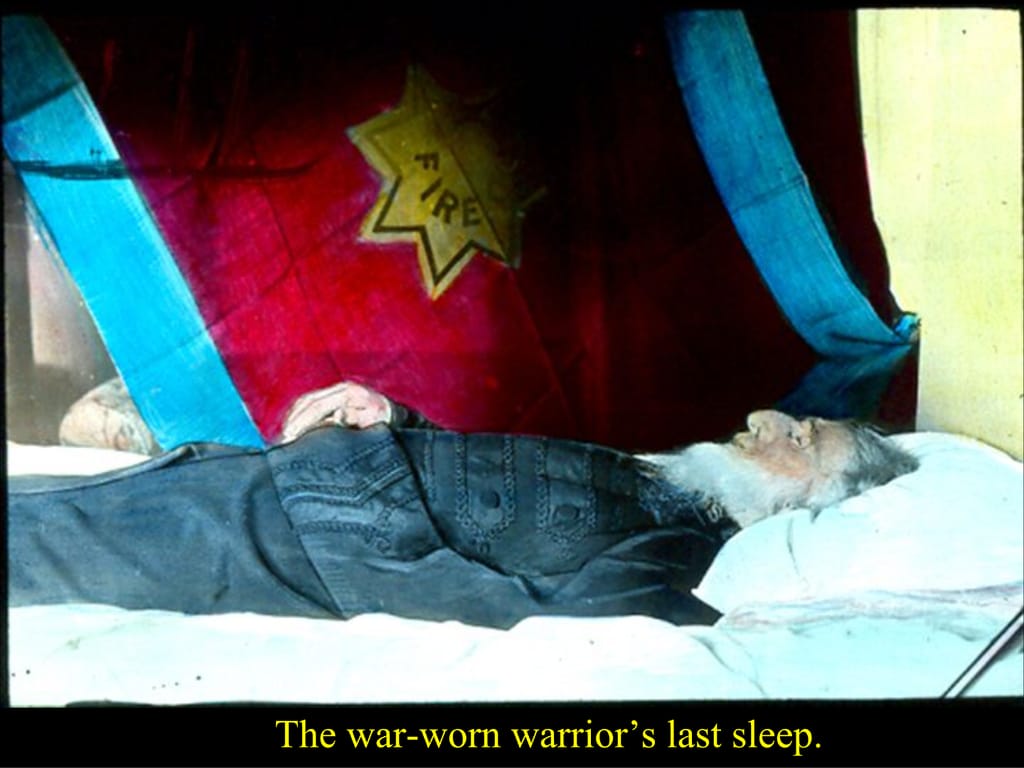
“The war-torn warrior’s last sleep. Lying on the bed after death.”
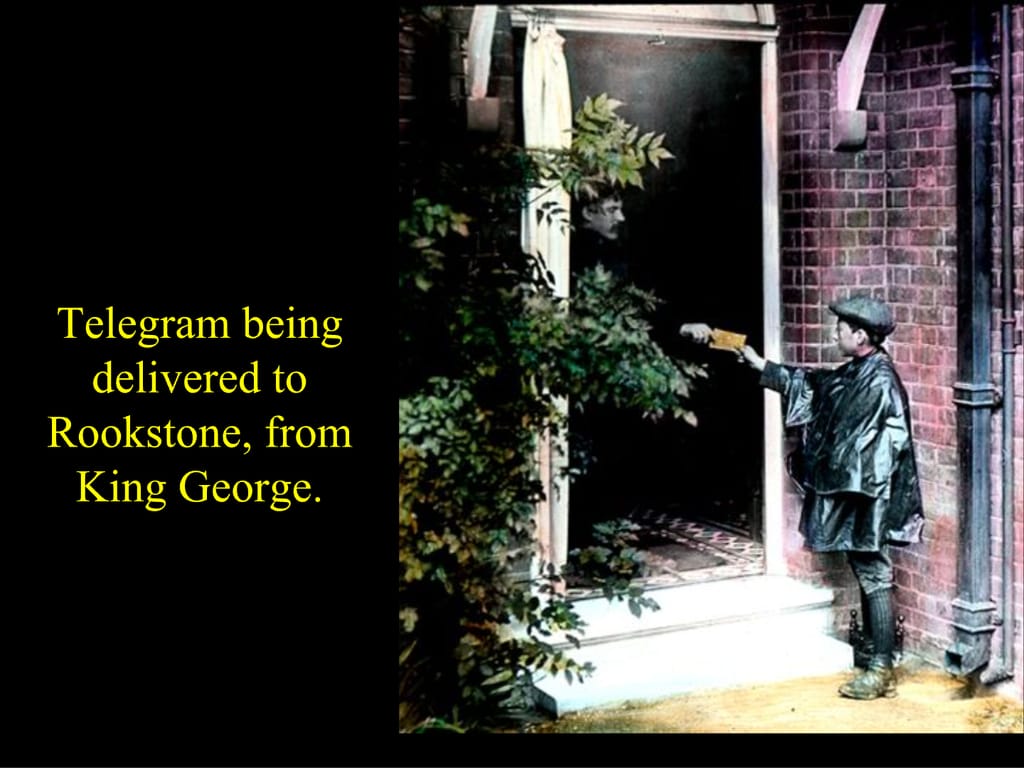
The telegram from King George expressing his sorrow, being received at Rookstone.
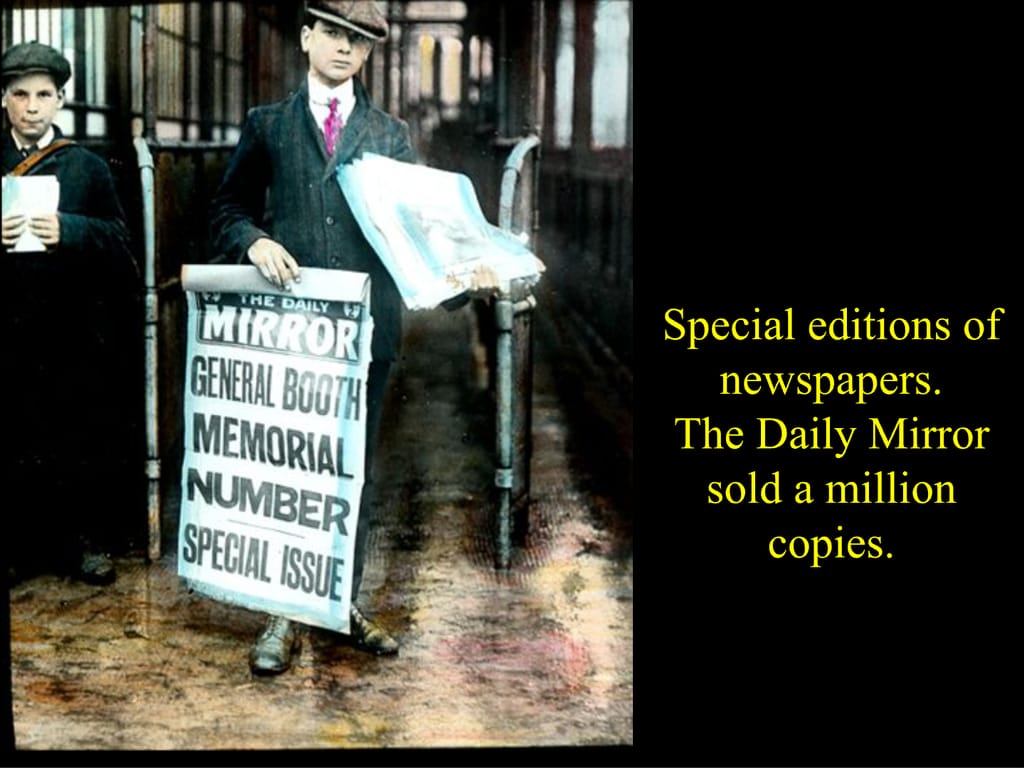
A special edition of newspapers were issued by all the main daily newspapers. The ‘Daily Mirror’ sold a million copies.
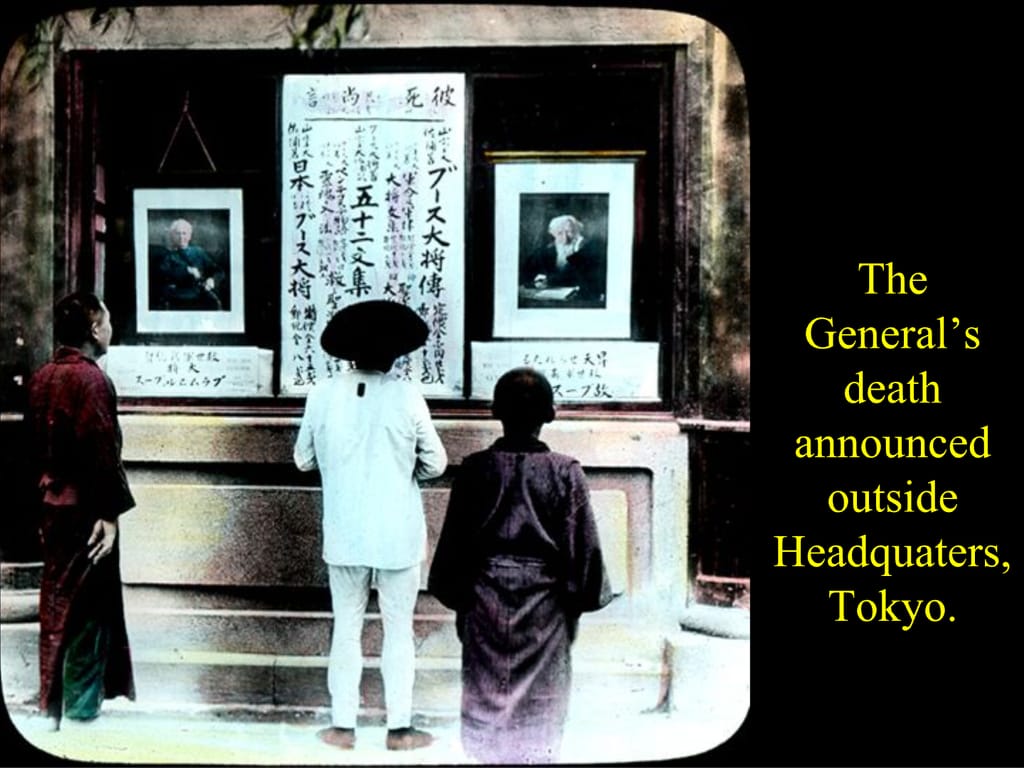
Outside the Army HQ in Tokyo, Japan. The General’s death is announced.
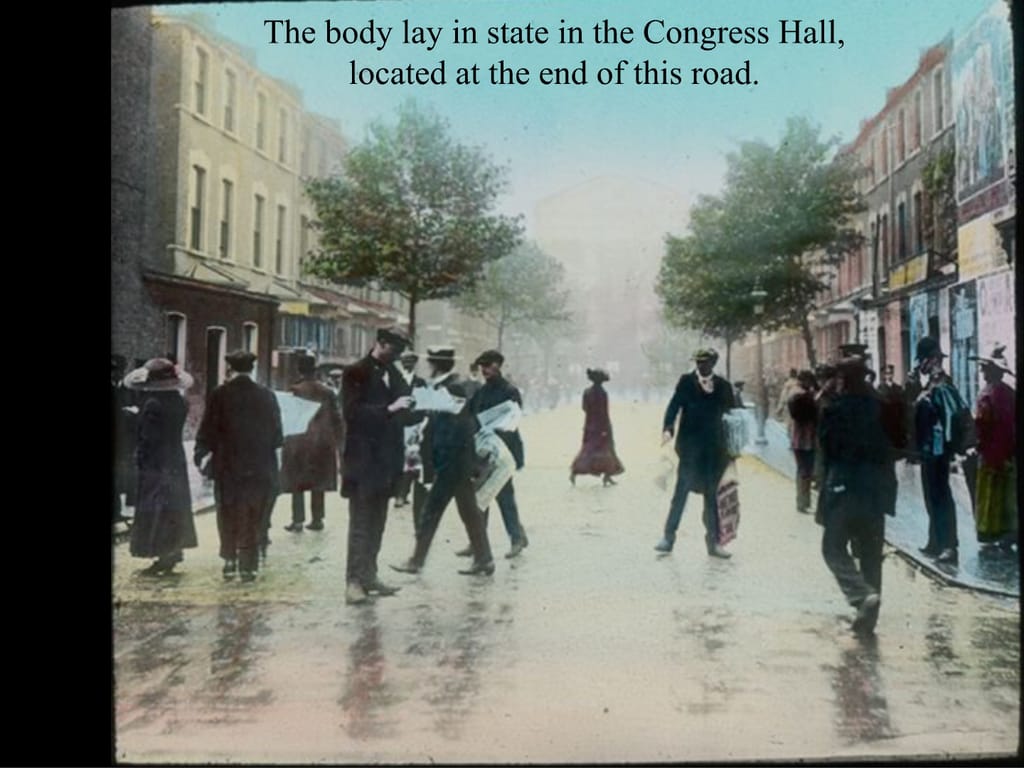
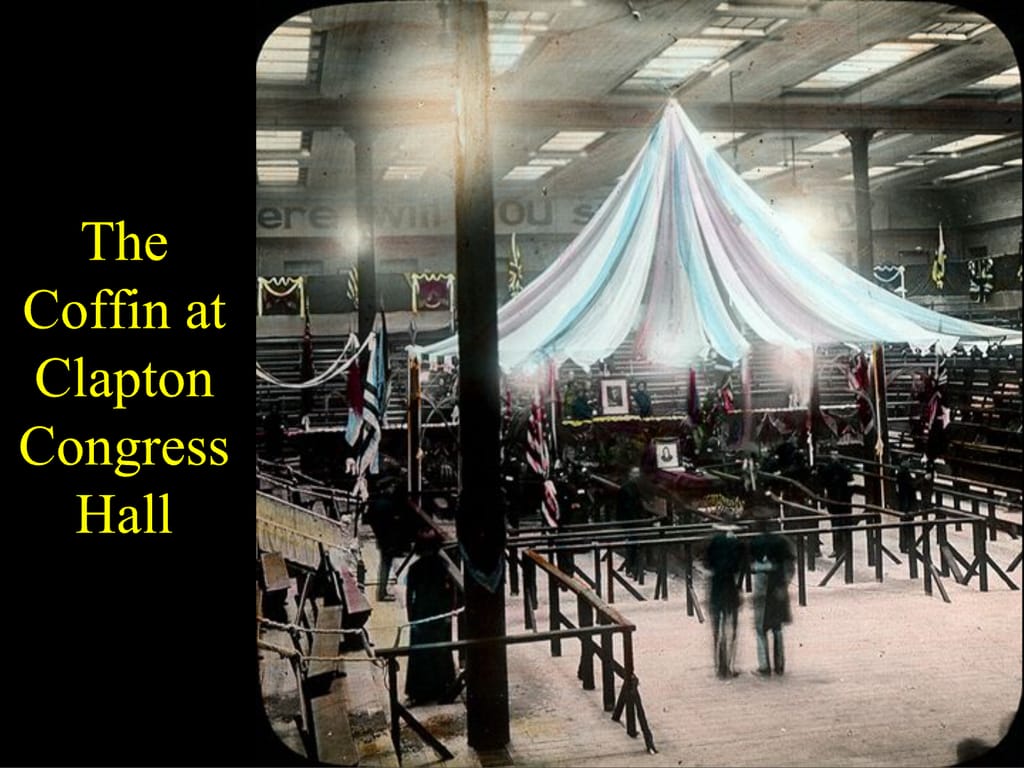
The body in state in the Congress Hall, Clapton, situated at the end of this road.
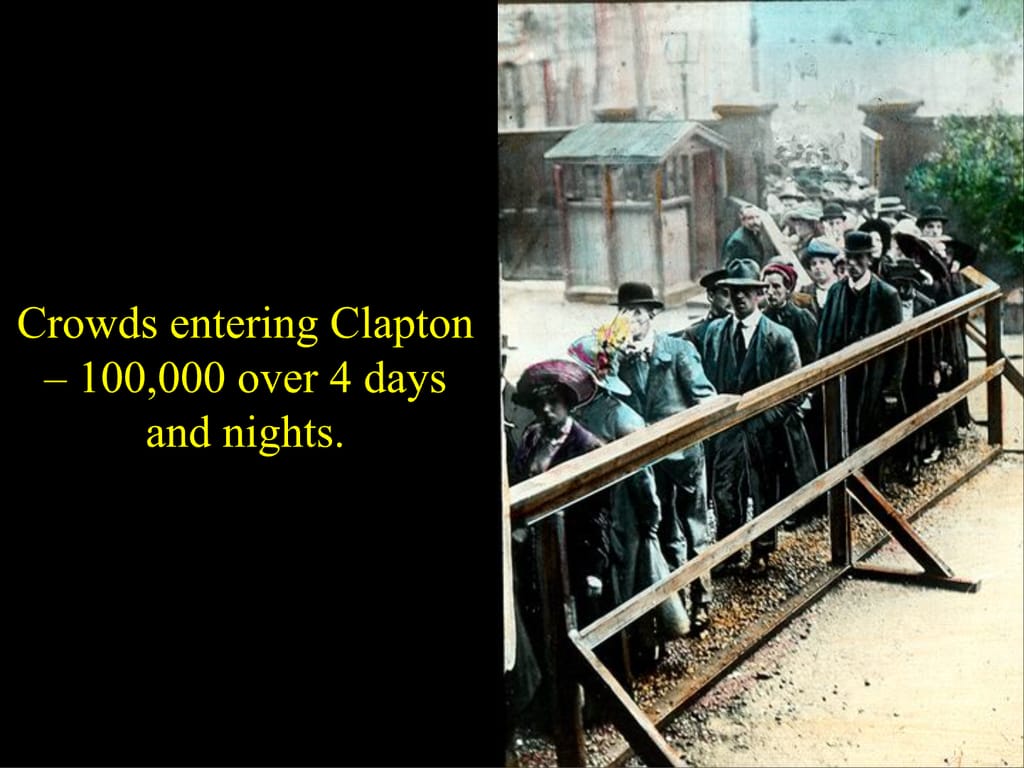
The interior of the Congress Hall, with the coffin ready of those coming to view. One daughter was heard to say to her 85yr old father, a former drunkard, “There’s the man who gave you back your life.” Around 100,000 people came, over a period of four days and nights.
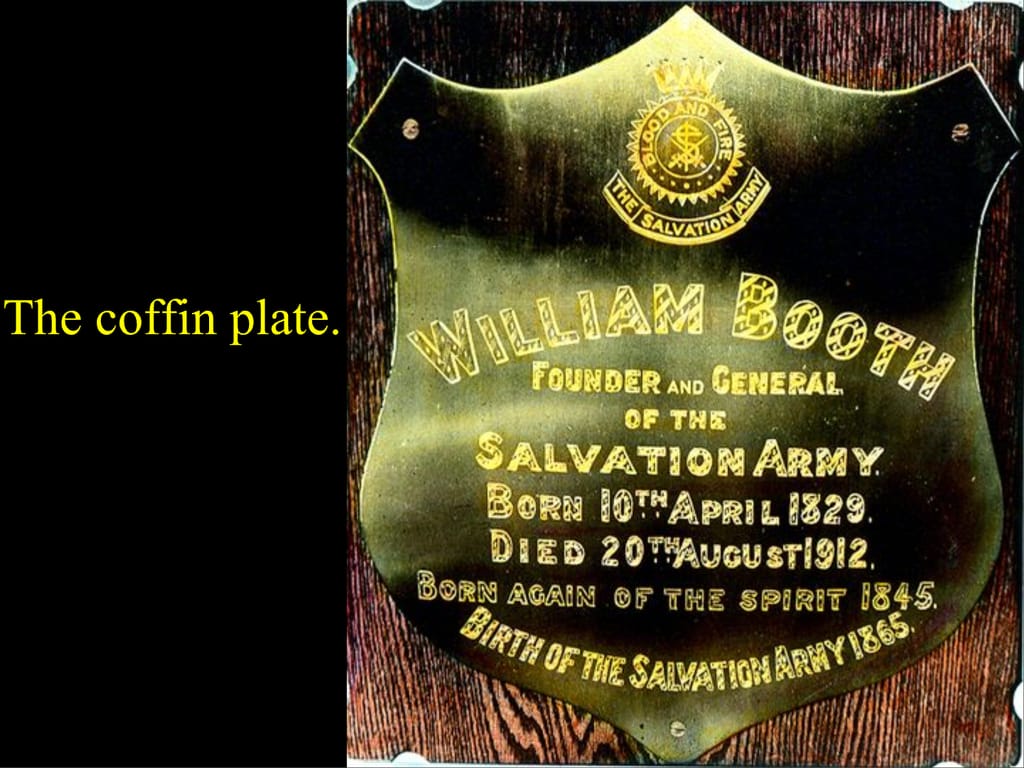
Plate on the coffin.
How the immense crowds had to be regulated at the entrance to the Congress Hall.
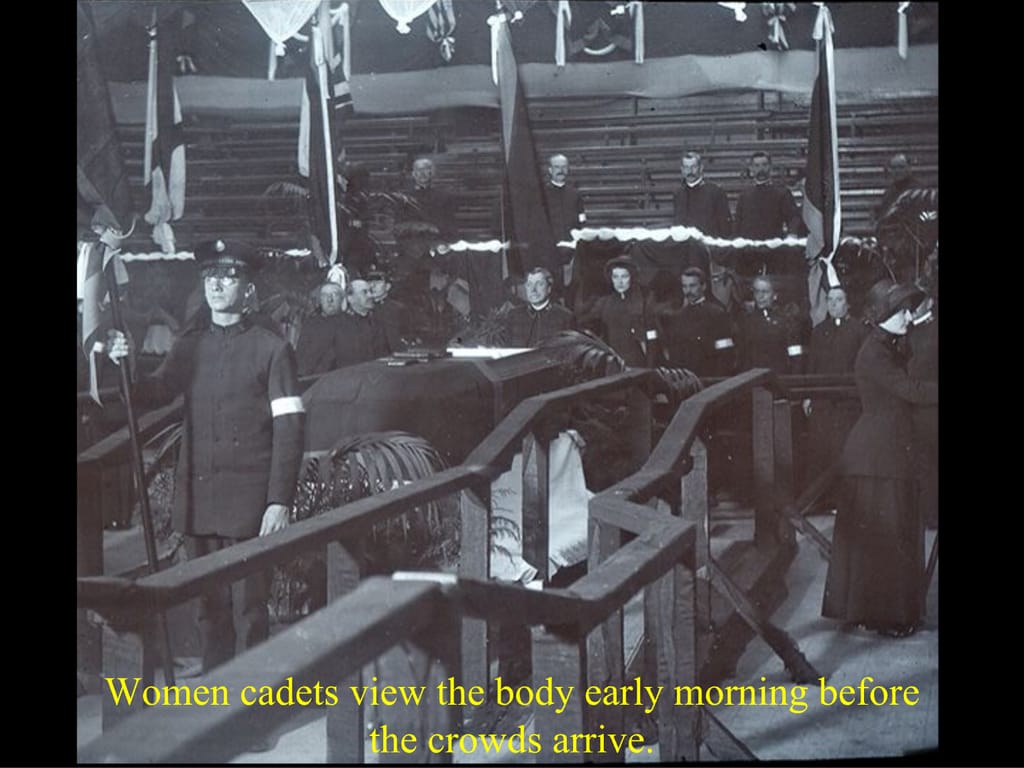
Women Cadets view the body early in the morning, before the crowds arrive.
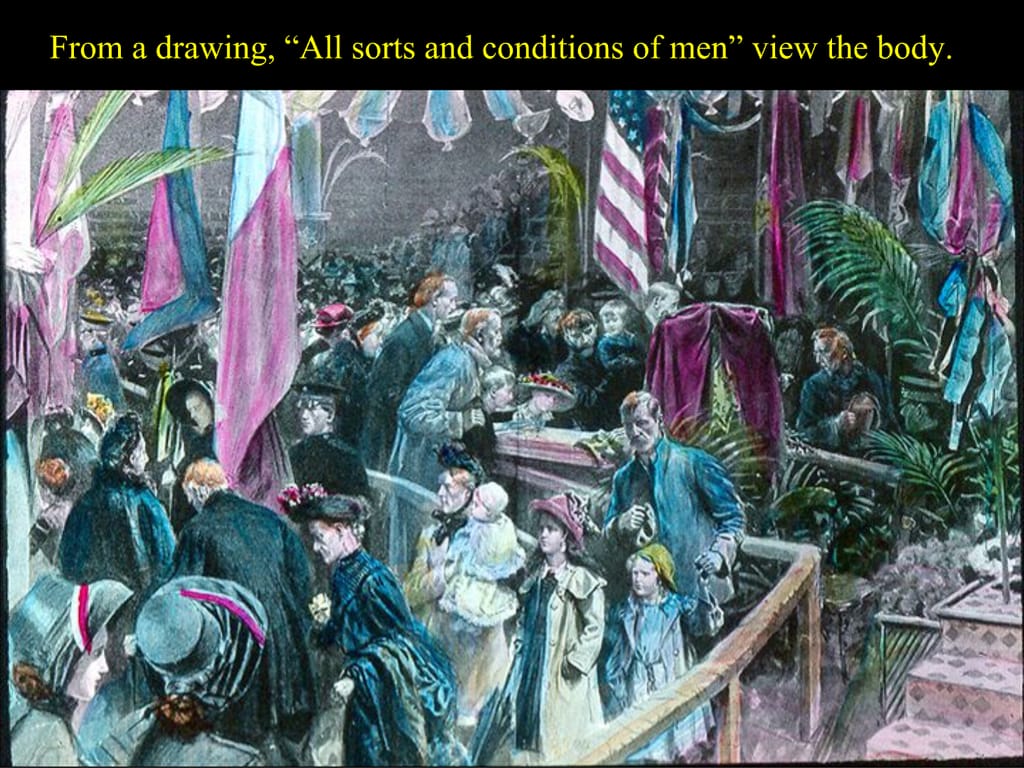
“All sorts and conditions of men” view the body. From a drawing.
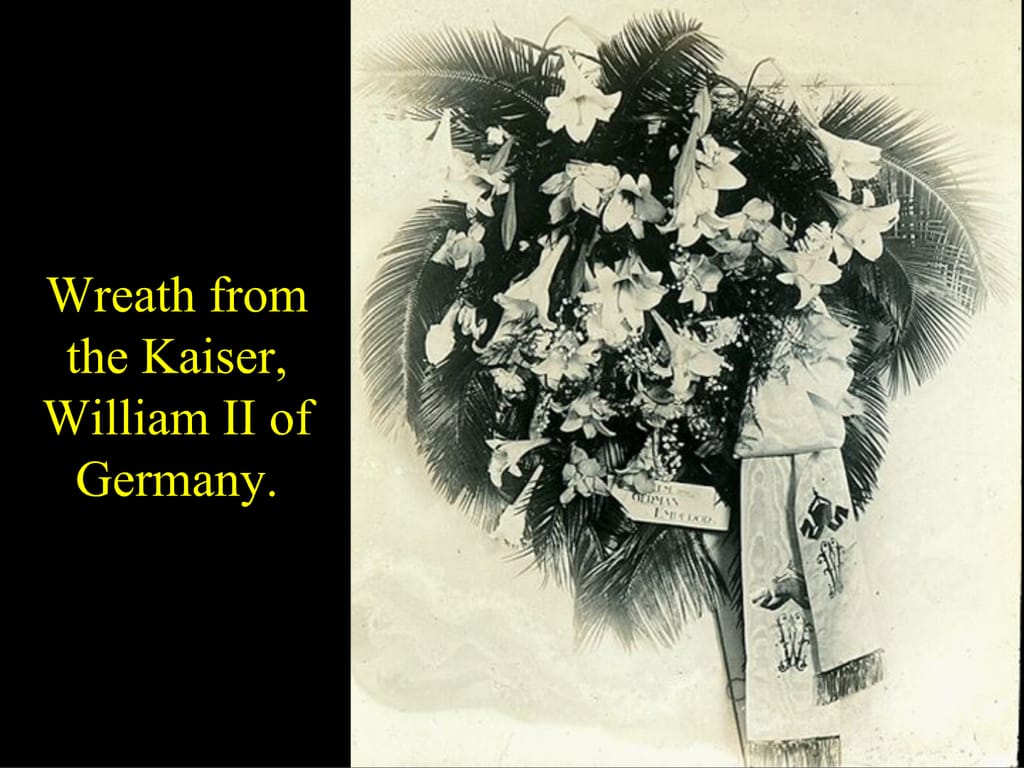
Wreath from the Kaiser, William II of Germany.
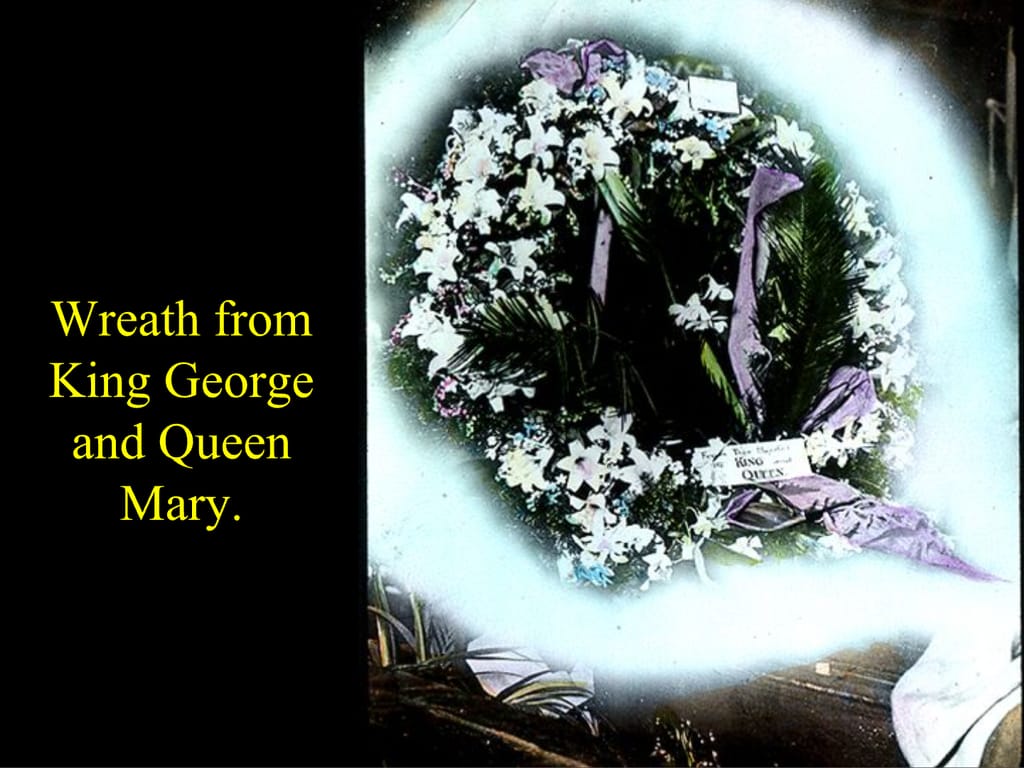
Wreath from King George and Queen Mary.
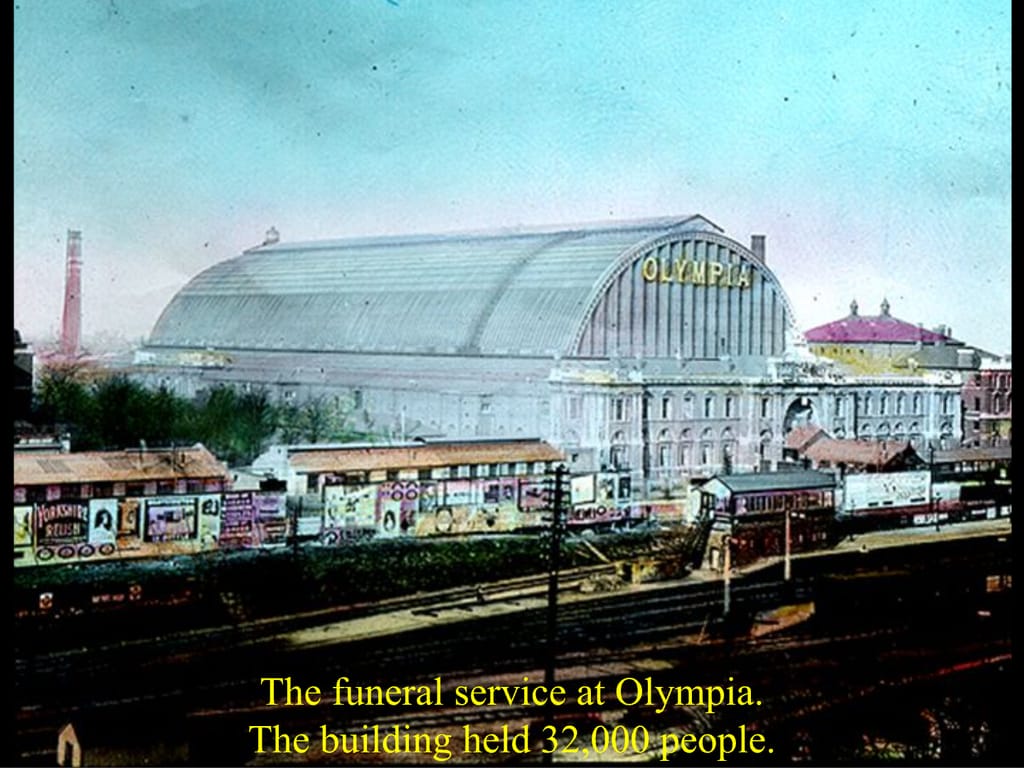
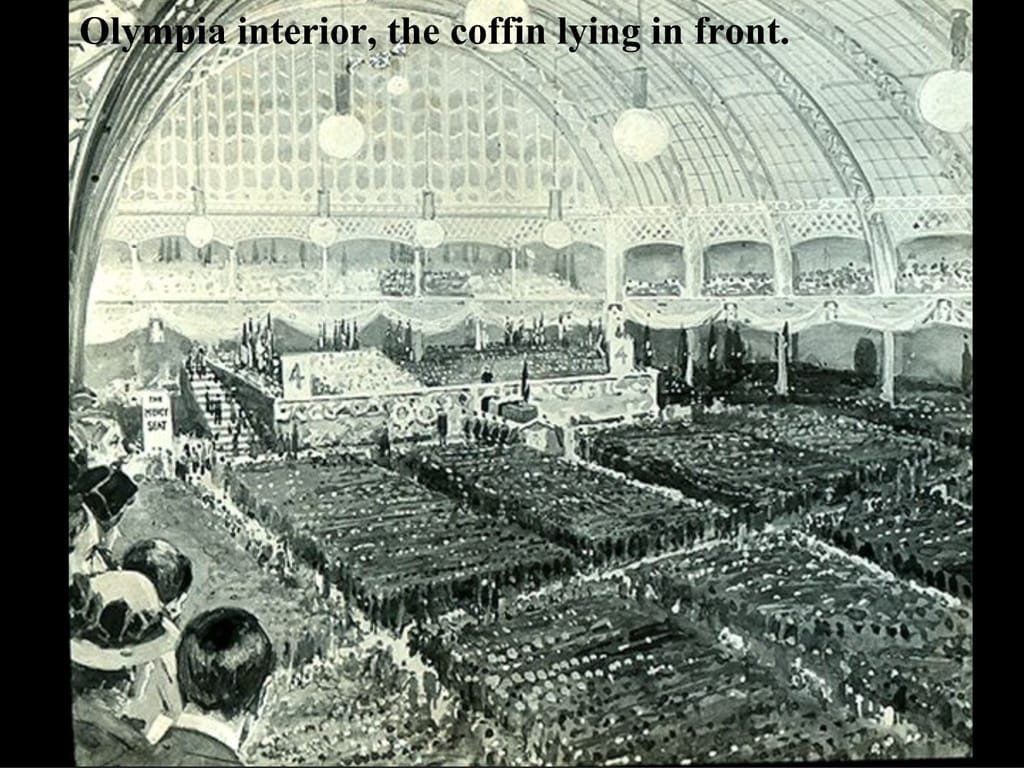
Olympia, that holds 32,000 people, seen from across the Metropolitan railway. The next slide – the the crowds turned away from Olympia, unable to find room inside.
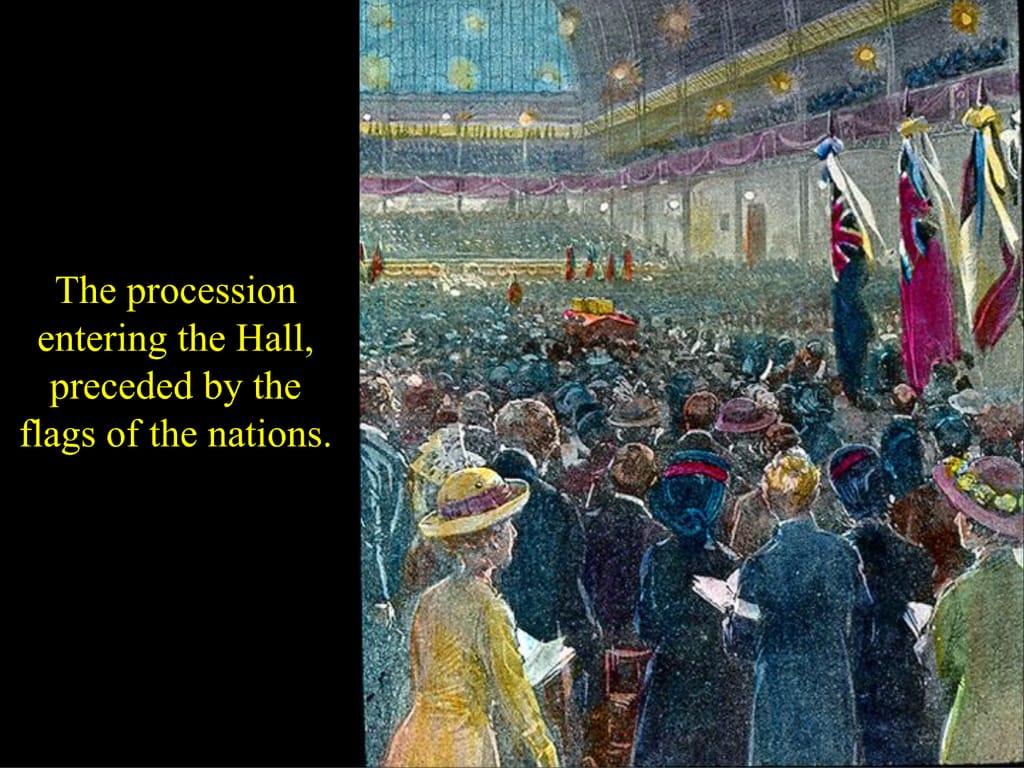
The procession entering the back of the Hall with the body, preceded by the flags of the nations. The next slide is missing – the muster on the Thames embankment.
Olympia interior, view of the platform, coffin lying in front.
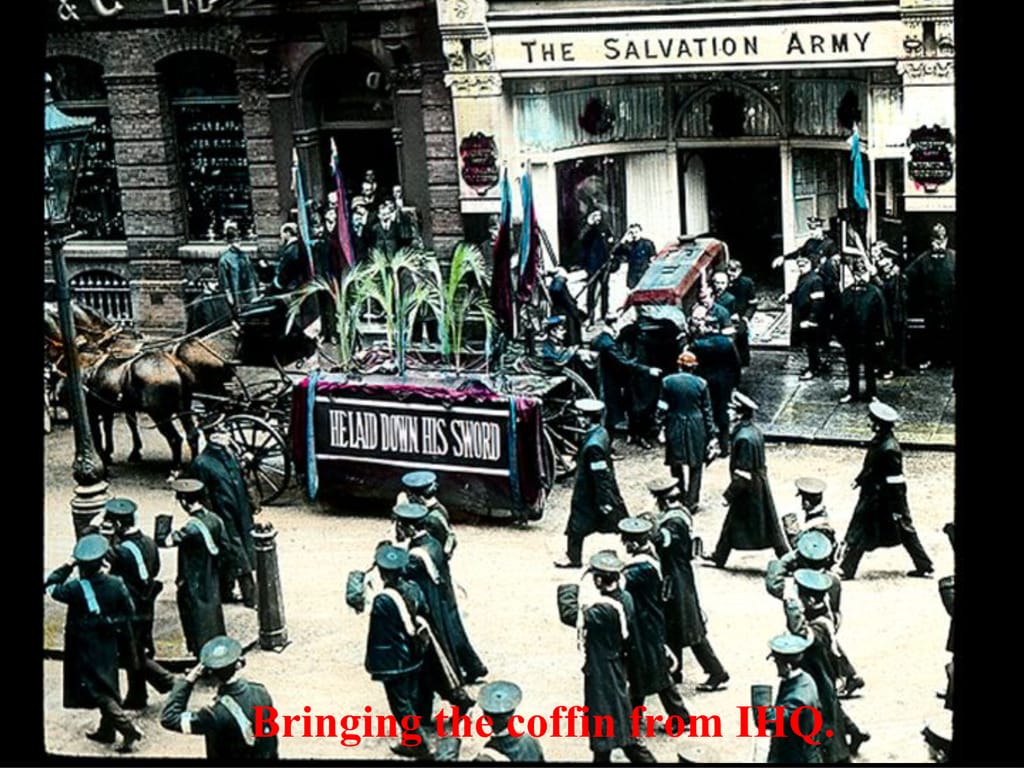
Bringing the coffin from IHQ
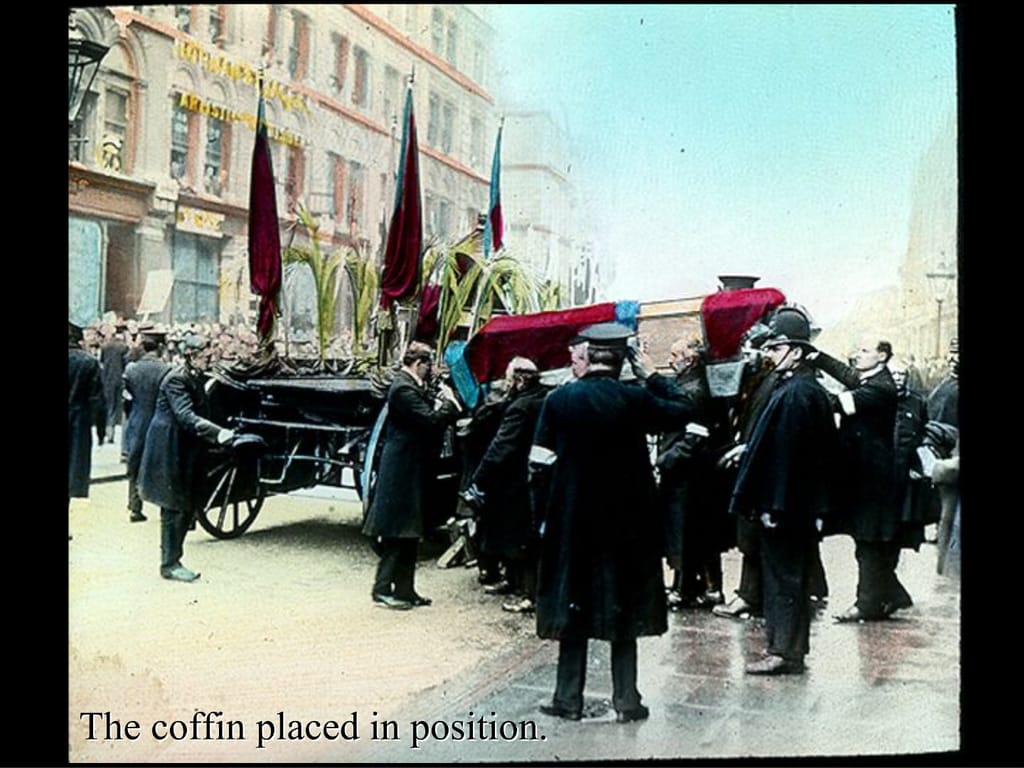
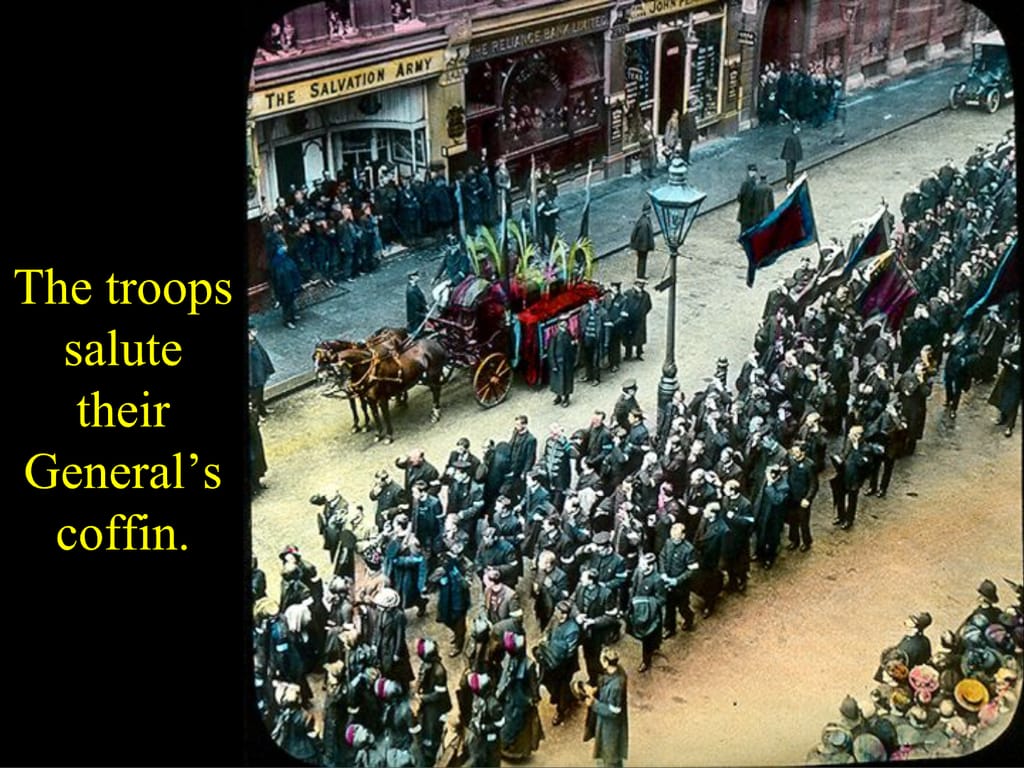
Coffin placed in position. The next slide is missing – nearer view of this one. Also the following slide missing – “The troops salute their General’s body.”
“For an hour the procession of Salvationists passed with bared heads and streaming eyes.”
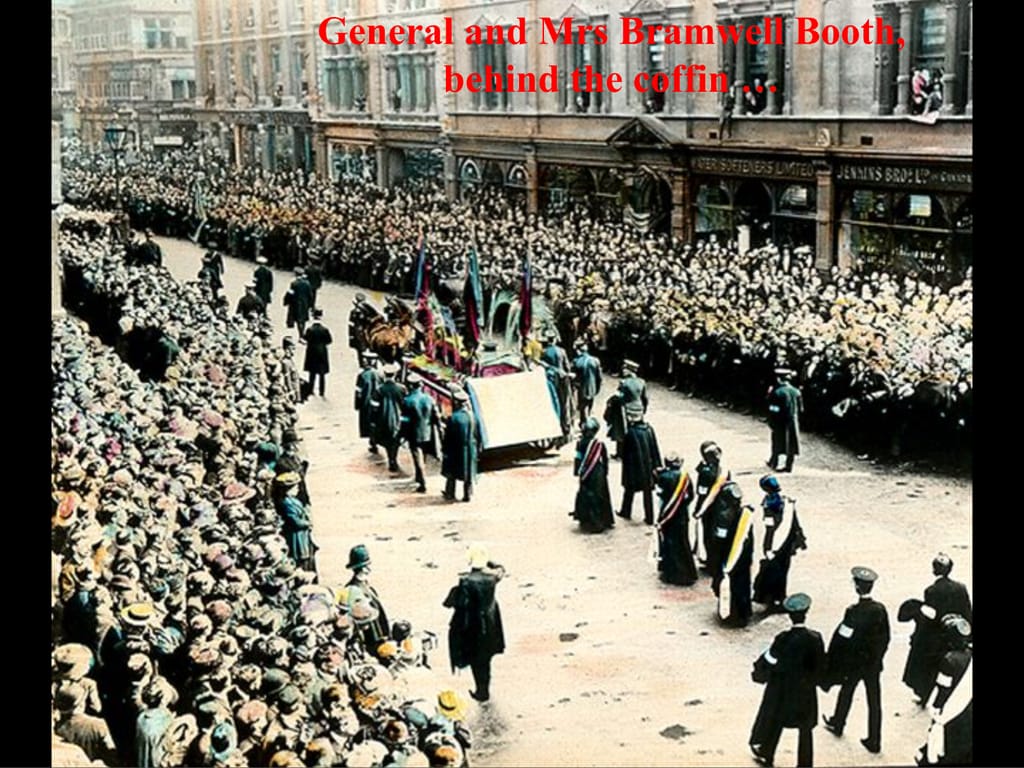
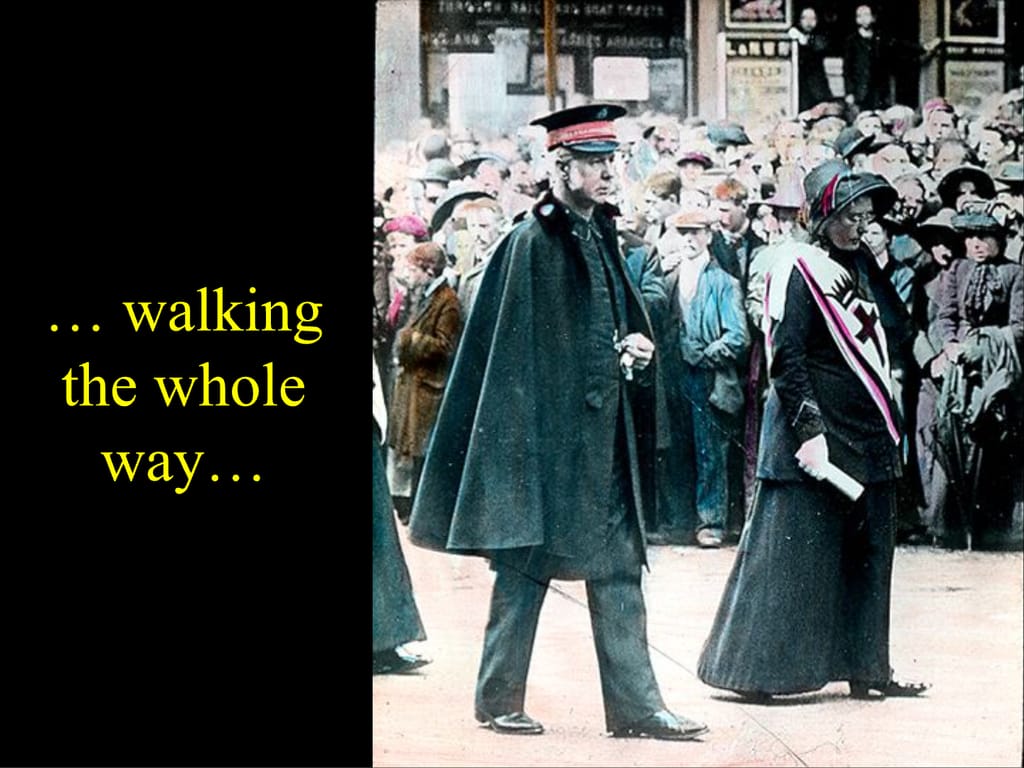
General & Mrs Bramwell Booth and the family of mourners join the procession, walking the whole way behind the coffin.
The General and Mrs Booth in the procession.
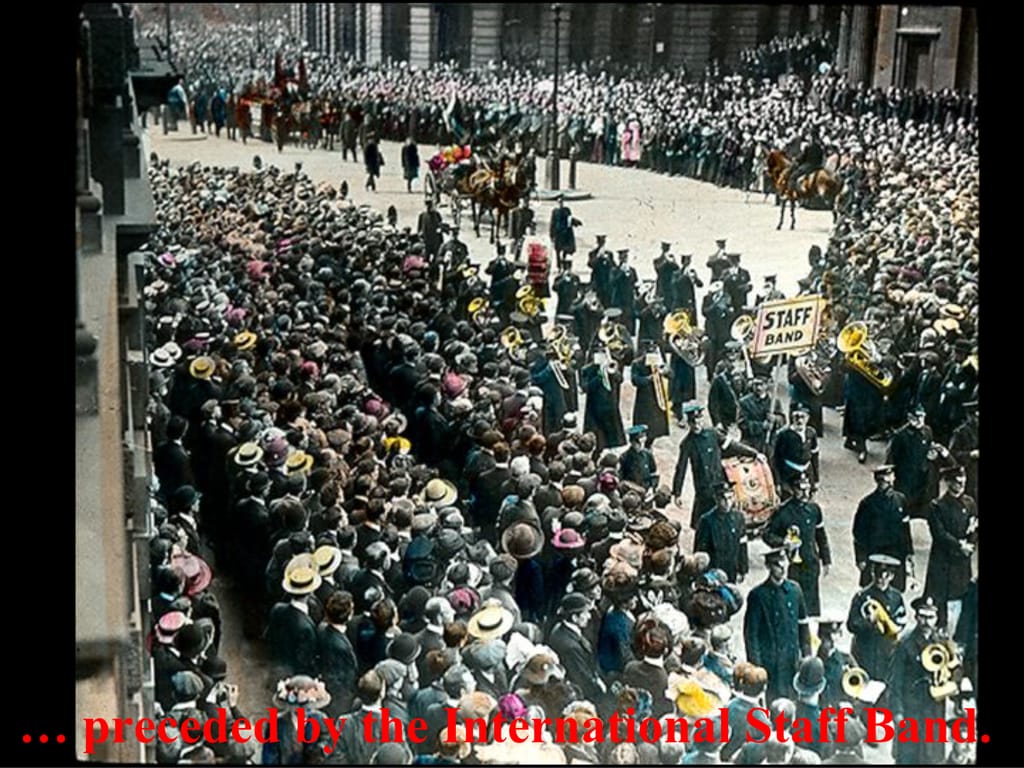
Preceded by the International Staff Band.
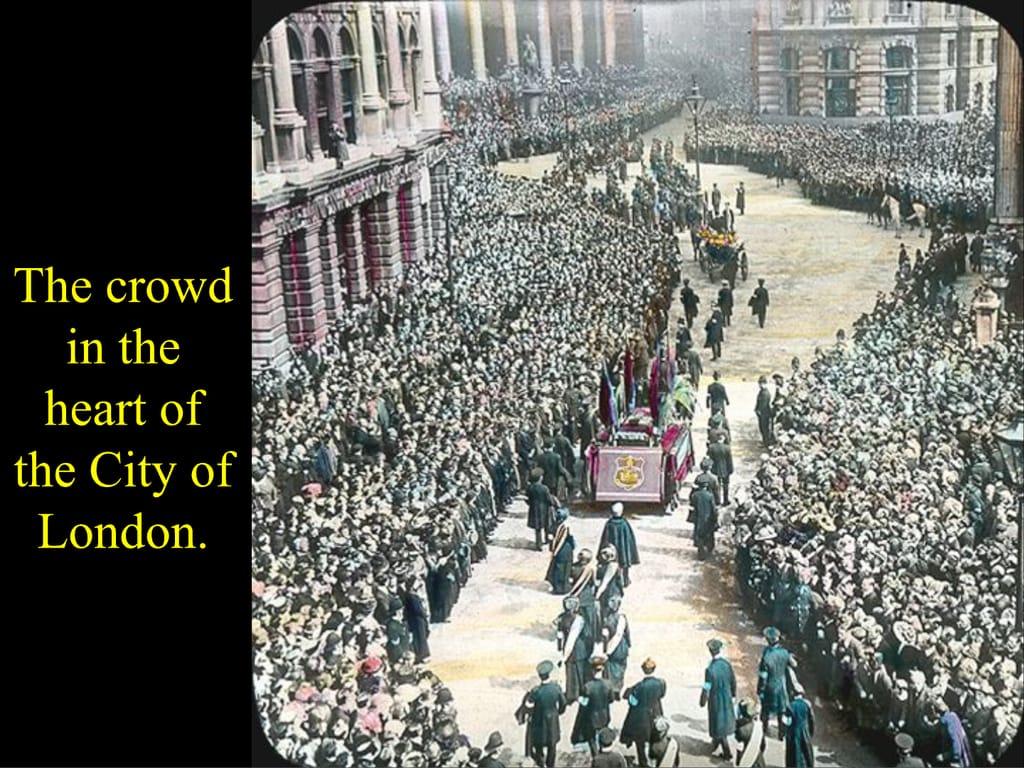
The crowd in the heart of the City of London.
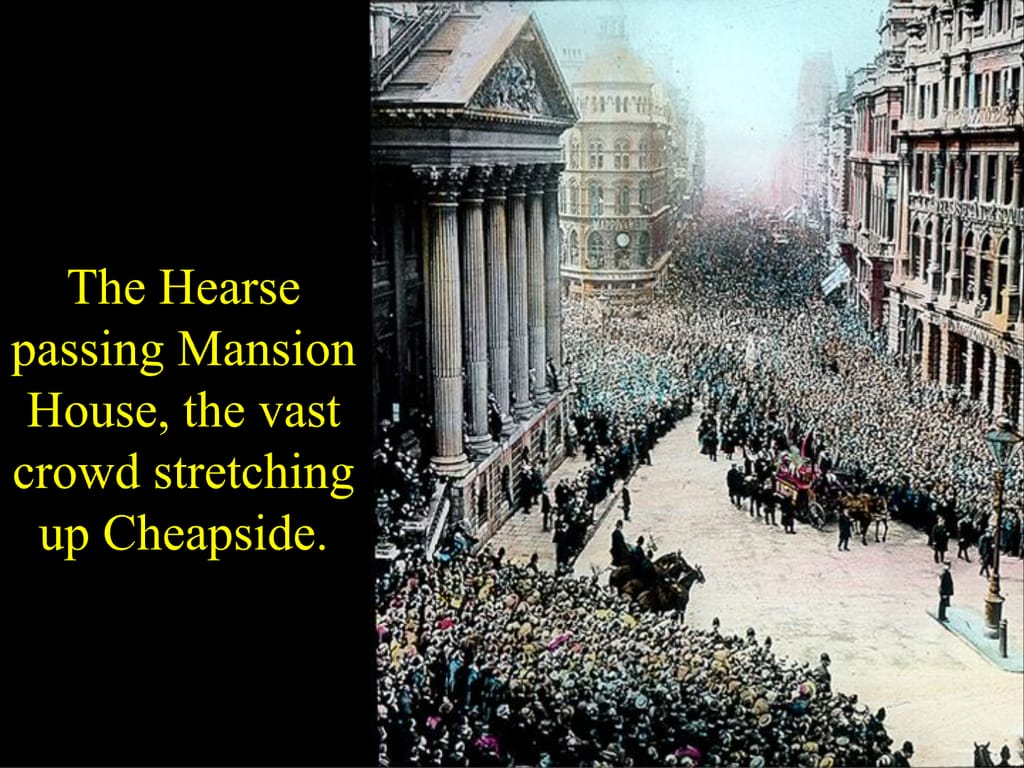
The hearse passing Mansion House, showing the vast crowd stretching up Cheapside.
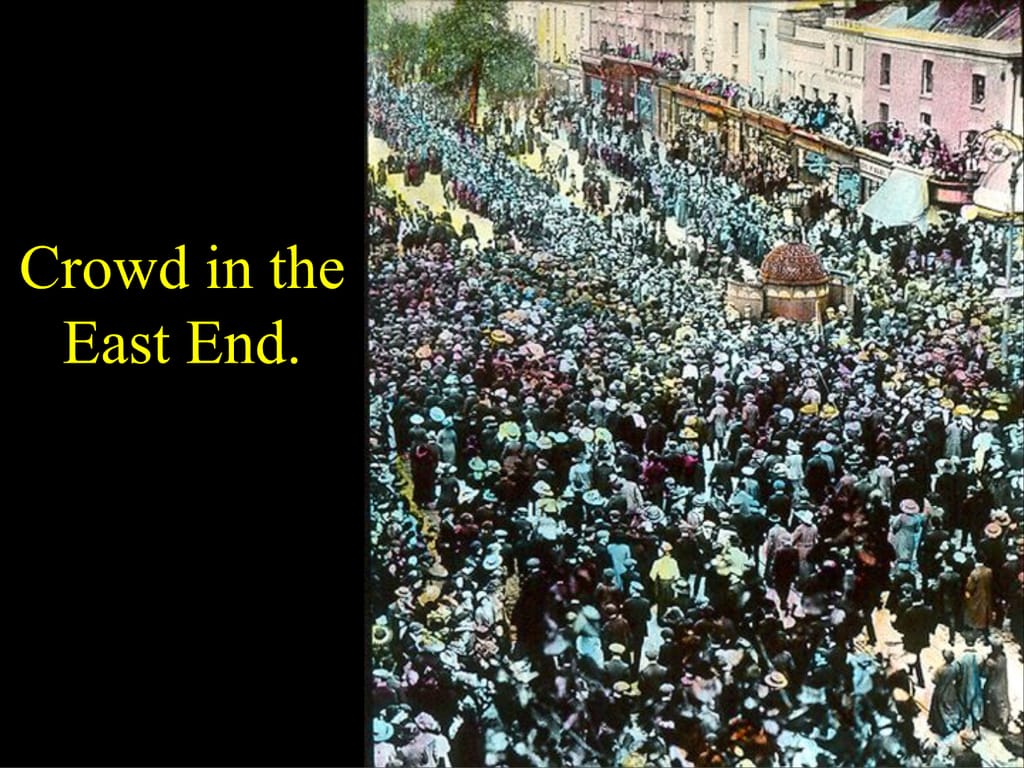
The crowd in the east end, the poorer part of London.
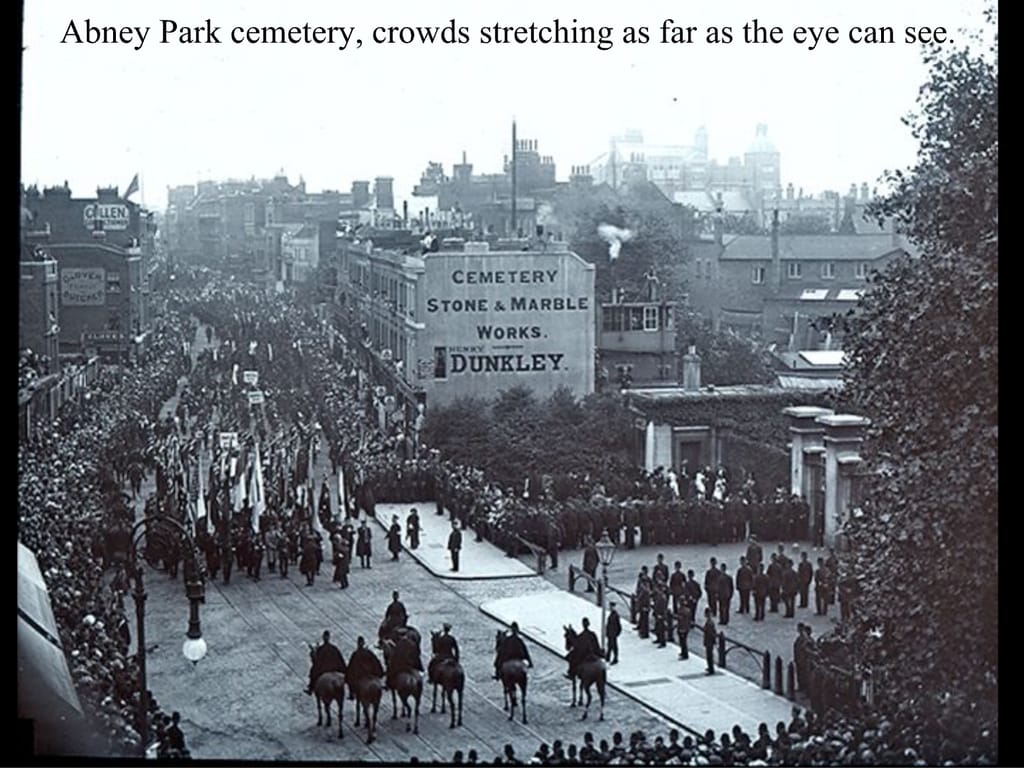
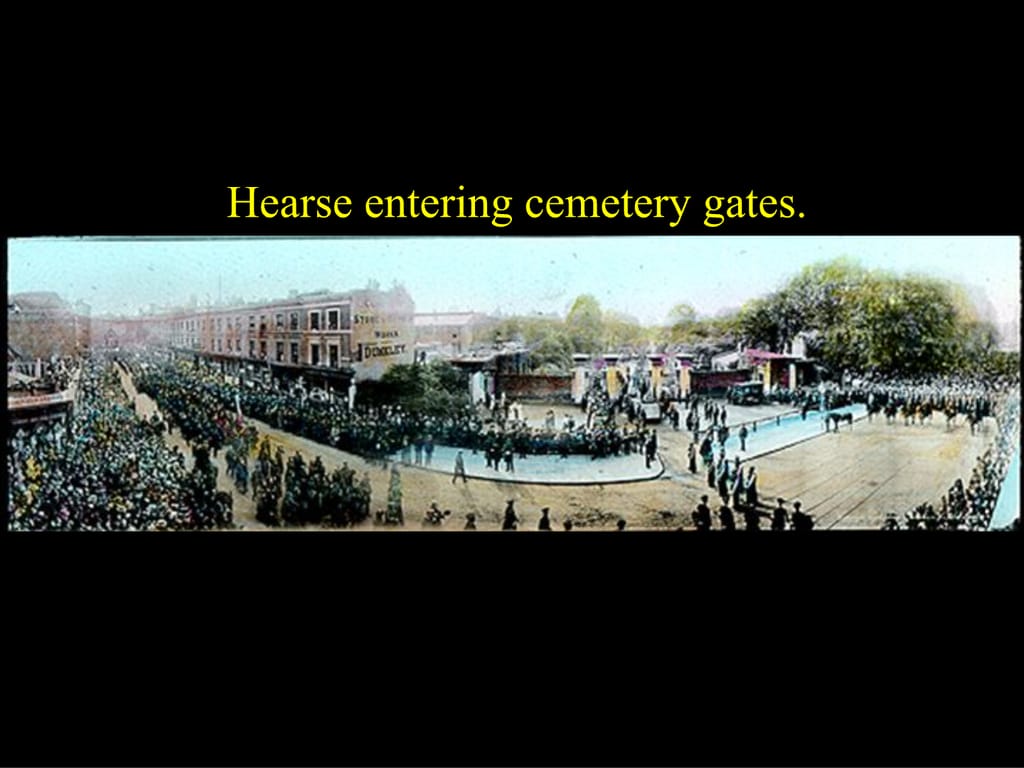
The crowds waiting outside Abney Park cemetery, stretching as far as the eye can see.
Cemetery gates.
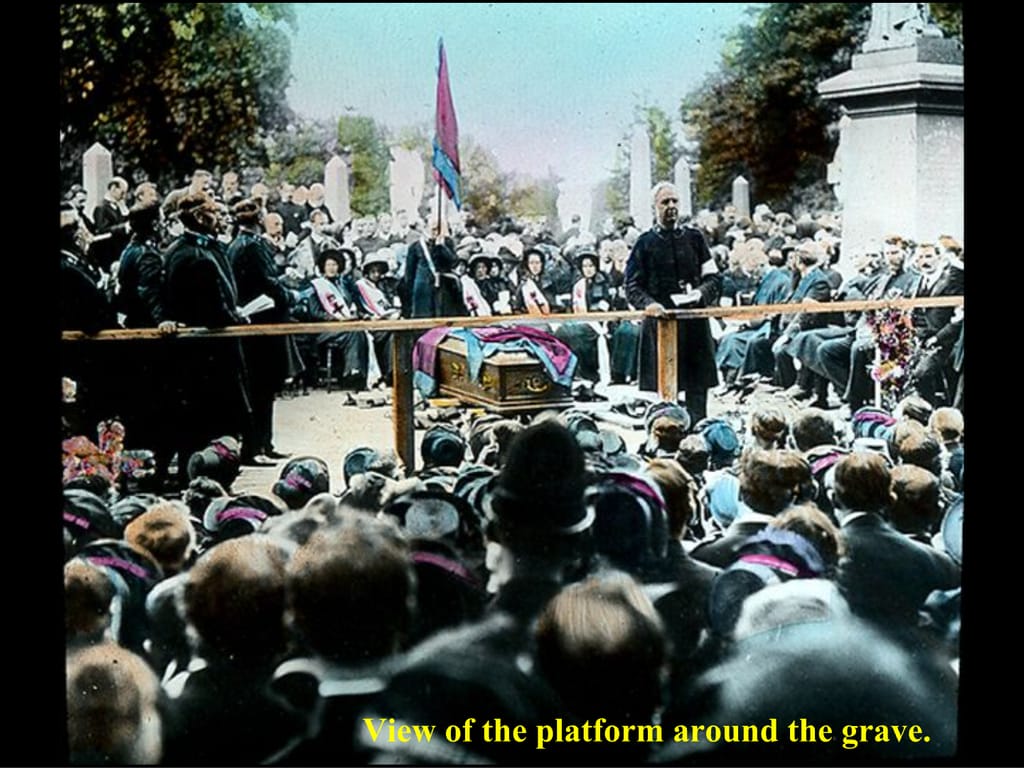
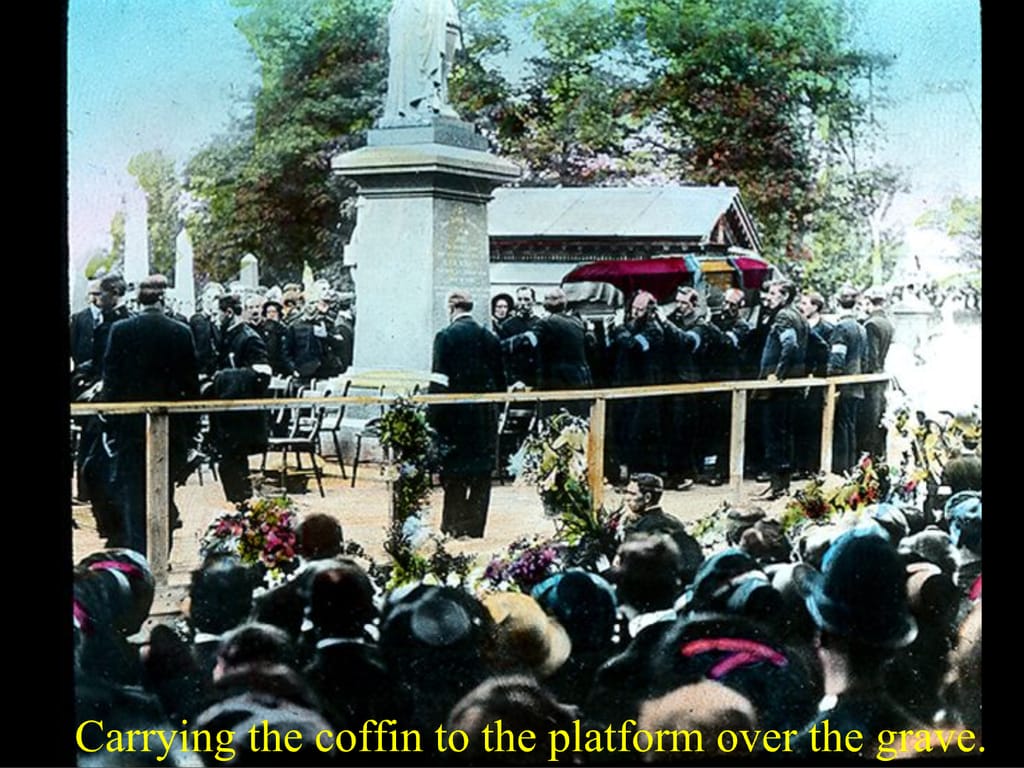
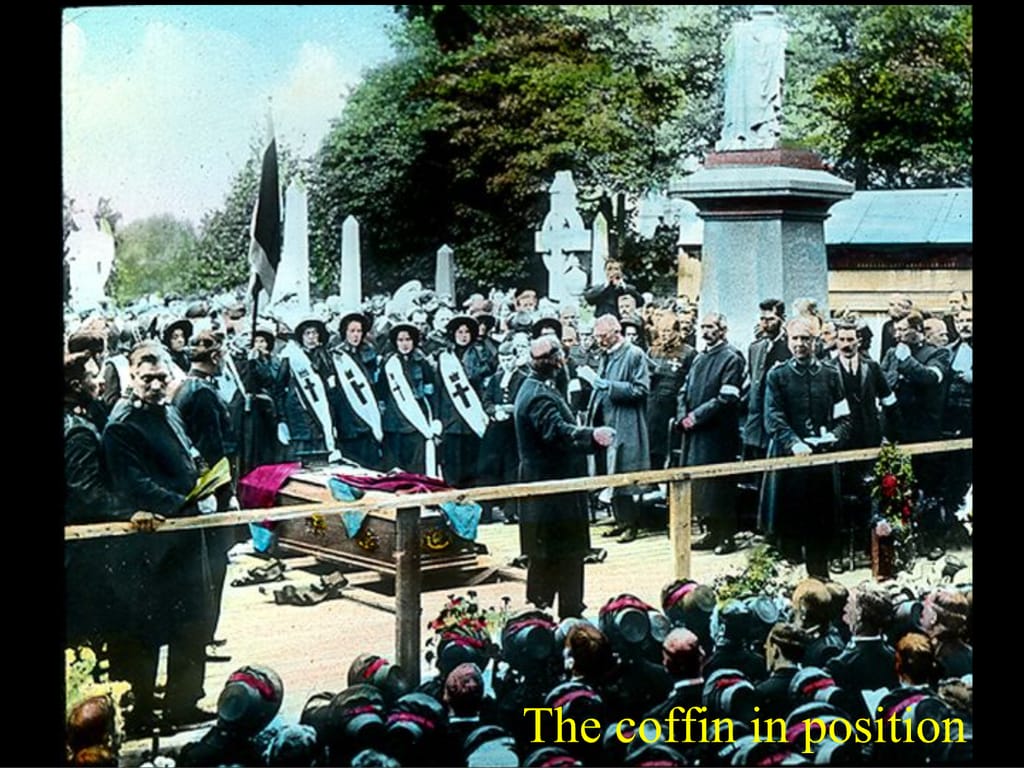
View of the platform around the grave. (These final six pictures are not covered by the script – last page is missing.)